
The Origins of Earth: How Our Planet Formed 4.5 Billion Years Ago
Planet Earth

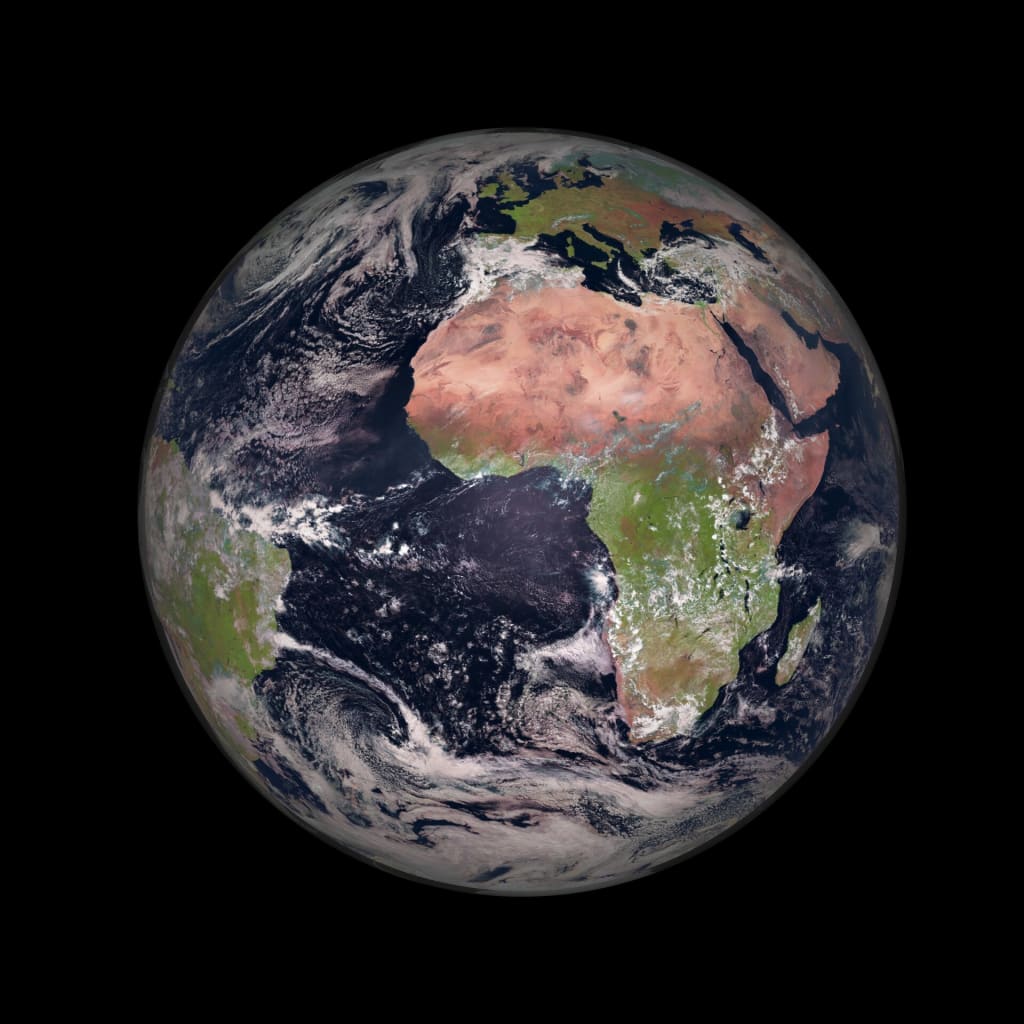
The Origins of Earth: How Our Planet Formed 4.5 Billion Years Ago
Today, when we walk barefoot on soft grass or gaze up at towering mountains, it's easy to forget how dramatically different our planet once was. Earth’s journey from a chaotic swirl of dust and gas to the vibrant, life-filled world we know today is a story of violence, patience, and remarkable transformation. Travel back with me to about 4.5 billion years ago, and let’s explore the origins of our home.
A Cosmic Beginning: The Birthplace of Worlds
Before Earth, before even the Sun blazed at the center of our solar system, there was only a vast, cold cloud of gas and dust drifting through the Milky Way. This cloud, known as a solar nebula, was the aftermath of generations of ancient stars living and dying, ejecting elements forged in their fiery cores into the galaxy.
At some point, possibly triggered by the shockwave of a nearby supernova explosion, gravity took hold of this nebula. It began to collapse inward, spinning faster as it shrank. At its heart, material clumped so densely that nuclear fusion ignited, giving birth to our Sun.
Meanwhile, further out in the disk of spinning gas and dust, smaller particles started sticking together, forming clumps. These clumps collided and merged over millions of years, growing into larger and larger bodies known as planetesimals. Among these growing worlds-in-the-making, one small rocky planet began its long path to becoming Earth.
Violent Youth: Earth’s Fiery Assembly
The early Earth was not the serene, blue-green planet we cherish today. It was a hellish world, shaped by relentless impacts. As planetesimals smashed together, the energy of these collisions melted large portions of Earth’s surface, creating a global "magma ocean."
One of the most significant events in Earth's early history occurred about 4.5 billion years ago — the Giant Impact Hypothesis. Scientists believe that a Mars-sized body, nicknamed Theia, collided with the young Earth. The collision was cataclysmic, vaporizing huge amounts of rock and debris. Some of this material eventually coalesced in orbit around Earth, forming what would become our Moon.
Without that impact, Earth would be a very different place. The Moon stabilizes our planet’s tilt, moderating seasons and climate. Its creation marked a crucial step in setting the stage for the emergence of life.
Cooling Down: The Birth of a Crust
After countless collisions and a period of intense volcanic activity, Earth began to cool down. Slowly, a primitive crust formed over the molten interior, though it was thin, unstable, and frequently broken by impacts and volcanic eruptions.
Around this time, Earth’s first atmosphere emerged, composed largely of hydrogen and helium, the lightest and most common elements. However, these gases were quickly stripped away by the young Sun’s fierce solar wind.
Earth needed a new atmosphere — and it would get one, in dramatic fashion.
Air, Water, and the Seeds of Life
Volcanic eruptions on the early Earth belched out vast quantities of gases: carbon dioxide, water vapor, nitrogen, and others. This created a thick, toxic atmosphere, far different from the breathable air we depend on today.
As the planet cooled further, water vapor condensed and fell as rain, filling the deepest basins and forming the first oceans. It's hard to overstate how crucial this was. Water isn't just a life-sustaining resource — it's a key player in geological processes like weathering, plate tectonics, and climate regulation.
But where did all of Earth’s water come from? Some scientists suggest that icy comets and asteroids bombarding the early planet delivered much of it. Others propose that water was already trapped within Earth's rocks and was released by volcanic activity. Most likely, it was a combination of both.
With water and a stable crust, the basic ingredients for life were now in place.
The Hidden Workings Beneath: Plate Tectonics Begin
One of the most distinctive features of Earth compared to other rocky planets is plate tectonics — the slow, dynamic movement of the outer shell of Earth over its molten interior. This process constantly recycles the planet’s crust, shapes continents and ocean basins, and even regulates the climate over geological timescales.
Evidence suggests that the seeds of plate tectonics were sown early in Earth’s history, perhaps as soon as 4 billion years ago.
Tectonics not only shaped the land but may have played a role in the origin of life. By cycling nutrients between the land, oceans, and atmosphere, plate tectonics created varied environments where life could begin and evolve.
A Changing Atmosphere: Oxygen Enters the Scene
For hundreds of millions of years, Earth's atmosphere remained largely oxygen-free — hostile to most of the life forms we know today. Early life, made up of simple, single-celled organisms, thrived in these conditions.
Then, around 2.4 billion years ago, something extraordinary happened: photosynthesis. Tiny microbes called cyanobacteria began using sunlight to convert carbon dioxide and water into sugars, releasing oxygen as a byproduct.
At first, the oxygen was absorbed by the oceans and rocks, but eventually, it started to accumulate in the atmosphere in what’s known as the Great Oxygenation Event. This was both a disaster and an opportunity: many existing organisms perished, unable to cope with the new gas, but others adapted and flourished.
Oxygen paved the way for the evolution of complex, multicellular life forms, including, much later, us.
Earth's Continents: Shifting Puzzle Pieces
Over billions of years, Earth's landmasses have come together and broken apart in a slow-motion dance. Supercontinents like Rodinia, Pannotia, and later Pangaea formed and fractured, driven by the relentless forces of plate tectonics.
Each rearrangement reshaped ocean currents, wind patterns, and climates, influencing the direction of evolution.
The continents we recognize today — Africa, Asia, the Americas, Europe, Australia, and Antarctica — are just the latest configurations in a history of constant movement. Even now, the continents drift a few centimeters each year, continuing the story that began billions of years ago.
Catastrophe and Renewal: Mass Extinctions
Life on Earth has not progressed smoothly or without setbacks. Several times, Earth has been rocked by mass extinction events, where a significant percentage of all living species died out.
Some were caused by volcanic eruptions so massive they choked the atmosphere with ash and sulfur. Others, like the asteroid impact that doomed the dinosaurs 66 million years ago, came from space.
Yet after each catastrophe, life rebounded, often with new forms and innovations. The resilience of life on Earth is a testament to the planet’s dynamic, ever-changing nature.
From Microbes to Humans
After the Cambrian Explosion around 540 million years ago, life diversified dramatically. Fish swam through ancient seas, plants colonized the land, and eventually, dinosaurs thundered across primeval landscapes.
In time, mammals rose to prominence, and a particularly curious and adaptable species — Homo sapiens — emerged. We are the product of 4.5 billion years of cosmic and geological history, a brief but dazzling spark in Earth's long story.
Today, we have the ability to look back and piece together Earth's origins from ancient rocks, meteorites, and the distant stars. We stand on a planet shaped by fire and water, by destruction and creation, by chance and necessity.
Conclusion: Our Fragile, Precious Planet
Earth’s formation was a wild, violent, and improbable journey. From the dust of dead stars to the living forests and oceans that surround us, the story of Earth reminds us that our world is rare and precious.
Understanding our origins doesn't just satisfy curiosity; it deepens our connection to the planet. It reminds us that we are part of a greater cosmic story — and that it is up to us to protect this incredible world for future generations.
As we continue to explore the universe, searching for other habitable planets, Earth remains our only true home. Its long, turbulent, and miraculous history deserves our awe, our gratitude, and our care.
About the Creator
Jeno Treshan
Story writer Jeno Treshan creates captivating tales filled with adventure, emotion, and imagination. A true lover of words, Jeno weaves unforgettable stories that transport readers to far-off lands.
Keep reading
More stories from Jeno Treshan and writers in Earth and other communities.
Understanding Climate Change: Causes, Effects, and Solutions.
Climate change refers to the long-term alterations in the Earth's climate patterns, including temperature, precipitation, and wind patterns, among others. It is primarily caused by human activities, and it has significant impacts on the natural world and human societies worldwide. In this article, we will explore the causes, effects, and solutions to climate change.
By Jeno Treshan 3 years ago in Earth


Comments
There are no comments for this story
Be the first to respond and start the conversation.