
The Origin of Water on Earth
Theories and Processes Shaping Earth's Watery Beginnings

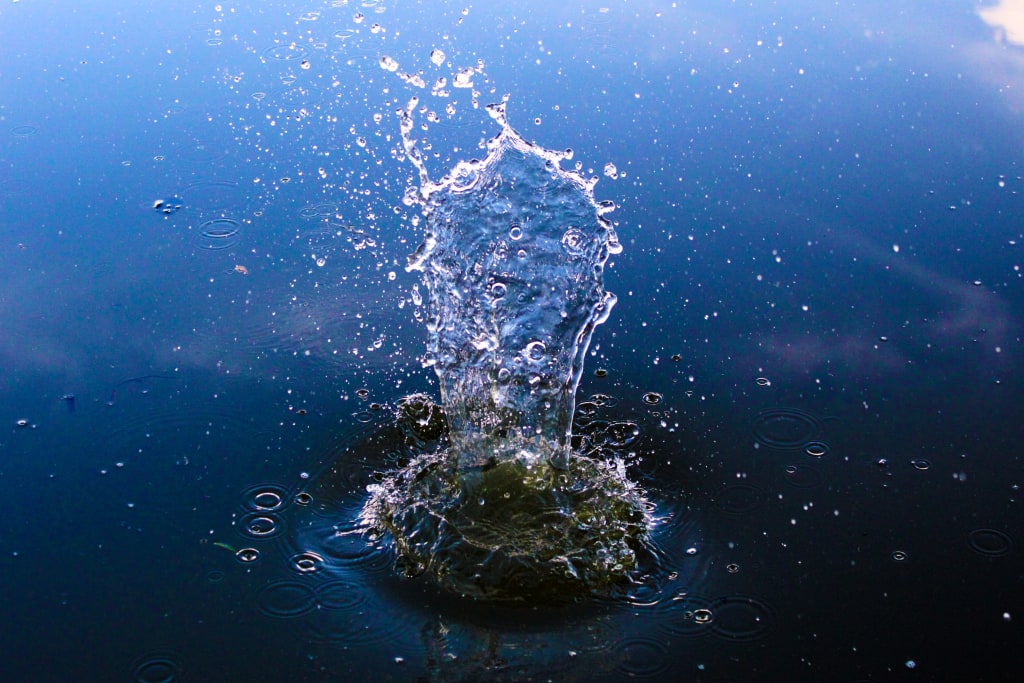
The presence of water on Earth is believed to be the result of several processes that occurred over billions of years. The most widely accepted theory is that water came to Earth through a combination of processes involving the early solar system and the planet's geological activity.
Water is thought to have been present in the form of ice in the protoplanetary disk that surrounded the young Sun about 4.6 billion years ago. As the planets were forming, icy bodies such as comets and asteroids containing water were likely present in the outer regions of the solar system.
Around 4.4 billion years ago, during a period known as the Late Heavy Bombardment, the inner planets, including Earth, experienced intense asteroid and comet impacts. These impacts are believed to have brought significant amounts of water to our planet. The water-rich objects collided with Earth, delivering water in the form of ice that eventually melted and contributed to the formation of oceans.
Another theory suggests that water could have also been produced on Earth through volcanic activity. Volcanoes release gases, including water vapor, into the atmosphere. Over time, as the planet cooled down, this water vapor condensed and fell as rain, contributing to the formation of oceans.
Determining the exact timeline of when water arrived on Earth is challenging due to the limited geological evidence available from that time. However, scientists believe that water was present on Earth's surface at least 4 billion years ago, relatively early in the planet's history.
It's important to note that our understanding of the origins of water on Earth is still evolving, and ongoing research and exploration contribute to further insights into this fascinating topic.

Theories and Processes Shaping Earth's Watery Beginnings
Introduction:
Water is a fundamental substance for life as we know it. The presence of water on Earth is not only vital for supporting various ecosystems and enabling the existence of diverse organisms, but it also plays a significant role in shaping our planet's geological processes. However, the origin of water on Earth has long been a subject of scientific inquiry and debate. In this article, we will explore the theories and processes that contribute to our understanding of how water came to exist on Earth, examining the early solar system, cometary bombardment, volcanic outgassing, degassing of the mantle, delivery by asteroids, and the role of cosmic dust and the interstellar medium.
Early Solar System:
To comprehend the origin of water on Earth, we must look back to the formation of the solar system. Approximately 4.6 billion years ago, a massive molecular cloud collapsed, leading to the birth of the Sun and the protoplanetary disk—a swirling disk of gas and dust surrounding the young star. Within this disk, small dust particles began to collide and stick together, forming larger objects known as planetesimals. Water in the form of ice was present in the protoplanetary disk, especially in the outer regions where temperatures were low enough for it to condense. As planetesimals continued to grow through accretion and gravitational attraction, some of them likely contained significant amounts of water.
Cometary Bombardment:
Approximately 4.4 billion years ago, the inner planets of the solar system, including Earth, experienced a phase known as the Late Heavy Bombardment. During this period, the planets were bombarded by a high number of asteroids and comets. Comets, in particular, are composed of icy material—primarily water ice—mixed with dust and other organic compounds. As comets collided with Earth, they delivered water in the form of ice to our planet's surface. The intense heat generated during these impacts would have caused the ice to melt, contributing to the formation of vast oceans.
Volcanic Outgassing:
While cometary bombardment played a crucial role in providing water to Earth, volcanic activity also contributed significantly to our planet's watery beginnings. Volcanoes are vents that connect the Earth's interior to the surface, allowing the release of gases and other materials. During volcanic eruptions, water vapor is released into the atmosphere along with gases like carbon dioxide and sulfur dioxide. Over time, as the Earth cooled down, the water vapor in the atmosphere condensed and fell as rain, eventually accumulating to form the early oceans. This process, known as volcanic outgassing, continues to occur today, replenishing the Earth's water cycle.
Degassing of the Mantle:
Another theory regarding the origin of water on Earth suggests that water may have originated from within the planet itself. The Earth's mantle, a layer located between the crust and the core, contains a variety of water-bearing minerals. As tectonic plates move and interact with each other, a process called subduction occurs, where one plate sinks beneath another. During subduction, water-rich minerals are carried into the mantle. Under high pressure and temperature conditions in the mantle, these minerals release their water content through a process called degassing. The released water can then rise back to the surface through volcanic activity, contributing to the formation of oceans.
Delivery by Asteroids:
In addition to comets, asteroids could have played a role in delivering water to Earth. Asteroids are rocky bodies that primarily orbit the Sun in the asteroid belt located between Mars and Jupiter. Some asteroids are known to contain hydrated minerals, indicating the presence of water in their composition. As asteroids collided with Earth in the early stages of the solar system's formation, they could have released water through the impact process. While the contribution of asteroids to Earth's water content may be smaller compared to comets, their role cannot be entirely discounted.
Cosmic Dust and Interstellar Medium:
Water molecules may have also been present in the dust and gas that existed in the interstellar medium—the vast space between stars—before the formation of the solar system. The interstellar medium contains various elements and compounds, including water vapor. As the molecular cloud collapsed to form the solar system, this interstellar material became incorporated into the protoplanetary disk. Some of these water molecules could have been part of the material that formed Earth, further contributing to our planet's water content.
Conclusion:
Understanding the origin of water on Earth is a complex scientific puzzle that involves the interplay of numerous processes and events. Theories and processes such as the early solar system, cometary bombardment, volcanic outgassing, degassing of the mantle, delivery by asteroids, and the role of cosmic dust and the interstellar medium all contribute to our current understanding. While ongoing research and exploration continue to shed light on this fascinating topic, the presence of water on Earth remains an essential factor in shaping our planet's habitability and supporting the remarkable diversity of life it hosts.
About the Creator
Anaz
Earth Related Topics
Green Earth: Nurturing Our Planet for a Sustainable Future
Reader insights
Nice work
Very well written. Keep up the good work!
Top insight
Heartfelt and relatable
The story invoked strong personal emotions
Robert Redford Remembered for His Mentorship of New Filmmakers at Sundance Gala
At this year’s Sundance Film Festival gala, the spotlight turned to Robert Redford, not only as a legendary actor and filmmaker but as a mentor who nurtured countless emerging talents. Attendees, including directors, producers, and actors, shared heartfelt stories about how Redford’s guidance transformed their careers and inspired a new generation of filmmakers. A Legacy Beyond Acting Robert Redford’s career in Hollywood spanned decades, with iconic roles in films like Butch Cassidy and the Sundance Kid, All the President’s Men, and The Sting. However, his impact extends far beyond the screen. As the founder of the Sundance Institute, Redford created a platform that championed independent voices, giving filmmakers the opportunity to explore creative freedom without the constraints of major studios. At the gala, festival director Tabitha Jackson remarked, “Redford didn’t just make films; he made futures. He believed in new voices long before they had a platform.” This sentiment resonated with many in attendance who credited their breakthroughs to Redford’s mentorship. Mentorship Through the Sundance Institute Founded in 1981, the Sundance Institute was born out of Redford’s vision to support independent filmmaking. Over the years, the institute has: Offered labs, workshops, and grants to new filmmakers. Provided mentorship from established directors and industry professionals. Created a global platform for storytelling through the Sundance Film Festival, now recognized as one of the premier venues for independent cinema. Several filmmakers who attended the gala recounted how Redford personally encouraged them to take creative risks, even when their ideas seemed unconventional. His approach emphasized storytelling authenticity over commercial considerations, a principle that has influenced countless careers. Voices From the Gala Emerging filmmakers at the event shared touching memories of Redford’s influence: Director Maya Johnson recalled how Redford reviewed her early short film and offered constructive advice, helping her refine her narrative voice. Producer Alex Chen highlighted Redford’s commitment to inclusive storytelling, encouraging him to amplify underrepresented voices in cinema. Actor Lila Martinez reflected on the actor-director’s ability to instill confidence in new talent, reminding them that their perspective mattered. These personal testimonies painted a portrait of Redford not only as an industry icon but as a guiding presence committed to cultivating the next generation of storytellers. Redford’s Philosophy on Filmmaking Redford often spoke about the importance of creativity, authenticity, and collaboration in filmmaking: Creativity over commerce: He encouraged filmmakers to prioritize artistic integrity. Mentorship as legacy: Redford believed sharing knowledge was key to sustaining the art form. Risk-taking: He frequently reminded young directors that innovation comes from challenging norms and exploring new perspectives. These principles remain at the heart of the Sundance Institute and the broader independent film community. The Global Influence of Sundance Thanks to Redford, Sundance has become a global platform for independent cinema, with programs reaching filmmakers in Europe, Asia, Africa, and Latin America. Through labs, festivals, and initiatives, Redford’s influence extended far beyond the U.S., helping shape a diverse, international community of filmmakers. Sundance alumni have gone on to create films that have won Oscars, Golden Globes, and international awards, underscoring Redford’s impact on the global film industry. Honoring Redford’s Legacy The gala featured a tribute montage highlighting Redford’s contributions as an actor, director, and mentor. Clips included moments of him guiding young filmmakers, presenting awards, and reflecting on his own journey in the industry. Many attendees emphasized that Redford’s greatest legacy may not be his iconic films, but the careers he helped launch. Festival director Jackson noted, “Every filmmaker here carries a piece of Robert’s wisdom. His mentorship continues to ripple through every frame of independent cinema.” Redford and the Future of Independent Filmmaking As the independent film landscape evolves—with streaming platforms, AI tools, and global collaboration becoming more prevalent—the foundations laid by Redford and Sundance remain vital. His mentorship model demonstrates that investing in people and ideas creates lasting cultural impact, ensuring that independent voices continue to thrive. Emerging filmmaker Jordan Reyes commented, “Redford taught me that every story has value. That lesson shapes how I create and support others in my community today.” Personal Reflections and Anecdotes Many festival attendees shared anecdotes reflecting Redford’s humility, approachability, and passion for storytelling: Despite his fame, he would sit in small discussion circles with young filmmakers, offering advice and encouragement. He often hosted informal gatherings at his homes or lodges, creating spaces where filmmakers could network, learn, and experiment. His presence at Sundance was consistently an inspiration to those navigating the challenges of independent filmmaking, providing mentorship that was practical, emotional, and motivational. These stories underscored that Redford’s mentorship was not just professional—it was personal and transformative. Final Thoughts Robert Redford’s remembrance at the Sundance gala served as a celebration of mentorship, vision, and the power of independent cinema. Beyond the accolades and cinematic achievements, his enduring legacy lies in the careers he nurtured, the voices he amplified, and the creative risks he inspired. The festival’s message was clear: while Redford may no longer be present in every Sundance discussion, his influence lives on through the filmmakers he mentored, ensuring that independent storytelling continues to thrive, evolve, and inspire future generations. For the community of filmmakers, audiences, and cinema lovers worldwide, Redford’s legacy remains a beacon of mentorship, creativity, and dedication to storytelling.
By Muhammad Hassan6 days ago in Earth



Comments (4)
Anaz, WOW!!! So much research must have gone into this article. Such a lot of information packed into a little space. Well done. I have never before considered the importance of water. I certainly will from now on. I just love paddling and swimming in it. I am new to Vocal and wish I had found it, sooner. Thank you for your vote of confidence by subscribing to me. I hope you enjoy my articles. All dedicated to my simple love for God. If you would like to read all my articles, they are found on medium.com Again, thank you. I too carry out a lot of research. Cannot get it wrong when you are writing about God, yes?
nice sr.
Certainly the water plays a vital part in maintaining and sustaining life on earth. Almighty the Sustainer says in his revelation The Quran "With the water we gave life to every being.
good