

History of Nilgiris
The history of Nilgiris dates back to eleventh and twelfth century. The Nilgiris was first mentioned in Silapathikaram. The Nilgiris was part of the Kingdoms ruled by most of the rulers of South India viz. the Cheras, the Cholas, the Pandiyas, the Rashtrakutas, the Ganges, the Pallavas, Kadambas and the Hoysalas. The illustrious king of Hoysalas Vishnuvardhana (A.D. 1111-1141) had conquered Nilgiris and turned the Nila mountains into a city.

Modern Period
The Nilgiris was part of the Vijayanagar Kingdom from 1336 to 1565. After its fall in 1565 the rulers of Mysore gained control over the Nilgiris. Later it came under the rule of Hyder Ali and Tipu Sultan (1760 to 1799). The Nilgiris was ceded to the East India Company in 1799 by a Treaty of Srirangapattanam. However this beautiful mountainous region was unknown to British until 1818.
It was John Sullivan, an Englishman and Collector of Coimbatore, who was destined to have greater cultural impact on the Nilgiri hills than any other single person, Indian or European. He had a strong love of Nature and propensity for Agriculture and Gardening. He was the first European official to build a house and settle there.
British Rule and John Sullivan’s contribution to the city
The Nilgiri Mountains came to be administered by the ‘East India Company’, under the treaty of Srirangapatnam in 1799. In the year 1818 Wish and Kindersley, Assistant and Second Assistant to the then collector of Coimbatore, visited the areas and submitted the reports of their visit. Later the collector, John Sullivan himself visited the spot and was captivated by the beauty of these hills and compared it to Switzerland. In 1822, Sullivan accquired a portion of Toda land and constructed his bugalow, which now stands here as an important tourist spot, called the ‘Stone House’. It was the first European House in Ooty. He founded Ooty, by placing it in the world maps.
John Suvillian's significant additions to present day Ooty cannot be overlooked. He was not the first to visit Nilgiris, but was the first person to recognize the serenity and potentiality of these beautiful hills. He came to the wooded land in 1819 and constructed the roads from Sirumugai near Mettupalayam to Dimbhatti in Kotagiri. Further the routes to Conoor also were laid and completed in 1832 helping develop the connectivity of the place. The location turned into a well-liked summer retreat for British officers.
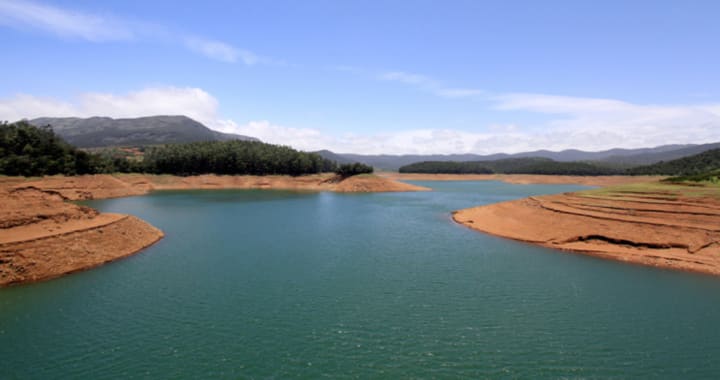
The pivotal Ooty Lake is a construction of Sullivan. The lake was formed damming the small streams around the place for irrigation purposes. Now the Lake still survives as the most popular tourist attraction of Ooty. Sullivan also introduced better agricultural practices in the surrounding areas and among the locals. He also introduced teak and chinchona tree plantations that are still an inevitable part of Ooty’s agricultural economy. He introduced tea and many European varieties of wheat and barley, hence changing the social and economical face of Ooty.
Slowly the city was uplifted to have a semblance to Old England. Club Houses, Riding stables , kennels, churches and summer cottages of civil servants and Maharajas came to Ooty, completely revamping the way the city looked. The year 1891 saw the commencement of construction of Nilgiri Railways. The Conoor-Frenhill Railway was complete by 1907 under South Indian Railways that purchased the line and assumed the charge of construction
Tourist Places in Nilgiris
1.Government Rose garden

2.Government Botanical Garden

3.Boat House

4.Mountain Train

5.Doddabetta

Best Season to Visit Nilgiris(Ooty)
Travel Seasons Min/Max Temperature Season
October - February 5-22°C Cold and windy
March - May 15-30°C Pleasant
June - September 12-25°C Heavy rainfall
About the Creator
Global Markets on Alert as Europe Suspends Approval of US Trade Deal
Global financial markets are on high alert following Europe’s announcement that it will suspend approval of a major US trade deal, a decision that has sent shockwaves across stock exchanges, currency markets, and investment forums worldwide. The move comes amid growing concerns over trade imbalances, regulatory disputes, and geopolitical tensions between the United States and European Union. Economists warn that the suspension could create ripple effects across global supply chains, impacting everything from manufacturing and energy to technology and agriculture. The Trade Deal in Question The US-EU trade agreement, intended to streamline tariffs, boost investment, and harmonize regulations between the two economic powerhouses, had been widely anticipated as a game-changer for transatlantic commerce. Negotiations had taken years, with both sides seeking to protect sensitive industries while opening markets for goods and services. However, Europe’s decision to halt the deal reflects mounting concerns over the potential impact on domestic industries and regulatory standards. EU officials cited the need for further review of compliance with environmental, labor, and consumer protection regulations before giving the agreement a green light. While not a full cancellation, the suspension introduces uncertainty and highlights the fragility of international trade negotiations in the current geopolitical climate. Immediate Market Reactions Financial markets reacted swiftly. Stock indices in Europe, the US, and Asia experienced volatility as investors recalibrated expectations for corporate earnings, trade flows, and economic growth. Commodity markets, particularly oil and agricultural products, also saw price fluctuations as supply chain uncertainties increased. The US dollar strengthened slightly against major currencies, reflecting investor demand for perceived “safe-haven” assets amid uncertainty. Meanwhile, European stock markets experienced moderate declines, particularly in sectors most dependent on transatlantic trade, such as automotive, aerospace, and industrial machinery. Investment analysts caution that this volatility may persist as both sides negotiate next steps. Market participants are monitoring political statements, regulatory filings, and industry responses closely to gauge the potential timing and scope of any eventual agreement. Broader Economic Implications Beyond immediate market movements, the suspension of the trade deal could have broader consequences for global economic growth. Reduced trade flows between the US and EU may affect multinational companies that rely on predictable tariffs and harmonized regulations. Sectors such as technology, pharmaceuticals, and energy could face delays in approvals, increased costs, or regulatory conflicts. Emerging markets may also feel the impact indirectly. Many countries are linked to transatlantic supply chains, exporting components, raw materials, or services to Europe or the United States. Any slowdown in EU-US trade could ripple through global production networks, affecting economic growth and employment in distant regions. Political Dimensions The suspension is not purely economic; it also has significant political implications. EU leaders are facing domestic pressures to safeguard industries, protect workers, and maintain environmental and safety standards. At the same time, US officials are emphasizing the strategic benefits of transatlantic cooperation and the risks of prolonged uncertainty. This tension underscores the broader challenge of balancing national interests with the benefits of globalization. Trade agreements are rarely purely transactional; they carry social, political, and environmental stakes. Europe’s decision to pause approval reflects a cautious approach in a time of global volatility, including ongoing geopolitical conflicts, energy security concerns, and fluctuating financial markets. Expert Analysis Economists and trade experts suggest that while the suspension introduces short-term uncertainty, it does not necessarily mean the collapse of the US-EU trade agreement. “This is a temporary pause,” says Dr. Elena Fischer, an international trade analyst. “Europe wants to ensure that the deal aligns with regulatory and sustainability standards. Once concerns are addressed, there is a strong likelihood that negotiations will resume and the agreement will eventually move forward.” Others, however, warn that delays could embolden protectionist tendencies and encourage other nations to reconsider or renegotiate trade agreements. The current global environment—marked by rising inflation, energy price volatility, and ongoing geopolitical tensions—makes international cooperation more complex than ever. Industry Responses Businesses on both sides of the Atlantic are closely watching the developments. Large multinational corporations have expressed concern about the potential for regulatory divergence, increased compliance costs, and disrupted supply chains. Some industries, such as automotive manufacturers and tech companies, rely heavily on synchronized regulations and predictable tariffs to maintain profitability. Trade associations are urging governments to provide clarity and timelines to prevent prolonged uncertainty. Investors, meanwhile, are adjusting portfolios to hedge against potential volatility, emphasizing sectors that may be less affected by transatlantic trade fluctuations. Potential Next Steps The path forward likely involves further negotiation, regulatory review, and stakeholder consultations. European officials have indicated that they are committed to maintaining high environmental and labor standards, while US negotiators are advocating for rapid approval to support economic growth and stability. Observers expect a period of careful diplomacy, with both sides balancing domestic pressures against broader economic and strategic interests. While the market may continue to experience volatility, experts suggest that clarity will eventually emerge, either in the form of a revised deal or a timeline for approval. Conclusion The suspension of the US-EU trade deal serves as a stark reminder of the delicate balance in global economic relations. Markets respond instantly to news and sentiment, while underlying economic, political, and regulatory considerations unfold more slowly. Investors, businesses, and policymakers must navigate these uncertainties carefully, weighing risks and opportunities in an interconnected world. As Europe pauses to ensure compliance and protect domestic interests, the global community watches closely. The resolution of this trade issue will not only shape transatlantic commerce but could influence global trade norms, investor confidence, and economic growth for years to come. For now, the message is clear: in an era of complex international relationships, vigilance and strategic foresight are paramount for global markets.
By Muhammad Hassan5 days ago in Earth
Trump, 79, Revives Greenland Fantasy With Absurd AI Post
Former U.S. President Donald Trump, now 79, has once again drawn global attention after posting an artificial intelligence–generated image related to his long-standing interest in Greenland. The post, which quickly spread across social media platforms, revived memories of Trump’s earlier and widely criticized proposal to purchase the autonomous Danish territory during his presidency. While the idea was dismissed years ago as unrealistic, the latest AI-driven revival has reignited public debate—this time centered on the role of artificial intelligence, political messaging, and credibility in the digital age.
By Aarif Lashari2 days ago in Earth



Comments
There are no comments for this story
Be the first to respond and start the conversation.