
The Mystery of the Extinction of the Biggest Monkey King "Gigantopithecus Blacki"
Discover the mystery of the largest ape on earth

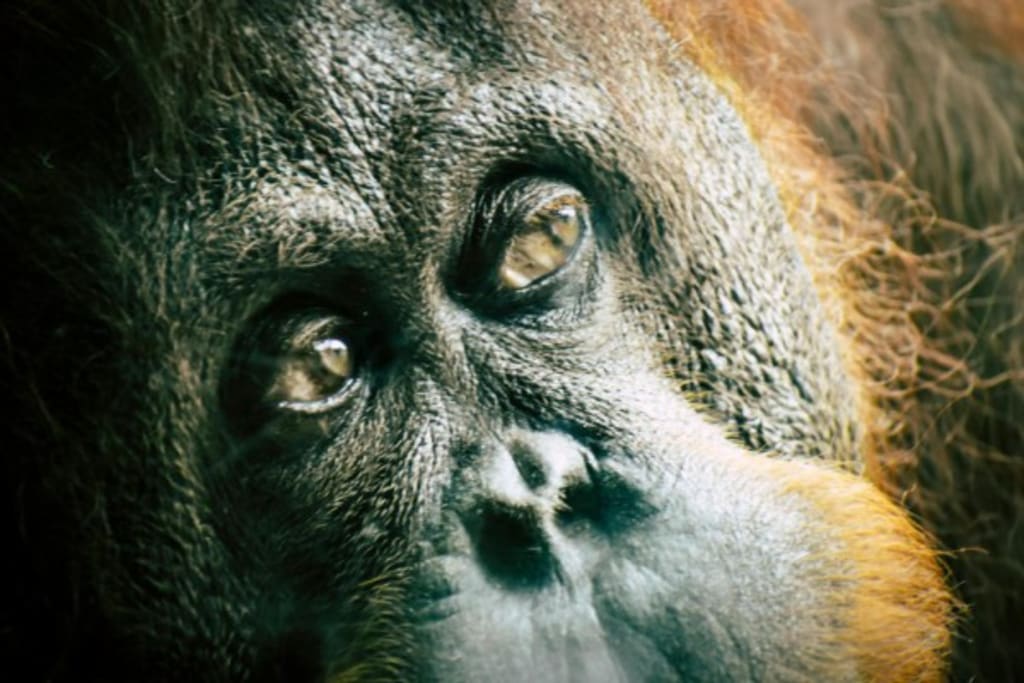
The mystery of the extinction of the king of monkeys on earth, "Gigantopithecus blacki", which is the largest monkey on earth, is starting to be revealed. The lack of nutritional fruit and environmental changes may be the cause, when today's great apes or ancient apes were able to survive amidst natural changes that occurred 300,000 years ago.
With an estimated height of 3 meters and a weight of 200-300 kilograms, or three times the size of today's orangutans, which are the largest megafauna in Southeast Asia.
"Its extinction is truly mysterious, considering that this ape is one of the few great apes in Asia that became extinct in the last 2.6 million years, while other great apes, including orangutans, still survive today," explained Zhang et al. [2024], in research entitled "The demise of the Giant Ape Gigantopithecus blacki" published in the Nature Journal, Wednesday [10/1/2024].
Efforts to uncover this mystery began with anthropologist Ralph von Koenigswald who discovered a large monkey tooth in a Hong Kong pharmacy, almost 90 years ago. Initially, these teeth were thought to be 'dragon teeth', due to the large size of the molars and the unusual thickness of their outer layer.
“Small fossil evidence makes it difficult to get an accurate picture of G. blacki, especially the circumstances that led to the species' disappearance,” explained the study's co-author, Kira Westaway, a geochronologist at Macquarie University, Sydney, Australia.
Not satisfied, Westaway and colleagues analyzed fossils and sediments from 22 caves in the Chongzuo and Bubing Basins in southern China.
The researchers also analyzed the chemical traces of G. blacki's tooth enamel to see how its diet changed over time, then compared them with those seen in the teeth of its close relative, Pongo weidenreichi.
Through analysis of G. blacki teeth from this period, the researchers also discovered several distinct bands of various trace elements. The clearer and clearer the lines, the more elements the tooth contains. This means that the giant ape ate a variety of foods and drank a lot of water.
Then, through pollen analysis, the extinction of G. blacki was triggered by a change in the landscape to a more open forest landscape due to drastic seasonal changes, since 700,000 years ago.
In this period, G. blacki's tooth lines become increasingly blurred, a sign that it is forced to consume less nutritious and fibrous food due to the scarcity of water sources and its favorite food in the forest. Fewer fossil discoveries during this period indicate that the population was decreasing.
“Compared to other well-known extinction events in North America and Australia that were influenced by Homo sapiens, there is no evidence to suggest that ancient hominins played a role in previous megafauna extinction events in southern China,” Zhang said.
On the other hand, if G. blacki is only able to live on land and has to walk down the valley just to get water, the arboreal Pongo weidenreichi moves up the trees to get water around the leaf canopy.
In an environmental crisis situation like this, large body size also seems to be less beneficial for G. blacki, because it requires a higher food intake, so its growth pattern becomes slower and delayed. This means the reproduction rate is lower.
“G. blacki experienced an increase in tooth size during the Pleistocene, meaning an increase in body size, whereas P. weidenreichi experienced a decrease, making it a more agile adapter.”
P. weidenreichi also shows flexibility towards open habitats, potentially moving in smaller groups and being able to adapt its behavior in response to environmental changes thereby reducing population pressure.
Pongo weidenreichi also managed to adapt its food preferences and behavior to these changes, while G. blacki showed signs of chronic stress and population decline.
G. blacki was a major specialist and as its arboreal environment changed, its struggle to adapt determined its fate. “Eventually it went extinct,” he explains.
That is the path to extinction of the "Monkey King" Gigantopithecus blacki, the Largest Monkey on Earth.
About the Creator
Wisnu ms
a simple man
What’s Going On in the World Nowadays?
The world today feels louder, faster, and more divided than ever before. News travels in seconds, crises overlap, and societies are undergoing changes that once took decades to unfold. From political instability and economic pressure to rapid technological growth and shifting social values, humanity is standing at a crossroads. To understand what is truly going on in the world nowadays, we must look beyond headlines and examine the deeper forces shaping our present and future.
By shaoor afridi3 days ago in Earth



Comments
There are no comments for this story
Be the first to respond and start the conversation.