
The Mystery Behind Earth’s Most Epic Migration
The Diel Vertical Migration (DVM)

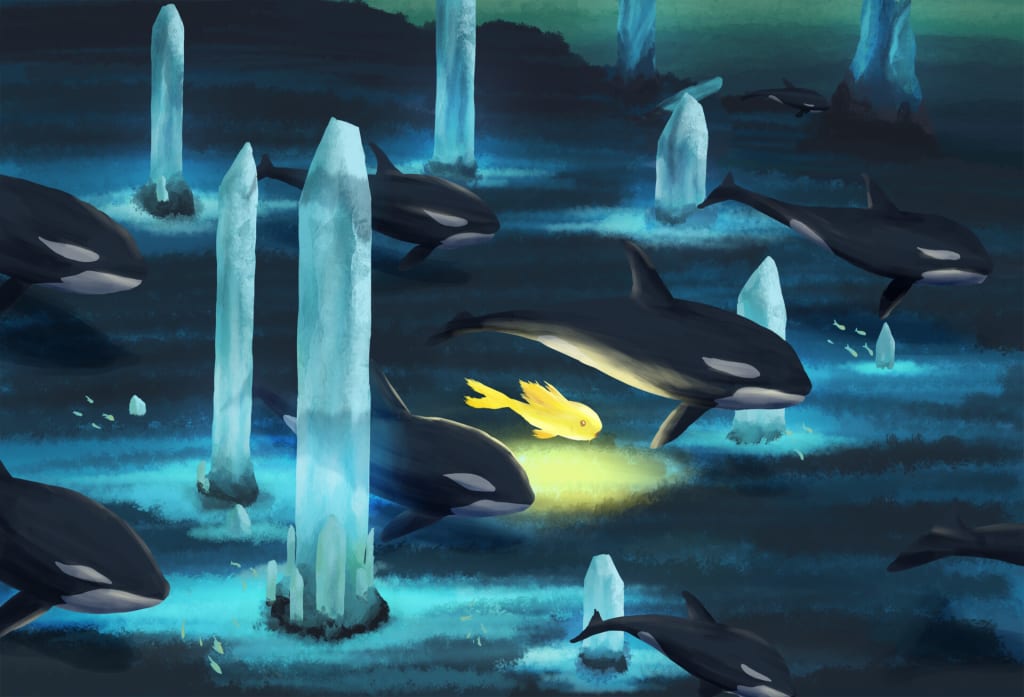
In the animal kingdom, migration is a common phenomenon and one of the most incredible migrations on Earth happens every night, underwater. Every night, the largest animal migration takes place in the depths of the ocean, as billions of tiny creatures, known as zooplankton, ascend to the surface to feed and then return to the depths as the sun rises. This vertical movement of zooplankton in the ocean is called the diel vertical migration (DVM), and it occurs in every ocean on the planet, making it the largest net animal movement in the world.
Zooplankton are tiny creatures, typically no larger than the tip of a crayon, and their journey from the depths to the surface and back again is an astonishing feat of endurance. To put it into perspective, if we were to scale this migration to a human, it would be equivalent to running two 10Ks a day, with a swimming speed twice that of an Olympic marathon runner.
The DVM is a well-known phenomenon among scientists, and it is thought to be one of the most common behaviors in the ocean. It is not only zooplankton that undergo DVM, but also larger animals, such as small fish, which follow the vertical migrations of the zooplankton.
The reason for this incredible daily journey by zooplankton has long puzzled scientists. It was not until World War II when submarines recorded strange dense signals rising from the deep as if parts of the ocean floor were moving up and down by as much as 3,000 feet, that scientists discovered the secret of the DVM. The sonar was actually detecting huge masses of tiny animals, known as zooplankton, ascending from the depths to the surface every night and returning down again.
The DVM is a real dance by these tiny creatures to find food, which is most abundant in the surface waters where photosynthesis lets things grow. However, zooplankton have to avoid becoming dinner for something else, and if they want to do so, they need to be in the dark. So, most often, they stay deep in the dark during the day and then as the sun sets, they migrate up to the surface before leaving again at sunrise.
The DVM is not only fueled by changes in sunlight, but also by moonlight. For instance, scientists studying zooplankton in the Arctic saw that during the long, dark winter months, zooplankton responded to moonlight instead. Thus, it seems that these tiny creatures respond to any changes in light, whether from the sun or the moon.
The DVM is an incredible migration that scientists are still trying to understand. By using sound to study the lives of ocean animals, scientists are able to get a complete picture of what's happening far away from what they can ever see when sitting on a ship at the surface. They send out a short pulse of sound and interpret how it echos off the animals in the habitat with low tech tools like nets but also with new techniques, looking for evidence of the DNA that these animals leave behind in the water column.
Thanks to all this high-tech study, scientists have gained a better understanding of the DVM and the creatures that undergo this journey. It is changing what we know about plankton altogether. It is fascinating to think that the largest migration on Earth happens every night and is hidden from our view, but it is also a reminder of the incredible diversity of life on our planet and the mysteries that still await discovery.
In conclusion, the diel vertical migration is the largest animal migration on Earth, occurring every night, underwater. It is a remarkable journey by billions of tiny creatures, known as zooplankton, from the depths to the surface and back again.
About the Creator
Keep reading
More stories from Tsar Banks and writers in Earth and other communities.
ARE HUMANS STILL EVEOLVING?
The typical human has a one- to two-minute underwater breath-holding capacity. However, the Bajau people of a Southeast Asian archipelago regularly dive down to depths of more than 60 meters to catch fish, and they are able to hold their breath for up to 10 minutes.
By Tsar Banks3 years ago in Futurism
Whales should be protected!
Carbon dioxide is one of the main gases responsible for global warming. When too much carbon dioxide builds up in the atmosphere, it traps heat from the sun and causes the Earth’s temperature to rise. If this problem continues without control, it could lead to serious environmental damage and may even make parts of the Earth difficult for humans and animals to live in. Therefore, it is important to find natural ways to reduce carbon dioxide levels. One surprising but very important solution is protecting whales, as they play a role in storing carbon in their bodies and supporting ocean ecosystems.
By *+*+*~Teja~*+*+*2 days ago in Earth


Comments
There are no comments for this story
Be the first to respond and start the conversation.