
The Million-Year-Old Skull That’s Rewriting Human Evolution
How a fossil found in China is shaking up the timeline of our species’ origins

Introduction
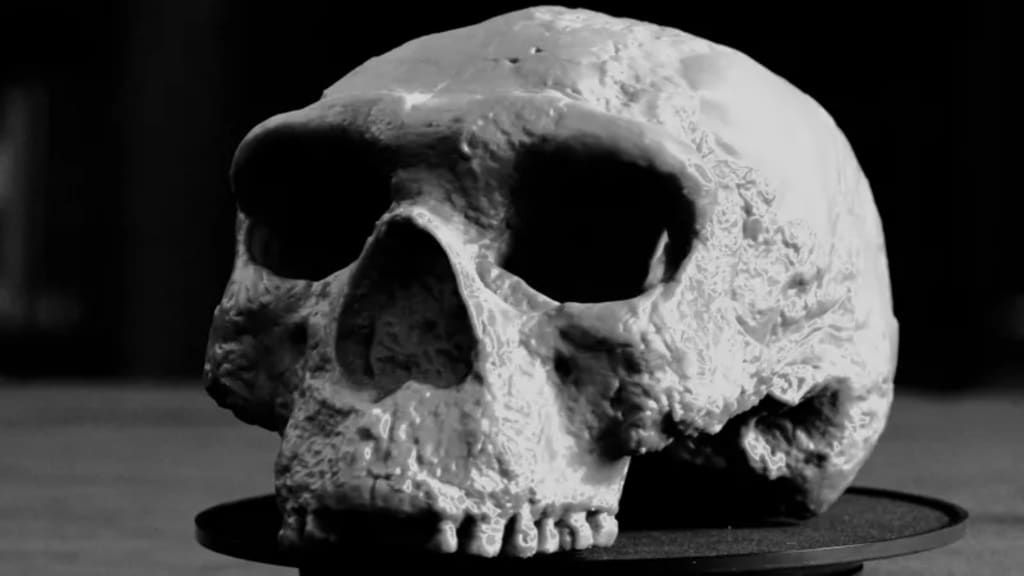
In recent years, paleoanthropology has been rocked by a discovery that forces us to re-examine long-held assumptions about when and where modern humans and their close relatives diverged from archaic lineages. A skull dated at almost one million years old, originally thought to be Homo erectus, is now reshaping our understanding of human origins. This find—known as Yunxian 2 from Hubei Province in China—has been digitally reconstructed and reclassified, suggesting a more complex evolutionary story than previously believed.
The Skull and Its Reclassification
Discovery background: Yunxian 2 was originally unearthed in the early 1990s in Hubei Province. It was classified at the time as a Homo erectus specimen.
Reanalysis using modern methods: Recent advances in virtual reconstruction—digital imaging, 3D modelling—allowed scientists to examine the skull in ways not previously possible, revealing anatomical features inconsistent with typical Homo erectus specimens.
The Guardian
New classification: Based on these traits, Yunxian 2 is now considered to belong to a species closely related to Homo longi (sometimes colloquially called “Dragon Man”) and possibly part of the lineage that includes Denisovans. This repositioning suggests that this skull occupies a branch of the human family tree more closely related to Homo sapiens than was once thought.
What It Rewrites in Our Timeline
Earlier divergence of lineages
Previously, many models placed the split between Homo sapiens and other archaic human lineages (like Neanderthals or Denisovans) somewhere around 500,000-700,000 years ago. Yunxian 2 suggests that some of those divergences may have occurred over one million years ago.
Geographic implications
The discovery in China provides strong evidence that parts of human evolution occurred outside Africa, or that Asia played a more significant role than formerly believed. The mixture of traits in Yunxian 2 complicates a strictly “Out of Africa” narrative, showing that archaic hominins in Asia may have evolved in relative isolation or had distinct evolutionary paths.
Filling gaps (the muddle in the middle)
Paleoanthropologists often refer to the period between ~300,000 and 1 million years ago as confusing—many species, fragmentary fossils, uncertain relationships. Yunxian 2 helps fill that gap, giving concrete morphological data from a skull that is nearly one million years old and well preserved enough to discern meaningful traits.
Key Anatomical Features
Braincase and facial structure: Yunxian 2 has a large braincase more similar in proportions to Homo longi and other archaic humans (including what we know about Denisovans) than to many Homo erectus fossils.
Unique mix of primitive and derived traits: While showing advanced cranial capacity, there are also more “archaic” features—such as certain facial structures—that are less modern. This blend suggests an evolutionary mosaic, rather than a clean, linear progression.
Why the Debate is Not Over
Though Yunxian 2 has stirred excitement, scientists warn that findings must be interpreted carefully:
Lack of genetic data: So far, this skull has not yielded usable DNA or proteins, making relationships inferred mainly from skull shape rather than genetic lineage.
Need for more fossils: One specimen—even one as informative as this—is not enough to definitively settle debates. Additional fossils of similar age and geography are needed to corroborate hypotheses.
Different models compete: Some genetic-based evolutionary models differ, positing later divergence times. Reconciling fossil data with genetic evidence is always a challenge.
Preservation and reconstruction biases: Fossils are often distorted, incomplete, or deformed. Digital and virtual tools help correct that, but there remains room for error.
Broader Implications
Rethinking human evolutionary maps: With Yunxian 2, Asia’s place in the human evolutionary saga becomes more central. It suggests that features we thought originated in Africa might have evolved in parallel or independently in Eurasian hominins.
Cultural and anthropological impact: Revising timelines and lineages has implications for understanding migrations, interbreeding, adaptation to climate, and cognitive development in early humans.
Scientific process showcased: This discovery highlights how technology (3D reconstructions, improved dating techniques) is critical to revising old categories and assumptions in paleoanthropology.
Conclusion
The Yunxian 2 skull is more than another fossil—it’s a potential pivot point in our understanding of what it means to be human, where we came from, and how different branches of our family tree diverged. At nearly a million years old, it forces us to stretch back timelines, reconsider geographic narratives, and appreciate the complexity of human evolution. As new discoveries come, we may find that what was once regarded as “known” becomes what must be reexamined—and rewritten.
About the Creator
Asad Ali
I'm Asad Ali, a passionate blogger with 3 years of experience creating engaging and informative content across various niches. I specialize in crafting SEO-friendly articles that drive traffic and deliver value to readers.
A Planet the Size of Earth with an Atmosphere Like Our Own
For centuries, humans have looked up at the night sky and wondered whether Earth is the only world capable of supporting life. Advances in modern astronomy have brought us closer than ever to answering that question. Recently, astronomers announced the discovery of a planet roughly the size of Earth with an atmosphere that appears surprisingly similar to our own. This finding has sparked excitement among scientists and renewed hope that life might exist elsewhere in the universe.
By Irshad Abbasi 6 days ago in Earth




Comments
There are no comments for this story
Be the first to respond and start the conversation.