
The Marvelous Tale of Earth's Formation and Its Dance of Rotation
The Mechanism of Earth's Rotation
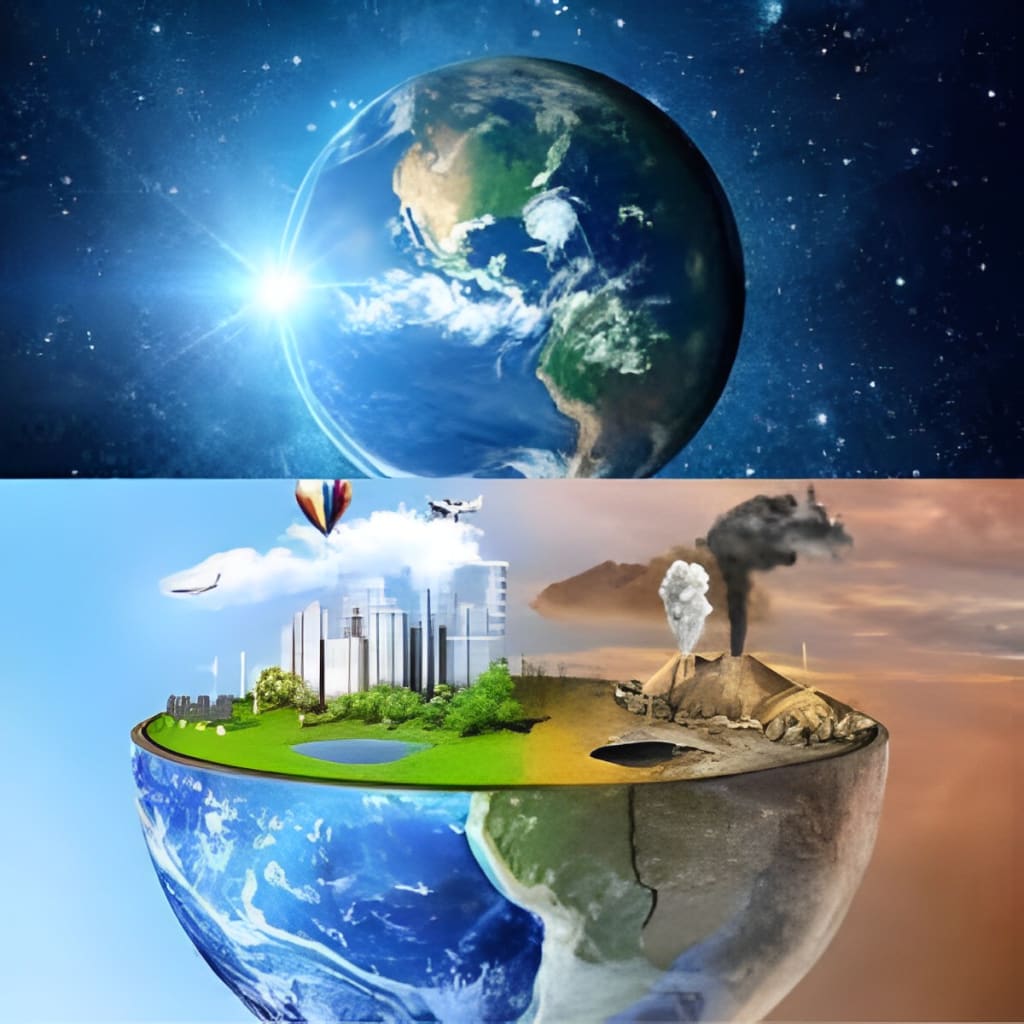
In the vast cosmic ballet that is our universe, our home planet Earth holds a unique position. It's not just our nurturing mother, but also a celestial dancer with a story as old as time itself. Join us on a journey through time and space as we unravel the mesmerizing tale of Earth's formation and the graceful rotation that sustains life.
Act I: The Cosmic Genesis
Billions of years ago, in the depths of space, a cloud of dust and gas began to coalesce under the influence of gravity. This humble beginning would set the stage for Earth's grand entrance. As the primordial cloud collapsed, it formed a swirling disk, and at the center, a nascent star - our Sun - was born. Around this stellar newborn, debris continued to collide and clump together, forming the seeds of planets.
Act II: Earth Takes Center Stage
In this swirling chaos, Earth emerged as a distinct entity. It began as a fiery ball of molten rock, constantly bombarded by other celestial bodies. Over eons, it gradually cooled, and its surface solidified. As this remarkable transformation occurred, Earth assumed its starring role in the cosmos.
Act III: The Dance of Rotation
One of Earth's most captivating features is its rotation. Like a cosmic pirouette, our planet gracefully spins around its axis. This rotation is the engine of day and night, of seasons, and of the planet's overall climate.
At its core, Earth's rotation is driven by the same force that brought it into existence: gravity. But it's not just about spinning; it's about the tilt. Earth's axis is tilted at about 23.5 degrees relative to its orbit around the Sun. This tilt is responsible for the changing seasons as different parts of the Earth receive varying amounts of sunlight throughout the year.
Act IV: The Gift of Rotation
Earth's rotation bestows upon us a host of gifts. First and foremost, it creates the cycle of day and night. As Earth turns, different parts of the planet are exposed to the Sun's warming rays, allowing life to thrive in diverse ecosystems.
Rotation also drives our planet's weather patterns, ocean currents, and atmospheric circulation. It's responsible for the trade winds that carried explorers and traders across the seas and the jet streams that influence our modern air travel.
Moreover, Earth's rotation provides stability. It prevents extreme temperature variations between day and night, creating the ideal conditions for life to flourish. Without this graceful dance, life as we know it might not have been possible.
Finale: Earth's Timeless Dance Continues
As we stand in awe of Earth's magnificent history and its ongoing rotation, we are reminded of the intricate choreography of the universe. Earth's formation and its graceful spin are the cornerstones of life as we know it. It's a story that continues to unfold, and we are privileged to witness and celebrate its timeless dance.
So, the next time you gaze at the night sky or feel the warmth of the sun on your skin, take a moment to appreciate the extraordinary tale of Earth's formation and its eternal rotation—a dance that sustains us all in this vast cosmic theater.
About the Creator
Keep reading
More stories from writers in Earth and other communities.
Venezuela Ships Its First LPG to the U.S.: A Historic Energy Move
Venezuela has reportedly shipped its first liquefied petroleum gas (LPG) cargo to the United States, marking a potentially historic shift in energy trade relations between the two countries. The move signals changing dynamics in global energy markets, regional diplomacy, and supply chain strategies as nations reassess energy security priorities.
By Aarif Lashari7 days ago in Earth
Hamptons Real Estate Prices Hit Record High as 2026 Summer Rentals in High Demand
The Hamptons, long synonymous with luxury, exclusivity, and summer getaways, has seen its real estate market soar to new heights in recent years. As we approach the summer of 2026, the area’s real estate prices are breaking records, and demand for vacation rentals has never been greater. While this trend is partly attributed to broader economic factors and changing work habits, it also signals an evolving landscape in the Hamptons real estate market that is shaping up to be one of the most competitive seasons in recent history.
By Ayesha Lashariabout 4 hours ago in Earth
Book Review: Atmosphere by Taylor Jenkins Reid
I flipped the book over in my hands in the centre of the small airport book shop. Although I had heard promising reviews of Atmosphere by Taylor Jenkins Reid, I hesitated. The synopsis didn’t compel me - I wasn’t much of a space girly. In high school it made me cringe when my peers would talk about the stars.
By sleepy drafts6 days ago in BookClub




Comments
There are no comments for this story
Be the first to respond and start the conversation.