
The Mariana Trench: Earth's Most Mysterious and Dangerous Place
The Mariana Trench: Earth's Most Mysterious and Dangerous Place

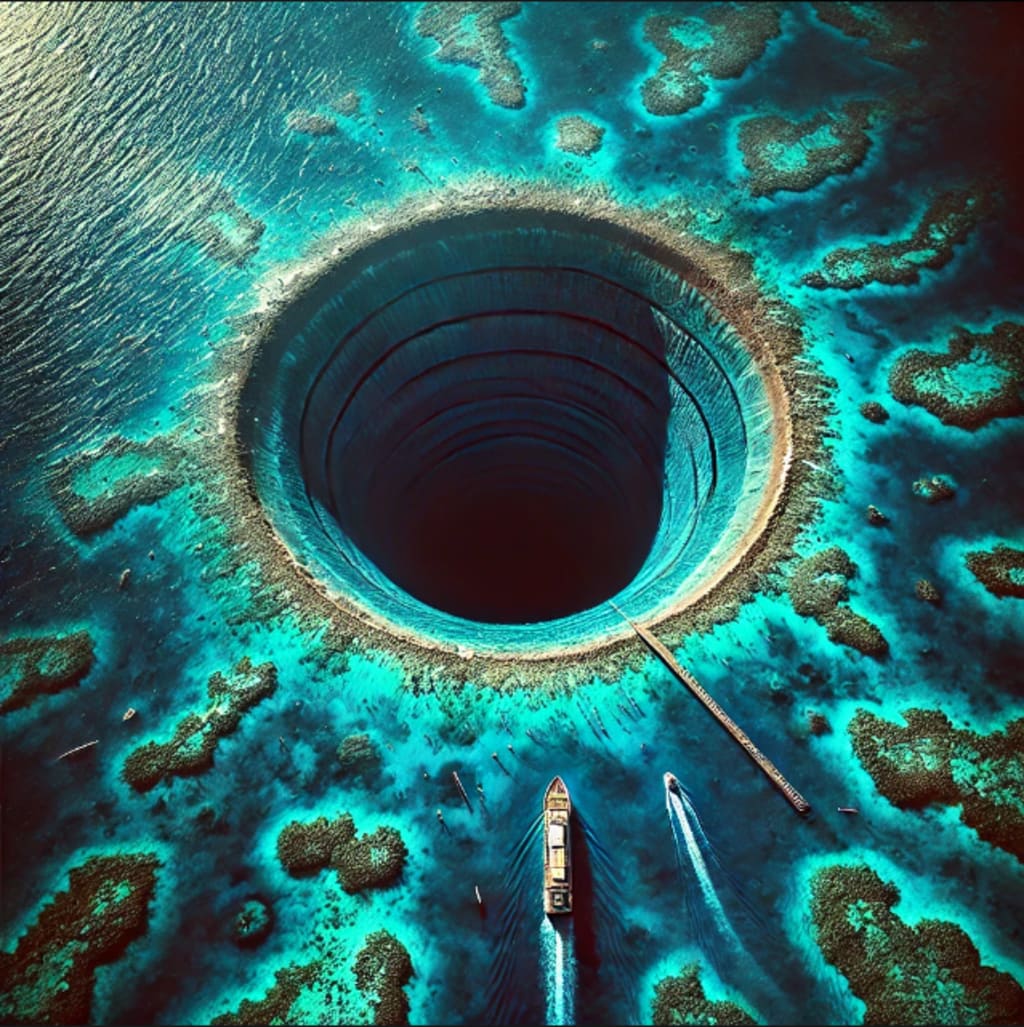
The Mariana Trench, a crescent-shaped scar in the Earth’s crust, plunges into darkness deeper than any other point on the planet. Located in the western Pacific Ocean near the Mariana Islands, this trench boasts an incredible depth of approximately 36,000 feet (10,972 meters) at its lowest point, the Challenger Deep. The Mariana Trench is not only the deepest place on Earth but also one of its most dangerous due to its extreme conditions, unique ecosystem, and potential environmental threats.
1. Unfathomable Depths
The Mariana Trench's depth alone makes it one of the most treacherous environments on Earth. To put its scale into perspective, if Mount Everest, the tallest mountain on Earth, were placed inside the trench, its summit would still lie over 1.6 kilometers beneath the ocean’s surface. The crushing pressure at the bottom of the trench is about 1,000 times greater than atmospheric pressure at sea level, equivalent to having 50 jumbo jets stacked on your shoulders.
Humans have only been able to explore the trench using advanced technology. Even then, the risks are immense. Any slight malfunction in submersible technology at these depths can be catastrophic, leaving no chance for recovery. The extreme depth makes this region largely inaccessible, adding to its mystery and danger.
2. Extreme Pressure and Temperature
The conditions in the Mariana Trench are inhospitable to most known life forms. The pressure is so high that it can crush most organisms or equipment not specifically designed to withstand it. Specialized submersibles, such as the Trieste in 1960 and the Deepsea Challenger in 2012, are some of the few crafts that have made successful descents to the Challenger Deep.
Temperatures in the trench hover just above freezing, except near hydrothermal vents where scalding water rich in minerals gushes out. These temperature extremes create an environment unsuitable for most life as we know it, but some organisms, known as extremophiles, have adapted to these harsh conditions.
3. Unique and Alien Ecosystems
Despite the extreme environment, the trench hosts a variety of unique life forms. These include amphipods, sea cucumbers, and xenophyophores—giant single-celled organisms that thrive in the crushing depths. These organisms are specially adapted to survive where others cannot, but they remain largely mysterious due to limited scientific exploration.
Bioluminescent creatures, which emit their own light, also inhabit the trench. They use their glow for communication, predation, and camouflage, making them both fascinating and eerie. This ecosystem is fragile, and any disruption, such as deep-sea mining or pollution, could have devastating effects.
4. Geological Instability
The trench is a site of intense geological activity. It marks a subduction zone where the Pacific Plate is being forced under the smaller Mariana Plate. This movement generates frequent earthquakes and has the potential to trigger tsunamis. The immense geological forces at play make the trench one of the most unstable and dangerous places on Earth.
In addition, the trench is home to hydrothermal vents and mud volcanoes, which release superheated water and toxic chemicals into the ocean. These phenomena can alter the local environment dramatically and pose significant challenges to both marine life and potential human exploration.
5. Pollution and Human Impact
One might think that the Mariana Trench, being so remote and deep, is untouched by human activity. Unfortunately, this is not the case. Scientific explorations have found evidence of pollution in the form of microplastics, chemical contaminants, and even radioactive isotopes from nuclear testing. These pollutants have been detected in organisms living at the bottom of the trench, illustrating the far-reaching impact of human activity.
The presence of such contaminants raises concerns about the trench’s long-term health and its role in the global ecosystem. It also highlights humanity’s responsibility to protect even the most remote parts of our planet.
6. Potential Environmental Threats
The trench has been considered for deep-sea mining and waste disposal, raising ethical and environmental concerns. Mining for rare-earth minerals could disrupt the delicate ecosystem, while waste disposal might introduce even more pollutants into an already vulnerable environment.
Additionally, some scientists speculate that the trench could harbor microbes capable of producing harmful effects if brought to the surface. While such claims remain largely theoretical, they underline the potential risks associated with disturbing this alien-like environment.
7. A Window Into Earth's Secrets
Despite its dangers, the Mariana Trench holds immense scientific value. It offers insights into the origin of life, the adaptability of organisms to extreme environments, and the geological processes shaping our planet. By studying the trench, scientists can better understand Earth's past and predict its future.
Moreover, the trench serves as an analogue for extraterrestrial environments, such as the icy oceans on Jupiter’s moon Europa or Saturn’s moon Enceladus. Exploring these depths could provide valuable knowledge for future space exploration missions.
Conclusion
The Mariana Trench is a place of unparalleled mystery and danger. Its extreme conditions, unique ecosystems, and potential environmental threats make it one of the most hazardous locations on Earth. Yet, it is also a frontier of scientific discovery, offering a glimpse into the resilience of life and the dynamic processes shaping our world.
As we continue to explore the Mariana Trench, we must tread carefully, respecting its fragility and ensuring that human activities do not irreparably harm this unique and invaluable part of our planet. Only by balancing curiosity with responsibility can we unlock the secrets of this underwater abyss while preserving it for generations to come.
About the Creator
Keep reading
More stories from mariam elghazaly and writers in Earth and other communities.
The Zone of Silence: Unraveling the Mysteries of Mexico’s Bermuda Triangle
Nestled in the arid expanses of northern Mexico lies a region that has baffled scientists, researchers, and adventurers for decades. Known as the Zone of Silence (La Zona del Silencio), this enigmatic area spans parts of the Mapimí Biosphere Reserve, intersecting the states of Durango, Chihuahua, and Coahuila. Often compared to the Bermuda Triangle due to its peculiar phenomena, the Zone of Silence has become a magnet for speculation, conspiracy theories, and scientific curiosity. What makes this place so mysterious, and why do visitors report strange occurrences?
By mariam elghazalyabout a year ago in Earth
Global Plastic Market Size and Forecast 2025–2033: Innovation, Sustainability, and the Future of a $894 Billion Industry
Introduction: A Market That Touches Every Industry The global plastics industry remains one of the most influential pillars of modern manufacturing, supporting everything from food packaging and construction to healthcare, automotive, and electronics. Despite growing environmental scrutiny, plastics continue to evolve, adapt, and expand—driven by technological innovation, economic growth in emerging markets, and the urgent shift toward recyclable and biodegradable materials.
By Janine Root about 7 hours ago in Earth
So You Decided To Become a Nurse Practitioner:
So you decided to become an "Advanced Practice" nurse. Congratulations!... is what I would say if this was a good idea. Grad school? In this economy? What were you thinking? Likely it was something along the lines of either 1) “I've seen these other chucklefucks do it— Why can't I?” or even 2) “I've got a nice career, I should shake it up. I miss feeling like I have no clue what I'm doing.”
By Sandor Szabo3 days ago in Fiction


Comments
There are no comments for this story
Be the first to respond and start the conversation.