
The Lotus Effect: How Nature’s Genius Inspires Tomorrow’s Technology
Self-Cleaning Surfaces and Innovations Inspired by the Lotus


When we think of the lotus flower, most of us imagine calm ponds, peaceful gardens, and symbolic beauty in Eastern cultures. But beyond its serene appearance lies a powerful secret—one that’s changing the way scientists and engineers design the world around us. The unique structure of the lotus leaf has become a cornerstone of innovation in bionics—a field that mimics nature’s solutions to solve human challenges.
Welcome to the world of the Lotus Effect, where biology meets high-tech engineering.
Nature’s Genius: Why the Lotus Stays Clean
If you’ve ever noticed a lotus leaf floating in muddy water, you might wonder how it remains spotless. While other plants collect dirt, dust, and algae, the lotus keeps its surface pristine. The secret? A microscopic structure on its surface that repels water and dirt with astonishing efficiency.
Under a microscope, the lotus leaf reveals thousands of tiny bumps covered in a waxy layer. This dual texture prevents water from spreading out on the surface. Instead, droplets bead up and roll off like tiny marbles, picking up dust and contaminants as they go. This self-cleaning ability has fascinated scientists and led to groundbreaking discoveries in material science.
This phenomenon is now famously known as the Lotus Effect.
From Pond to Prototype: Bionics at Work
Once researchers understood how the lotus works, they realized they could apply this principle in engineering. The result? An explosion of innovations in surface design, all inspired by one humble plant.

Here are a few ways the Lotus Effect is being put to good use:
1. Self-Cleaning Surfaces
Buildings with glass facades can now stay cleaner for longer thanks to coatings that mimic lotus leaves. Rainwater simply washes away dirt without needing manual cleaning or harsh chemicals. It’s not just practical—it’s sustainable.
2. Water-Repellent Clothing
From hiking jackets to sportswear, fabrics with lotus-inspired coatings repel water and stains. This technology keeps clothes dry and clean while reducing the need for frequent washing.
3. Cleaner Solar Panels
Dust and dirt can reduce the efficiency of solar panels. By using self-cleaning materials modeled after lotus leaves, engineers ensure that panels remain clear and efficient—even in dusty environments.
4. Medical Advancements
Surgical tools and implants are now being developed with anti-bacterial, water-repellent surfaces to prevent contamination. This is particularly important in sterile environments like operating rooms, where cleanliness is critical.
Looking Ahead: The Future of Lotus-Inspired Tech
Scientists haven’t stopped at copying the lotus leaf. They’re now enhancing and adapting its design for even more applications. One major area of research is anti-icing technology. Think airplane wings, wind turbines, or power lines—places where ice buildup can cause major problems. A lotus-like coating could prevent water from sticking in the first place, stopping ice from forming.
Another emerging frontier is adaptive materials—surfaces that can change their water resistance based on temperature, light, or pressure. Imagine a car windshield that becomes super water-repellent during rainstorms, or shoes that adjust to wet or dry ground automatically.
In agriculture, lotus-effect materials could help design smarter greenhouses, irrigation systems, or tools that require minimal cleaning—saving water, time, and resources.
Why Nature Still Wins
What’s so remarkable about the lotus is that its self-cleaning power isn’t based on chemicals or moving parts—it’s all about structure. Nature didn’t just evolve beauty in the lotus; it evolved functionality that’s millions of years ahead of some of our best technology.
This is the heart of bionics: not just copying nature, but learning from its logic. The lotus isn’t the only plant or organism with remarkable properties, but it’s one of the most elegant examples of how natural evolution can guide modern innovation.
Final Thoughts
The lotus flower is more than just a pretty symbol. It’s a blueprint for smarter, cleaner, and more efficient technologies. As we face environmental and engineering challenges in the 21st century, looking to nature for answers isn’t just poetic—it’s practical.
From the surface of a single leaf, we’re learning how to build a better world. And that’s the beauty of bionics: sometimes, the greatest innovations begin with simply watching how a droplet rolls off a flower.
About the Creator
Helga Che
My name is Olga, I love studying plants and ecology.
Greenland: New Shipping Routes, Hidden Minerals – and a Frontline Between the US and Russia?
Once seen as a remote and largely isolated Arctic territory, Greenland is rapidly emerging as a focal point of global geopolitics. Climate change, melting ice, and technological advances are transforming the island into a strategic hub defined by new shipping routes, vast mineral resources, and growing rivalry between major powers, particularly the United States and Russia. As the Arctic opens up, Greenland’s geographic position and untapped potential are pushing it to the center of international attention, raising questions about security, sovereignty, and sustainable development. Melting Ice and the Opening of New Shipping Routes One of the most visible impacts of climate change in the Arctic is the reduction of sea ice, which is making previously inaccessible waters navigable for longer periods each year. New Arctic shipping routes, including passages near Greenland, promise shorter travel times between Europe, Asia, and North America. Compared to traditional routes like the Suez Canal, Arctic pathways can reduce shipping distances by thousands of kilometers, cutting fuel costs and emissions. For global trade, this could be transformative. Greenland’s coastal waters are increasingly important as potential transit corridors and support hubs for these routes. However, the expansion of Arctic shipping also raises concerns about environmental risks, maritime safety, and the lack of robust emergency infrastructure in the region. Hidden Mineral Wealth Beneath the Ice Beyond shipping, Greenland holds significant reserves of critical minerals, many of which are essential for modern technologies and the global energy transition. These include rare earth elements, lithium, graphite, uranium, and other strategic resources used in electric vehicles, wind turbines, batteries, and defense systems. As demand for these materials grows, Greenland is being viewed as a potential alternative to existing supply chains dominated by a small number of countries. This has increased interest from Western governments seeking to diversify mineral sourcing and reduce strategic dependencies. However, mining in Greenland is controversial. Local communities and policymakers must balance economic opportunities with environmental protection and cultural preservation. Greenland’s harsh climate and fragile ecosystems make resource extraction both technically challenging and politically sensitive. The United States’ Strategic Interest in Greenland The United States has long considered Greenland strategically vital, largely due to its location between North America and Europe. The US already maintains a military presence at Pituffik Space Base (formerly Thule Air Base), which plays a key role in missile warning systems and space surveillance. In recent years, Washington has renewed its focus on Greenland, emphasizing Arctic security, infrastructure investment, and cooperation with Denmark, which oversees Greenland’s foreign and defense policy. US interest is driven by several factors: protecting transatlantic security routes, countering rival powers in the Arctic, and ensuring access to critical minerals. Greenland is increasingly viewed as a frontline in maintaining Western influence in the High North. Russia’s Arctic Ambitions Russia, meanwhile, sees the Arctic as central to its economic and military strategy. It has invested heavily in Arctic military bases, icebreaker fleets, and energy projects, particularly along its northern coastline. Although Greenland is geographically distant from Russia’s main Arctic territories, Moscow closely monitors developments there. The island’s proximity to key Arctic sea lanes and North Atlantic routes makes it strategically relevant in any broader confrontation between Russia and NATO. As tensions between Russia and the West remain high, Greenland’s location places it near the intersection of competing security interests, increasing its geopolitical significance. Greenland Between Global Powers The growing attention from major powers puts Greenland in a delicate position. While the island seeks greater economic independence and development, it must navigate complex relationships with Denmark, the United States, and other international actors. Greenland’s government has emphasized the importance of maintaining control over its resources and ensuring that development benefits local populations. At the same time, geopolitical competition risks turning Greenland into a strategic chessboard rather than a partner in decision-making. This balancing act is becoming more difficult as Arctic competition intensifies. Environmental and Social Challenges Greenland is on the front lines of climate change. Melting ice sheets contribute to global sea-level rise, while local communities face changes to traditional livelihoods such as fishing and hunting. The expansion of shipping and mining could bring jobs and infrastructure, but it also threatens fragile ecosystems and raises concerns about pollution, habitat disruption, and long-term sustainability. Any future development in Greenland will require careful regulation, international cooperation, and meaningful engagement
By Aarif Lasharia day ago in Earth
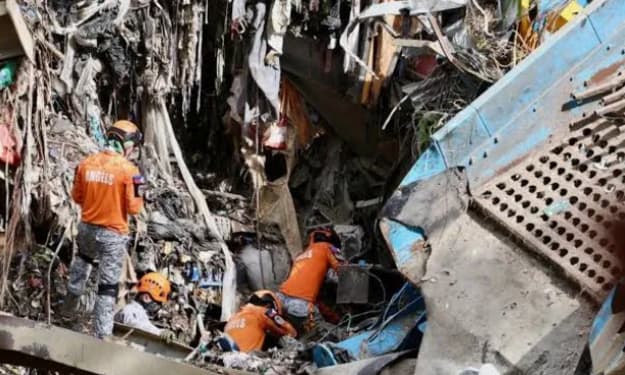
Filipino Rescuers Detect “Signs of Life” in Garbage Avalanche That Killed 4 and Left Dozens Missing
In the early hours following a devastating garbage avalanche in the Philippines, rescuers reported detecting “signs of life” beneath tons of waste, igniting a fragile sense of hope amid widespread grief and uncertainty. The deadly incident, which claimed at least four lives and left dozens missing, has drawn national attention to the dangers faced by communities living near massive waste disposal sites.
By Aqib Hussain6 days ago in Earth


Comments
There are no comments for this story
Be the first to respond and start the conversation.