
The Looming Menace of World War III
Could the current web of global alliances and rivalries lead to World War III, and how can the world prevent this potential conflict?

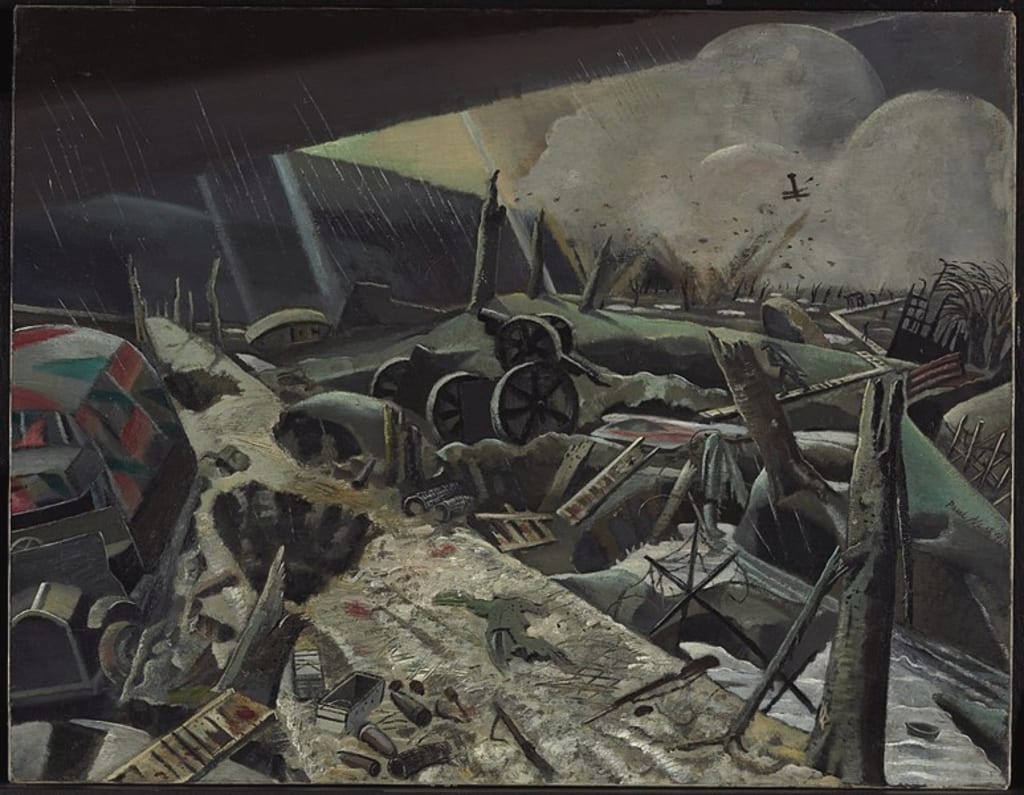
Today, a coming together of global crises in the form of growing tensions between superpowers, regional conflicts, and advancements in military technology means the world is steadily building upon an ever-critical geopolitical environment.
For the first time since the Cold War, the possibility of a world war - cautiously termed World War III - no longer seems impossible but rather perilously near.
At the center of it all are three powers - China, Russia, and Iran - whose increasingly aggressive posturing has only managed to position them as part of the brewing "autocratic axis of evil" challenging the established world order in ways that could invite unparalleled cataclysm.
The nexus of crises in Eastern Europe, East Asia, and the Middle East - territorial ambitions, military buildups, and the rising tide of nationalism - suggests that the world is hurtling toward a devastating conflict. From Russia's invasion of Ukraine to China's ambitions for Taiwan and Iran's nuclear aspirations, the international system is at a breaking point.
As tensions rise, the specter of a new world war stares at the world community, capable of rendering all the balances of power and, as a matter of fact, the entire international order of the post-Second World War era different.
The Autocratic Axis: China, Russia, and Iran
Of late, the geopolitical dynamics have changed dramatically, and China, Russia, and Iran have been in the frontline in this change.
This autocratic triumvirate has aligned in such a way as to pose a fundamental challenge to the liberal international order set up after World War II. For each of these three countries, different yet interlinked agendas exist: Russia's imperial resurgence, China's quest for regional dominance, and Iran's drive for nuclear power-together forming a loose coalition of revisionist states against U.S. hegemony that is serious about reshaping the global order.
This view has been echoed by no less than a former US President, Donald Trump, and a host of geopolitical scholars as a dangerous autocratic axis. The military cooperation and geopolitical moves certainly point to a premeditated attack aimed at upending Western predominance.
From the Russian war in Ukraine to China's military expansion in the Pacific, Iran's support of militant proxies across the Middle East-these are only examples of how these countries are driving the world closer to conflict. The U.S. Commission on National Defense Strategy recently sounded the alarm, calling for a dramatic rise in defense spending to meet these growing threats.
Currently hailed as the security and peacekeeper, the U.S. faces an uphill challenge in containing these threats amid military recruiting challenges, let alone political divisions, at home. The decline in America's prestige on the world stage seems to have whet appetites in China, Russia, and Iran for a multipolar world in which conflict is highly probable.
The Middle East: Ready to Explode
For decades, the Middle East was a flashpoint, but nowadays, it has grown into one of the most explosive hot spots in world geopolitics.
The rise of Iran as a hegemon interplayed with tensions with Israel and nuclear ambitions, creating an extremely combustive situation that can spiral into a wider war at any time.
The fragility of this stability was already being further undermined by Iran's support for Russia in its war on Ukraine, together with Russia's aid to Iran in nuclear development. A nuclear-armed Iran would already be directly threatening Israel and Saudi Arabia. Alternatively, if it could provoke a nuclear arms race across the region, this escalation would likely drag in the U.S. and NATO, further depleting stretched military and diplomatic resources.
Of all the flashpoints in the region, the conflict involving Iran and Israel is arguably one of the most dangerous, especially in the use of proxy wars in Syria and Lebanon. Hezbollah represents a direct threat to Israel as Iran's Lebanese proxy, and any dramatic escalation between these two actors promises to create a full-scale war.
The implications, though, are colossal on a wider scale: war in the Middle East would disrupt supplies of energy globally, destabilize economies, and may draw in other powers like Russia and China to make a regional conflict global.
What is more, the alliance of Iran with the autocratic states of Russia and North Korea has rendered the geopolitical environment pretty unpredictable. The missile program in North Korea, boosted by Iranian technology, is a serious menace to regional security, particularly in Northeast Asia, further characterizing how global threats have interwoven.
Russia's Imperial Ambitions and the War in Ukraine
The Russian invasion of Ukraine in 2022 marked a tectonic shift in modern geopolitics.
It was the most blatant challenge to the post-Cold War international order, and its consequences still unravel. What started as a "special military operation," as termed by Russian President Vladimir Putin, metamorphosed into a brutal, grinding war of attrition that might hardly stop from snowballing into a larger conflict between NATO and Russia.
This is not a territorial invasion but rather one more about regaining its influence over the former Soviet republics and challenging NATO's eastern flank. The Ukraine resistance has been strong, thanks to several Western countries that have donated armaments, and the war is far from over. The longer this war drags on, the more likely a miscalculation or accident will draw in NATO directly into the fight, hence catalyzing a larger European War.
But we shouldn't expect the ambitions of Putin to be limited to Ukraine.
Once gains are consolidated, Russia will likely then shift its focus to other vulnerable countries in Eastern Europe, the Baltic states, Moldova or Romania. This would put NATO directly up against Russia-a scenario which many analysts believe could escalate into World War III.
Complicating things is the wavering commitment of the United States to NATO. Under the previous President Trump, the U.S. threatened to pull back from its commitments to European security-a prospect that raises questions as to whether NATO is able to defend its eastern flank.
A divided or weakened NATO will open up the door to further Russian aggression and risk the collapse of the European security architecture that has kept the continent at peace for decades.
The Taiwan Flashpoint
Of course, the war in Ukraine is taking center stage now. Meanwhile, a second potential flashpoint overshadows East Asia: Taiwan.
The Chinese view Taiwan as a renegade province and have vowed to reunify the island with the mainland, by force if necessary. The United States, on its part, has made clear its commitment to defend Taiwan-a fixture of the potential military confrontation between the world's two largest economies.
United States officials have called the Chinese military buildup unprecedented. The PLA is said to be planning to invade Taiwan as early as 2027, a date that marks the centennial anniversary of its founding, and one which has now taken on added significance for United States military planners working to shore up Taiwan's defenses and deter Chinese aggression.
A conflict over Taiwan would be nothing short of catastrophic on a global level. Taiwanese supply chains-semiconductors being one of the most important-are indispensable nodes in global supply chains; any forced shutdown of its production would send shockwaves into the world economy.
A war in the Taiwan Strait would not be contained to the U.S. and China but will likely draw in other regional powers such as Japan, South Korea, and Australia, and potentially even NATO.
Such a conflict would have the attribute and characteristic of a world war, with all its disastrous implications on the world's economy and, as a whole, on international stability.
Korean Peninsula: A Constant Threat to Global Stability
Meanwhile, as the world rivets its attention on Ukraine and Taiwan, the Korean Peninsula remains arguably one of the most dangerous flashpoints of global conflict.
Since North Korea, under Kim Jong-un's helm, has continued to advance its nuclear and missile programs, a direct threat to South Korea, Japan, and even the United States is very real. The collapse of the U.S.-North Korea diplomatic talks in 2019 has left this region on a knife's edge.
Equally, support from North Korea for Russia in the war against Ukraine has further bound Pyongyang and Moscow closer together, making Northeast Asia's geopolitics more complicated. For that reason, Washington has reinforced military coordination with South Korea and Japan by conducting combined drills to prepare against potential North Korean aggression.
A war on the Korean Peninsula would rapidly develop into an all-engulfing conflagration, considering the case where North Korea launches a pre-emptive attack against South Korea. America would be duty-bound to intervene according to its defense agreement with Seoul, raising the possibility of China getting sucked in. The consequence of a war on the Korean Peninsula is catastrophic; it would be an involvement of several major powers and result in significant loss of life and economic disruption.
A New Era of Global Arms Races
As these geopolitical tensions continue to ratchet up, global military spending has risen to levels not experienced since the Cold War.
Against the growing tide of tensions, nations worldwide are preparing for war, with many boosting their defense budgets to unprecedented levels. In NATO, 23 of the 32 member states have increased or will increase their military expenditure to the threshold of the alliance-2% of GDP-assuming a more compelling conviction that military power will once again be one of the basic components of international relations.
The German Defense Minister has warned that Europe should be "ready for war in five years" because the possibility of a Russian attack against NATO rises between 2029 and 2032. European nations, especially on NATO's eastern flank, are making big preparations for further Russian aggression, while calls grow for an independent European defense capability.
Meanwhile, the U.S. and its allies are reinforcing their military presence in the Indo-Pacific as a hedge against Chinese aggression against Taiwan and North Korean provocations. This global arms race-spurred by the perception of impending war-is remaking the international security environment.
Countries are bringing their militaries up to date and forging new alliances in anticipation of what many believe will be inevitable conflicts.
The Collapse of the Post-World War II Order
The international order set up after World War II, based on the United Nations, NATO, and the World Trade Organization, among other things, is collapsing.
What was supposed to be the guarantor of peace and stability has been eaten away by the revisionist powers of China, Russia, and Iran. American leadership is in decline, and at home, the divisions and rising nationalism weaken the foundation of this order even more.
We are living in a world that will see a new and dangerous era of great power competition. Under such circumstances, the possibility of conflict becomes higher than at any time in recent history. A global war-one that involves the world's most powerful nations-isn't some far-off event but a prospect looming large over the world. Therefore, the world has to make a decision as to how the 21st century is to turn out: whether it has to head toward chaos or find a way out of this precarious situation.
Thus, the world is standing at the threshold of yet another era of conflict. The rise of the authoritarian axis, together with the implosion of the post-war international order due to the recent resurgence of military power, has rendered the geopolitical landscape rather incendiary. Yet with tensions mounting in flashpoint regions such as Eastern Europe, East Asia, and the Middle East, the prospect of a looming Third World War naturally evokes readier concern.
While the future remains inherently uncertain, one thing has become blindingly clear: the world is closer to the brink of war than at any time in decades, and the consequences of such a conflict would be so catastrophic.
About the Creator
Tanguy Besson
Tanguy Besson, Freelance Journalist.
https://tanguybessonjournaliste.com/about/
Keep reading
More stories from Tanguy Besson and writers in Earth and other communities.
Philippines Pharmaceutical Market 2026: Healthcare Access, Local Manufacturing & Treatment Demand
Philippines Pharmaceutical Market Overview The Philippines pharmaceutical market is experiencing steady growth as rising healthcare needs, expanding access to medicines and increasing public and private healthcare investment reshape the country’s medical landscape. Pharmaceuticals play a central role in treating acute and chronic conditions, supporting preventive care and improving overall quality of life. The Philippines pharmaceutical market growth reached USD 3.36 Billion in 2025. Looking forward, the market is expected to reach USD 3.91 Billion by 2034, exhibiting a growth rate (CAGR) of 1.71% during 2026-2034. This growth reflects population expansion, greater health awareness and gradual strengthening of domestic manufacturing capabilities.
By Manisha Dixit3 days ago in Earth
Public Announcement Challenge Winners
For the Public Announcement Challenge, writers were asked to work inside voices built for control. These were notices, warnings, and updates meant to inform rather than confess. The strongest entries committed to that form and didn't break from it. Corporate memos, formal government alerts, and internal policy language were held consistently, allowing emotion, fear, grief, or humor to surface indirectly through pressure rather than declaration. The following poems recognize the voice of authority, and let human feeling slip through despite all its rules and restraint.
By Vocal Curation Teamabout 8 hours ago in Resources




Comments
There are no comments for this story
Be the first to respond and start the conversation.