
The Lifespan of Jellyfish.
How Long Do They Live?
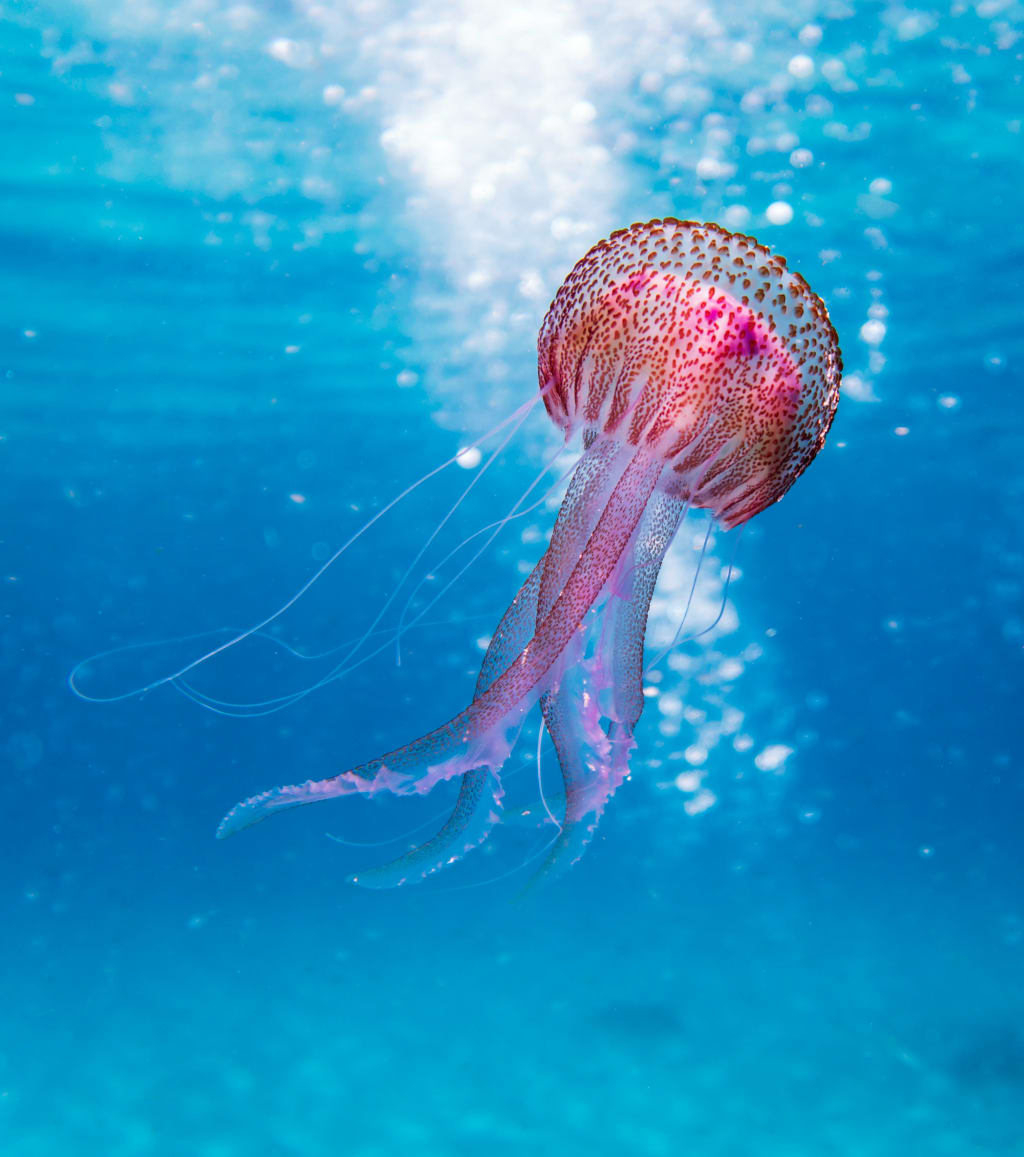
Jellyfish are fascinating creatures that inhabit oceans and other water bodies around the world. These gelatinous invertebrates have been around for over 500 million years, making them one of the oldest animal groups on the planet. While there are many different species of jellyfish, each with its own unique characteristics, one question that often comes up is: how long do they live?
The lifespan of a jellyfish can vary greatly depending on the species. Some species, such as the moon jellyfish, have a relatively short lifespan of only a few months, while others, such as the immortal jellyfish, are capable of living for several years.
One of the most well-known species of jellyfish is the box jellyfish. These creatures are known for their extremely potent venom, which can be deadly to humans. Despite their dangerous reputation, box jellyfish have a relatively short lifespan of only a few months.
The moon jellyfish, another common species of jellyfish, has a slightly longer lifespan than the box jellyfish. Moon jellyfish typically live for around six months to a year, although some individuals may live for up to two years in captivity.
On the other end of the spectrum is the immortal jellyfish, also known as Turritopsis dohrnii. This species of jellyfish is unique in that it has the ability to revert back to its juvenile state after reaching adulthood, effectively allowing it to live indefinitely. While there is no limit to how long the immortal jellyfish can live, most individuals are thought to live for only a few years before succumbing to predation or disease.
Other species of jellyfish have lifespans that fall somewhere in between these extremes. For example, the lion's mane jellyfish, which is one of the largest species of jellyfish, can live for several years. Some individuals have been known to live for up to five years in the wild, although most individuals live for only a year or two.
So, what factors influence the lifespan of jellyfish? One of the most important factors is the environment in which the jellyfish lives. For example, jellyfish that live in warmer waters may have a shorter lifespan than those that live in cooler waters. This is because warmer water temperatures can increase the metabolic rate of the jellyfish, which can lead to faster aging and a shorter lifespan.
Another factor that can influence the lifespan of jellyfish is predation. Many species of jellyfish are eaten by predators such as sea turtles and certain species of fish. Jellyfish that are able to avoid predation are more likely to live longer than those that are not.
Finally, the reproductive strategy of a jellyfish can also play a role in its lifespan. Some species of jellyfish reproduce sexually, while others reproduce asexually. In general, individuals that reproduce sexually have a shorter lifespan than those that reproduce asexually. This is because sexual reproduction is a more energy-intensive process that can lead to faster aging.
Despite their relatively short lifespans, jellyfish play an important role in marine ecosystems. They are a key food source for many marine predators, and their presence can help to indicate the health of a marine ecosystem. Additionally, jellyfish have unique adaptations that allow them to survive in some of the harshest environments on the planet, including the deep sea and polar regions.
In conclusion, the lifespan of jellyfish varies greatly depending on the species, with some living for only a few months and others living for several years. Factors such as the environment, predation, and reproductive strategy can all influence the lifespan of a jellyfish. While jellyfish may not live as long as some other animals, they are still an important part of marine ecosystems and have many fascinating adaptations that make them worthy of study and appreciation.
About the Creator
Keep reading
More stories from Mr Royal Honey and writers in Earth and other communities.
Jellyfish Blooms: Causes, Consequences, and Mitigation Strategies.
Jellyfish blooms, or large sudden increases in the population of jellyfish, have become a global phenomenon. While jellyfish are natural inhabitants of the world's oceans, the frequency and intensity of jellyfish blooms have increased in recent years, leading to significant ecological and economic impacts. This article will discuss the causes and consequences of jellyfish blooms, as well as mitigation strategies..
By Mr Royal Honey 3 years ago in Earth
Man Shot Dead Was 37-Year-Old US Citizen, Minneapolis Police Chief Says
For many residents of Minneapolis, the news landed like a heavy blow. Authorities confirmed that a man shot dead during a law enforcement operation was a 37-year-old U.S. citizen, a detail that immediately intensified public reaction. What began as a breaking news alert quickly became a broader conversation about policing, federal authority, and community trust.
By Muhammad Hassan5 days ago in Earth
The Sad Nightingale
The Sad Nightingale Writing No. 2402 Saturday, November 26, 2022 By Iman Javed The sun had just set, leaving a soft orange glow lingering on the horizon. The air was calm, carrying a faint chill of the approaching night. Away from the village, frogs croaked in the drying pond, their sounds echoing across the still waters. Crickets intermittently played their tunes, pausing now and then as if checking their tiny instruments for the night ahead. On a branch of a nearby withered tree sat a nightingale, utterly sad. It neither moved nor chirped; it seemed as though it had forgotten the very art of singing. Its eyes reflected deep sorrow, and its feathers drooped in silence.
By Sudais Zakwan6 days ago in Earth
📢 Raise Your Voice Thread: 01/22/2026
Our “Raise Your Voice Threads” are hosted most alternating Thursdays at 12PM ET to offer creators more avenues to uncover exceptional stories on Vocal. As we are continuously searching for fresh creators and inspiring stories, this thread provides an opportunity to exchange and discuss the stories that have moved and motivated us on Vocal.
By Raise Your Voice by Vocal7 days ago in Resources



Comments
There are no comments for this story
Be the first to respond and start the conversation.