
The Letter I Found After He Died
A forgotten note in a hospital drawer revealed a patient’s final gift


Hospitals are filled with stories. Some begin with a cry, some end in silence, and some linger long after the heartbeats fade. As a doctor, I often tell myself that I’ve seen everything — the tears, the triumphs, the losses. But I was wrong.
One cold evening changed that.
It was during my residency, the kind of time in a doctor’s life when sleep is rare, meals are rushed, and emotions are buried beneath protocol and practice. I was assigned to the oncology unit that month — a place where hope lived on a thin wire, and every patient knew they were in a race against time.
That’s where I met Mr. Haroon.
He was a quiet man in his early sixties, with sharp cheekbones, salt-and-pepper hair, and eyes that carried stories far older than he was willing to share. Stage IV pancreatic cancer. The diagnosis was grim from the beginning, but Haroon never asked how long he had. Instead, he asked for a notebook and a pen.
“I like to write,” he said simply.
He arrived with no family. No visitors. No flowers. Just a small suitcase, a journal, and a calmness that was unnerving. Unlike many patients, he never questioned the treatments, never cried during chemotherapy, and never asked for extra pain medication. He always thanked the nurses, even when he was too weak to lift his hand.
For weeks, I monitored his vitals, adjusted his medications, and watched his body weaken while his spirit remained strangely intact. He filled several notebooks during his time there. Sometimes, I would find him staring at the wall, lips moving silently, as if rehearsing a speech only he could hear.
One night, during rounds, I found him sitting up — an unusual sight given his condition. He was scribbling something feverishly.
“You should be resting,” I said gently.
He looked up and smiled. “Almost done.”
I didn’t ask what he meant. I assumed it was another entry in his journal.
A few days later, he slipped into unconsciousness. The cancer had spread aggressively to his liver and lungs. We made him comfortable with palliative care. He passed away quietly in the early morning hours, a nurse holding his hand.
We cleaned out his room later that day. His suitcase contained nothing but some clothes, toiletries, and several worn notebooks. Most of the staff had grown fond of him. There was something peaceful about Haroon, something that stayed behind even after he left.
I don't know what prompted me to open that drawer by his bedside. Maybe it was instinct. Or maybe it was that strange unfinished sentence — “Almost done.”
Inside, I found a sealed envelope. On the front, in elegant handwriting, it simply said:
"To the doctor who stayed until the end."
My heart raced.
I took it to the on-call room and sat down. I hesitated before opening it, unsure if I was invading something private. But curiosity and an odd sense of permission compelled me.
The letter inside was handwritten:
---
Dear Doctor,
I don’t know your name. I never asked. I suppose that was by design. I wanted you to be just “the doctor,” because in doing so, you became every doctor — every kind soul who ever helped someone die with dignity.
You must be tired. I’ve seen it in your eyes. You walk these halls like a ghost sometimes, burdened by the weight of lives you couldn’t save. But let me tell you something important — you saved me. Not my body, no. That was beyond saving. But you saved my soul.
Every time you checked on me without rushing, every time you listened to my silence, you gave me the gift of being seen. Do you know how rare that is for someone who is dying?
I came here to die alone. I thought I wanted that. I thought I was ready. But your presence reminded me of something I had long forgotten — the beauty of being cared for.
I’ve spent the last few weeks writing letters — to people I loved, people I hurt, and people I never got to know. You fall into the third category. A stranger who meant more to me in my final days than most did my whole life.
You may forget me. That’s okay. But I hope you don’t forget what you did for me. I hope you remember that sometimes the quietest kindness speaks the loudest.
I am at peace now. Because of you.
With gratitude,
Haroon
---
I read the letter twice. Then a third time. The words swam before my eyes as tears blurred the ink. I had spent my entire medical career chasing precision — diagnoses, charts, reports. But in that moment, I realized something much deeper: we are not just doctors. We are witnesses to life’s final chapter. And sometimes, our presence is the most powerful medicine we can offer.
I kept that letter in my coat pocket for weeks. On the hardest days — when a child’s fever wouldn't break, when a family shouted at me in grief, when I questioned why I chose this path — I would take it out, unfold it, and read it again.
It reminded me that not every victory is measured in heartbeats restored or tumors removed. Sometimes, it’s simply in making someone feel less alone as they slip away.
A year later, I submitted the letter — anonymously — to a medical journal. It was published under the title “The Patient Who Thanked Me After Death.” I didn’t include his name. I didn’t need to. The story wasn’t just his — it was for every patient who leaves behind more than pain, and every doctor who wonders if they’re making a difference.
I’ve met hundreds of patients since then. I’ve saved some, lost many. But Haroon stays with me. Not just as a memory, but as a compass — reminding me why I wear this white coat, why I stay the extra hour, why I sometimes sit silently beside a dying patient, even when there’s nothing more I can do medically.
We are taught to cure. But we must also learn to comfort.
Haroon taught me that.
And for that, I will always be grateful.
About the Creator
Doctor marwan Dorani
"I’m Dr. Marwan, a storyteller and physician passionate about human resilience, untold journeys, and emotional truths."
Keep reading
More stories from Doctor marwan Dorani and writers in Earth and other communities.
The Patient Who Taught Me to Breathe Again
In the world of medicine, we often walk a fine line between life and death, healing and heartbreak, science and empathy. As doctors, we learn to diagnose diseases, administer treatments, and make swift decisions in high-stakes environments. What we rarely prepare for, however, is the emotional toll of human suffering — and the unexpected lessons we receive from those we are trying to save.
By Doctor marwan Dorani 10 months ago in Motivation
Hillary Clinton Accuses Republicans of ‘Fishing Expedition’ in Epstein Testimony
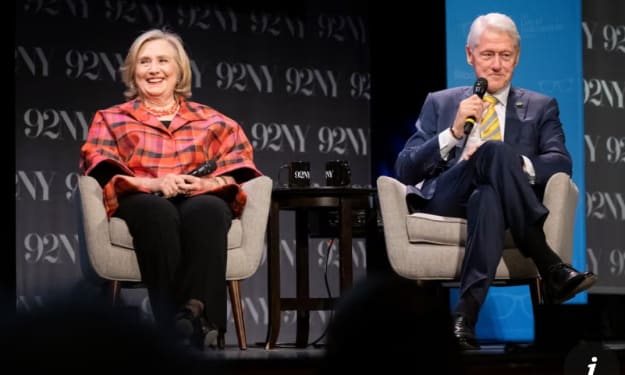
Hillary Clinton has accused Republican lawmakers of conducting a “fishing expedition” amid renewed testimony and investigations connected to Jeffrey Epstein, the late financier whose criminal activities and high-profile associations continue to generate political controversy. The former Secretary of State’s remarks underscore deep partisan divisions as congressional scrutiny surrounding Epstein’s network resurfaces in Washington.
By Aarif Lashari6 days ago in Earth
"Scream 7" (2026): Running out of Fresh Screams
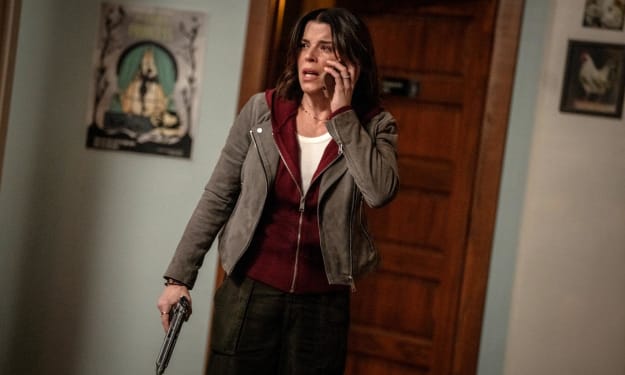
This is the seventh time we’ve had a Ghostface crisis. Scream 7 is the latest edition of the Scream franchise. Sydney Prescott and her family are under attack by another anonymous killer dressed in a Ghostface costume. While having issues with her daughter, Tatum, they run from the bloody murders, trying to determine who is behind it all.
By Marielle Sabbag3 days ago in Horror


Comments
There are no comments for this story
Be the first to respond and start the conversation.