
The launch of the longest space flight in the history of the Arabs on an American ship, with Russian participation
Emirati astronaut Sultan Al Neyadi launched today, Thursday, aboard an American ship, with Russian participation, to embark on the longest space mission in Arab history.

Earlier, the Ross Cosmos Foundation announced that NASA plans to launch the crewed Crew Dragon spacecraft to the International Space Station on March 2.
And "Ross Cosmos", quoting sources in "NASA", indicated, "The experts at the agency discovered the reason for the technical malfunction that caused the Crew Dragon flight to be delayed last time, and after they fixed the malfunction, they decided to retry the launch on March 2."
And “NASA” stated in a statement, that weather officials at the 45th Squadron, affiliated with the Cape Canaveral Station at the Kennedy Space Center in Florida, predicted that weather conditions would be favorable for the launch of the “SpaceX Crew 6” mission today, Thursday, by 95%.
For its part, the company "SpaceX" confirmed in a tweet on "Twitter" that all systems of the "Falcon 9" launch rocket are in good condition in preparation for launch, as a new date for the launch of Sultan Al Neyadi with his mission "Zayed's ambition 2", and the "SpaceX Crew 6" team. ".
Source: agencies
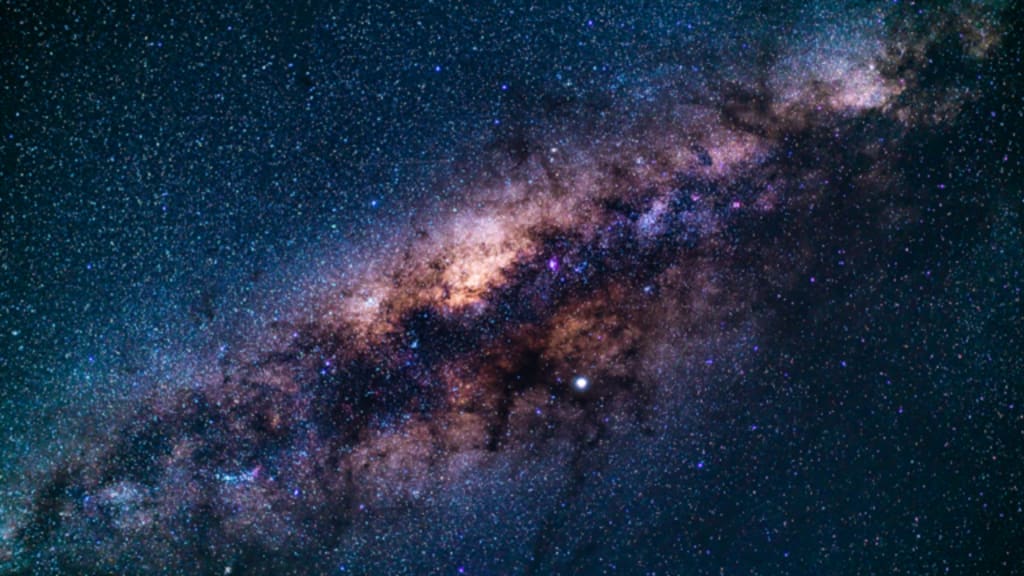
The Milky Way galaxy is "birth"!
An analysis of the galaxy's most energetic light has revealed that we may be wrong about star formation rates in the Milky Way.
Gamma rays from the radioactive decay of isotopes generated during star formation reveal that stars are forming at a rate of four to eight times the mass of the Sun each year. This may not seem like much, but it is two to four times more than current estimates, indicating that our home galaxy is not quite as quiet as we thought.
This has important implications for our understanding of the evolution of our galaxy, as the rate of star birth and death can alter the chemical composition of a galaxy.
A paper describing the discovery, led by astrophysicist Thomas Siegert of the University of Würzburg in Germany, has been accepted for publication in Astronomy & Astrophysics and is available on the arXiv preprint server.
Stars are known as the factories that produce the universe's most complex elements. When it dies, its violent death spews heavier elements into interstellar space, only to be swept up in clouds or to be picked up by the new stars that are forming.
The births of stars are as active as their deaths. They form into clouds of dense clumps of interstellar dust and gas, collapsing under gravity and gobbling up material from the surrounding space until there is enough pressure and heat in their cores to ignite fusion. As it does so, it begins to give off a strong stellar wind that blasts particles out into space, and jets of particles accelerate from its poles along the star's magnetic field. One of the elements known as a result of star death, a radioactive isotope of aluminum called aluminum-26, is short-lived in cosmological terms; Its half-life is 717,000 years. When it decays, it gives off gamma radiation of a specific wavelength.
But aluminum-26 is also present in large quantities in the clouds of material that surround newly formed stars. If the speed at which matter falls into the star exceeds the speed of sound, a shock wave is formed and cosmic rays are generated. When the rays hit isotopes in the dust, such as aluminum-27 and silicon-28, they can produce aluminum-26.
So, by looking at the universe's gamma radiation budget resulting from the radioactive decay of aluminum-26, astronomers can estimate the rate at which isotopic stars are born and die in the Milky Way, and use that to determine the total star generation rate.
Current estimates of the rate of star formation in the Milky Way lie at about two suns mass of material being converted into stars each year. Since most of the stars in the Milky Way are much less massive than the Sun, it is estimated that there will be an average of about six or seven stars per year.
Siegert and his colleagues have taken a count of aluminum-26 gamma radiation in the galaxy and modeled the most likely production mechanism for the observed abundance of this light. They found that the most appropriate is the star formation rate of about four to eight solar masses per year. Or up to about 55 stars a year.
There is still room for improvement in this estimate. The models did not reproduce the gamma radiation of the Milky Way as currently observed; The distance of the gamma-ray source can change the final estimate, but it is difficult to measure. This is why the researchers could only give an approximate range of the rate of star formation, rather than specifying an exact mass.
However, the team's method holds promise for a better understanding of how the Milky Way forms new stars. Star formation is usually surrounded by dense gas and dust that are difficult to see.
Source: ScienceAlert
About the Creator
News Correct
Information WorldWide MORE INFORMATION
Keep reading
More stories from News Correct and writers in Earth and other communities.
A mysterious object dragged into the black hole at the center of our galaxy!
By analyzing 20 years of observations, a team of scientists led by UCLA astrophysicist Anna Ciorlo discovered a dramatic shift in the shape of X7, as it expanded to almost twice its initial length.
By News Correct3 years ago in Earth
White Mushroom Market Size and Forecast 2025–2033
Introduction White mushrooms—scientifically known as Agaricus bisporus—are no longer confined to salads, pizzas, and soups. Once considered a humble kitchen staple, they are now emerging as a strategic crop in the global agrifood ecosystem. Driven by sustainability trends, plant-based eating, and rising health consciousness, white mushrooms have carved out a powerful position in both consumer markets and foodservice industries.
By jaiklin Fanandish3 days ago in Earth


Comments
There are no comments for this story
Be the first to respond and start the conversation.