
The Last Seed
In a warming world, one girl’s discovery could change everything

The summer of 2025 was the hottest Maya could remember. At sixteen, she’d grown up in a small coastal town in Oregon, where the Pacific Ocean used to hum with life. Now, the beach was littered with plastic bottles, and the air smelled faintly of smoke from distant wildfires. Her grandmother, Rosa, used to say the Earth was “singing a warning.” Maya didn’t understand back then. But this summer, with the news blaring about floods in Asia and the Arctic ice shrinking to its lowest ever, she felt the warning in her bones.
Maya’s town was buzzing with talk of the new climate laws. In March, the U.S. government had passed a $200 billion Green Future Act, promising solar farms and reforestation. Across the ocean, the European Union was taxing high-pollution imports, and even corporations were pledging zero-waste goals after years of public protests. On X, people shared videos of youth activists planting trees with hashtags like #Green2025. But in Maya’s town, hope felt fragile. The local river, once teeming with salmon, was now a sluggish stream choked with algae.
One muggy afternoon, Maya escaped to her grandmother’s old greenhouse behind their house. Rosa had been a botanist, filling the glass walls with ferns and wildflowers before she passed last year. Now, the greenhouse was Maya’s sanctuary, though most of the plants had withered. She sat cross-legged on the cracked concrete, tracing the outline of a dry pot. That’s when she saw it—a tiny, sealed jar tucked behind a shelf, labeled in Rosa’s looping handwriting: The Last Seed.
Inside was a single, glossy seed, no bigger than a pebble. A note was folded beneath it: “For when the world is ready. Plant with care.” Maya’s heart raced. Rosa had spent her life studying native plants, believing they could heal degraded soil. Could this seed be one of her experiments? Maya didn’t know, but she felt a spark of purpose for the first time since the endless heatwaves began.
She told her best friend, Leo, who was skeptical. “A seed? Maya, the river’s dying, and half the town’s out of work since the fishery closed. What’s one plant gonna do?” Leo was practical, always scrolling X for updates on the G20’s latest climate funds or new carbon-capture tech. But Maya couldn’t shake the feeling that this was more than just a seed—it was a promise.
The next day, she researched at the library. The seed matched images of a rare coastal milkvetch, a plant Rosa had once called a “soil whisperer” for its ability to restore nitrogen and hold earth together against erosion. But milkvetch was nearly extinct in Oregon, outcompeted by invasive weeds and drought. Maya’s chest tightened. If she planted it and failed, Rosa’s last gift would be gone forever.
Still, she had to try. She chose a spot by the riverbank, where the soil was parched but close to water. Leo, despite his doubts, showed up with a shovel. “If we’re doing this, let’s do it right,” he muttered. They cleared away plastic wrappers and nettles, digging a small hole under the hazy sun. Maya placed the seed gently, whispering, “Please grow.”
Weeks passed, and nothing sprouted. The news grew grimmer—coffee prices spiked after Brazilian crop failures, and a viral X post showed dead coral reefs in the Pacific. Maya’s hope flickered. Maybe Leo was right. Maybe one seed was nothing against a world on fire.
Then, one morning, she saw it—a tiny green shoot pushing through the dirt. It was delicate, almost invisible against the cracked earth, but it was there. Maya whooped, startling a crow. She called Leo, who sprinted over, his usual frown replaced by wide-eyed wonder. “Okay, you win,” he said. “What now?”
“Now we protect it,” Maya replied. She didn’t know how, but she felt Rosa’s strength guiding her. She started small, rigging a makeshift shade from old fabric to shield the sprout from the sun. Leo posted a photo on X with the caption: “One seed, one chance. #Green2025.” To their shock, it spread. Locals commented, offering compost tips. A botanist from Portland messaged, suggesting drip irrigation. Someone donated a water filter to clean the river’s edge.
The shoot grew into a sturdy plant, its purple flowers buzzing with bees Maya hadn’t seen in years. Word spread beyond the town. A news crew arrived, filming the milkvetch as a symbol of resilience. The reporter mentioned the Green Future Act, noting how grassroots efforts were filling gaps where policy lagged. On X, #TheLastSeed trended, with people sharing their own stories—tree plantings in Kenya, cleanups in Mumbai.
Maya realized it wasn’t just about the plant. It was about showing what’s possible. The town rallied, clearing more of the riverbank and planting native grasses. A local school started a “Seed Guardians” club, teaching kids to nurture soil. Even the fishery workers, inspired by the buzz, lobbied for a community solar project to power their boats.
One evening, Maya sat by the milkvetch, now surrounded by new sprouts—seeds it had scattered itself. The river looked clearer, reflecting a pink sunset. She thought of Rosa’s note: For when the world is ready. Maybe the world wasn’t fully ready yet, but this was a start.
Leo joined her, scrolling X on his phone. “Look at this,” he said, showing posts of milkvetch patches popping up along the coast, inspired by their story. “You did this, Maya.”
She shook her head. “We did. And we’re not done.”
The Earth was still warming, the challenges immense. But as the bees hummed and the river whispered, Maya felt it—a quiet, stubborn hope. One seed couldn’t save the world, but it could wake it up.
Call to Action: What’s your “seed” for change? Plant an idea, share it below, or post with #Green2025. Let’s grow a better future together.
About the Creator
jA Y
I want tell you something
UK must double down on renewables as wars drive up energy costs, experts say
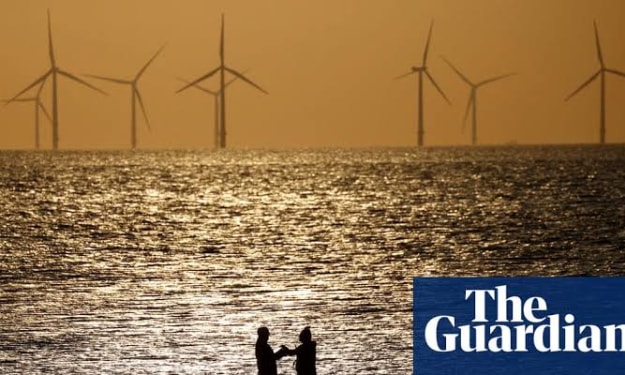
Britain must accelerate its transition toward renewable energy sources as geopolitical conflicts continue to drive global energy prices higher, according to leading energy analysts and climate policy experts. The warning comes as wars and political tensions across key energy-producing regions expose the vulnerability of countries still heavily reliant on imported fossil fuels. In recent years, the United Kingdom has made significant progress expanding renewable energy capacity, particularly in offshore wind and solar power. However, experts argue that the pace of the transition remains insufficient to shield the country from the volatility of international energy markets. Conflicts in the Middle East and Eastern Europe have demonstrated how quickly supply disruptions can translate into rising costs for households and businesses. Energy economists say the lesson from recent global crises is clear: the more dependent a country is on imported oil and gas, the more exposed it becomes to geopolitical shocks. Britain imports a substantial portion of its natural gas and refined fuel products, meaning instability in global supply chains can quickly affect domestic energy bills. During periods of international conflict, oil prices often spike due to fears that shipping routes or production facilities could be disrupted. Even rumors of attacks near key energy chokepoints — such as major pipelines or shipping lanes — can cause markets to react sharply. These fluctuations, analysts say, ultimately filter down to consumers through higher electricity and heating costs. Renewable energy sources offer a potential solution to this problem because they rely on domestic resources such as wind and sunlight rather than imported fuels. Once renewable infrastructure is built, operating costs remain relatively stable because there is no need to purchase fuel on global markets. The United Kingdom already operates some of the world’s largest offshore wind farms, and renewable energy now accounts for a significant share of the country’s electricity generation. Government data indicates that wind power alone has become one of the largest sources of electricity in Britain, particularly during periods of strong weather conditions. Despite this progress, energy specialists argue that further investment is essential. Expanding renewable generation capacity requires not only building more wind and solar farms but also upgrading the national electricity grid. A modernized grid would allow energy produced in remote offshore locations to be transmitted efficiently to cities and industrial centers. Energy storage is another critical piece of the puzzle. Because renewable sources like wind and solar are intermittent, large-scale battery systems or alternative storage technologies are needed to ensure a stable supply of electricity during periods when generation drops. Developing these systems will require both technological innovation and sustained financial investment. Some experts also emphasize the importance of diversifying the country’s renewable portfolio. While offshore wind remains a cornerstone of Britain’s energy strategy, solar power, tidal energy, and green hydrogen could also play important roles in the future energy mix. The government has already announced plans to increase renewable capacity dramatically over the next decade. Officials argue that reducing reliance on fossil fuels will not only strengthen national energy security but also help the country meet its climate targets. However, critics say policy uncertainty and slow planning approvals have sometimes delayed renewable projects. Industry leaders have urged authorities to streamline regulatory processes and provide clearer long-term incentives for investors. For many analysts, the link between energy security and climate policy has never been more obvious. Wars and geopolitical tensions have shown that fossil fuel dependence can create economic vulnerability, while domestically produced renewable energy offers greater stability. “The global energy system is changing,” said one energy policy researcher. “Countries that invest early in renewable infrastructure will be better protected from geopolitical shocks and price spikes.” As international conflicts continue to reshape global energy markets, the debate over Britain’s energy future is likely to intensify. For supporters of renewable power, the current moment represents both a warning and an opportunity — a chance to accelerate the transition toward a more secure and sustainable energy system.
By Fiaz Ahmed 7 days ago in Earth
Early March 2026: 4 Goals Accomplished
It's early March and I've now accomplished my 4th writing goal for the year of 2026. Before diving into the behind-the-scenes of it... why not tell you up front what that accomplishment was? I was published in a 2nd publication for this year. Published in Helix Literary Magazine out of Central Connecticut State University. You can read it for free right now!
By Stephen Kramer Avitabile7 days ago in Writers



Comments
There are no comments for this story
Be the first to respond and start the conversation.