
KING COBRA
The jungles of Southern and Southeast Asia are home to the very venomous King cobra (Ophiophagus hannah). The only cobra in the genus Ophiophagus, it may be identified from other cobras primarily by its size and neck markings. The King cobra is the longest venomous snake in the world, and it mostly preys on other snakes, even members of its own species. In Indian, Sri Lankan, and Myanmarese mythology and folklore, this snake is a major symbol. It is India's emblematic reptile.
Appearance
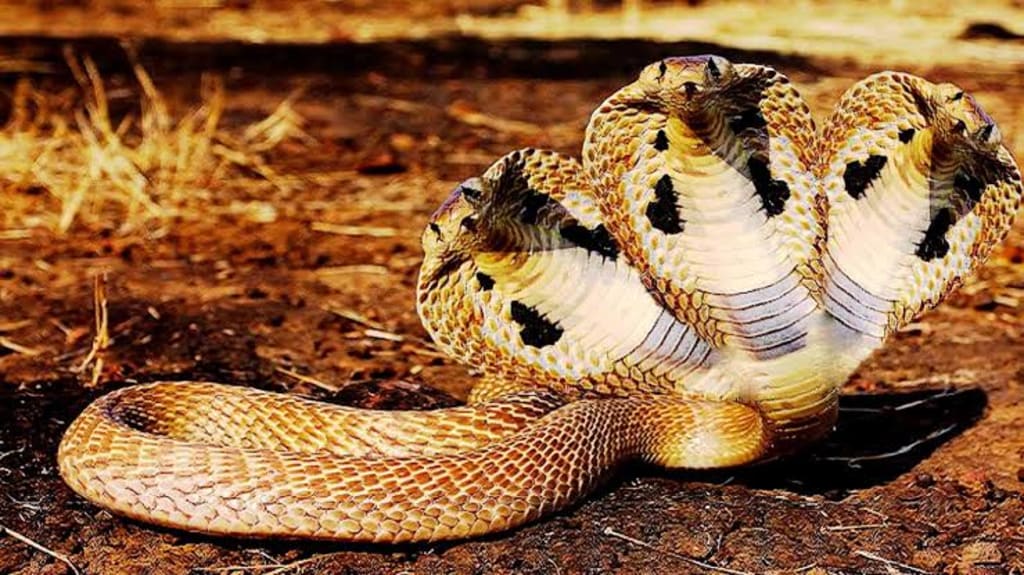
The crossbands of king cobras are either white or yellow or black with dark olive or brown bands. There are two crossbars at the nose and two behind the eyes on their black skull. It has a cream or light yellow belly. Juveniles have thin yellow bands on their sleek black skin. A mature snake's head can appear fairly huge and thick, but like all snakes, it can open its jaws wider to swallow large food items.
Habits and Way of Life
King cobras are solitary animals that only congregate to breed. They can be observed at night, but they are active all day. Like other snakes, king cobras also acquire chemical information through their forked tongue, which collects fragrance vapours and transmits them to a unique sensory organ (Jacobson's organ) situated in the roof of their mouth. The snake utilises its excellent eyesight together with its double forked tongue to flick when it detects the aroma of a meal to determine where the prey is. King cobras can spot moving prey from approximately 100 metres (330 feet) away. They can also track their prey using their intellect and sensitivity to vibrations from the earth. King cobras prefer to flee rather than engage in conflict when they are irritated. But if provoked repeatedly, they can become very hostile. They lengthen their necks and rear up the front third of their bodies when scared, flashing their teeth, and hissing loudly. People could mistake the safe zone since King Cobras can still move forward after rising their body to strike at a great distance. Adults of this snake are known to bite and hang on, and they are capable of striking numerous times in a single strike. King cobras typically try to escape if they come across a natural predator like the mongoose, which is immune to the neurotoxins. If they are unable to do so, they construct the recognisable cobra hood and hiss, perhaps with simulated
Nutrition and Diet
King cobras are carnivores, and the majority of their diet consists of other snakes, including venomous snakes like the krait and numerous true cobra species. When food is in short supply, king cobras also eat rodents, lizards, birds, and other small vertebrates.
Threats to the population
Due to continued collecting for the global pet trade and the loss of forests in some parts of its range, king cobra numbers have decreased. The collection of these snakes for their flesh, skin, and traditional medicinal purposes also causes them harm.
The population
The entire population size of the King cobra is not disclosed by the IUCN Red List or any other sources. The IUCN Red List currently rates this species as Vulnerable (VU), and its population is currently declining.
Habits
According to some theories, king cobras are monogamous, returning to the same spouse each breeding season. From January through April, they reproduce. King cobras lay eggs (egg-laying). The female builds a nest, where she places 12 to 51 eggs, and guards it for the duration of the roughly 51 to 79-day incubation period. The hatchlings range in size from 18.4 to 40 g and are between 12 and 73 cm (12 in) long (0.65 to 1.41 oz). They start out on their own. In contrast to other snakes, the female of the King cobra is an incredibly devoted mom. The female builds a mound of leaves and other detritus for the nest and stays there until the eggs hatch.
Kids' Facts
• The general name for the King cobra is Ophiophagus, which comes from the Greek and means "snake-eater".
• Due to their slow metabolic rate, king cobras can go weeks or even months without eating after a substantial meal.
• All snakes, including king cobras, have flexible jaws. The lower jawbones can move independently because the jawbones are connected by flexible ligaments. Because of this, king cobras can swallow prey that is significantly larger than their heads and can even devour it whole.
• The only snakes in the world that construct nests for their eggs and protect them until they hatch are king cobras.
• Tossing a shirt or hat on the ground while gently backing away is an excellent defence for anyone who unintentionally comes across a King cobra.


Comments
There are no comments for this story
Be the first to respond and start the conversation.