
The Kallanai Dam: An Ancient Marvel of Engineering in Tamil Nadu, India
History, Significance, and Challenges Faced by the Kallanai Dam over the Years

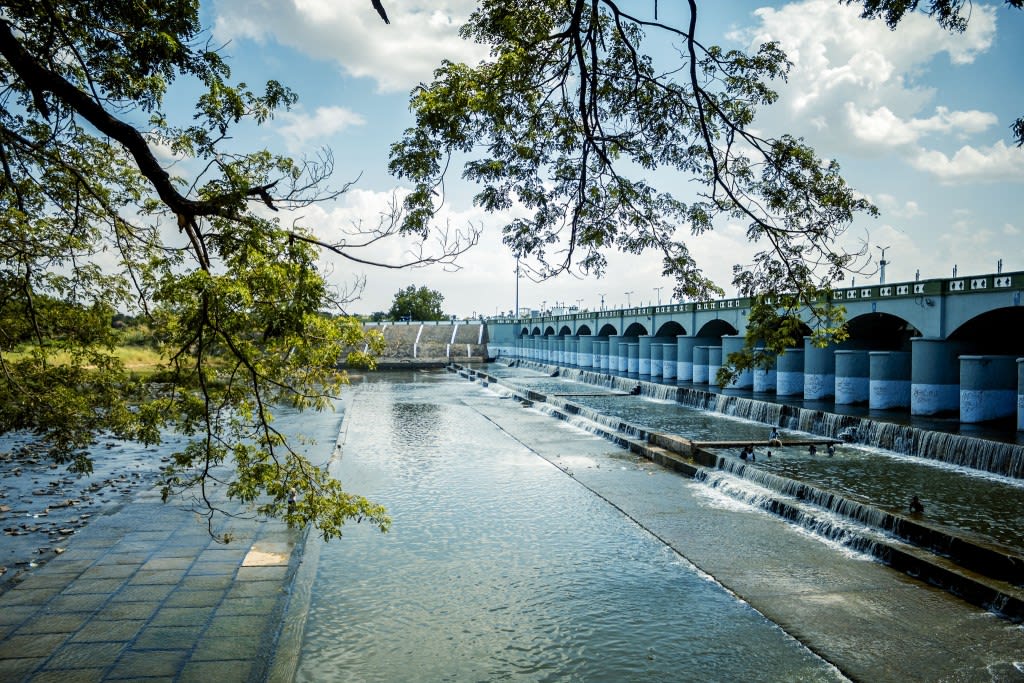
Kallanai Dam, also known as Grand Anicut, is an ancient dam built across the Kaveri River in the state of Tamil Nadu, India. It is located about 20 km from the city of Trichy and was constructed during the reign of the Chola dynasty in the 2nd century AD.
The dam is made of stone and stretches for about 1,080 feet (330 meters) in length and 66 feet (20 meters) in width. It has a total of 45 sluices that can be used to control the water flow of the Kaveri River. The Kallanai Dam was built to divert water from the Kaveri River to irrigate the delta regions of Tamil Nadu, which are known for their fertile soils.
The construction of the Kallanai Dam was a major engineering feat at the time, and it is still considered to be a marvel of ancient engineering. It is a popular tourist destination and attracts thousands of visitors every year. The Kallanai Dam is also a source of hydroelectric power, and it provides irrigation water for the surrounding agricultural lands.
The Kallanai Dam was built during the reign of Karikalan, a king of the Chola dynasty. According to historical records, Karikalan built the dam to regulate the water flow of the Kaveri River and to ensure a constant supply of water for agriculture. The dam was constructed using massive granite blocks and limestone, which were quarried from nearby hills.
The Kallanai Dam has survived for over 2,000 years and has undergone several renovations and repairs over the centuries. In the 19th century, the British engineer Sir Arthur Cotton carried out extensive repairs to the dam, and he also constructed a new bridge across the river.
Today, the Kallanai Dam is an important source of water for irrigation in Tamil Nadu. The dam is also a popular tourist attraction, and visitors can take boat rides on the river and explore the surrounding area. The dam is particularly impressive during the monsoon season when the water flow is at its peak.
In addition to its practical and historical significance, the Kallanai Dam is also an important cultural landmark in Tamil Nadu. The dam is celebrated in local festivals and ceremonies, and it is often depicted in art and literature. The Kaveri River, which is regulated by the Kallanai Dam, is also considered to be a sacred river in Hinduism, and it is associated with several religious myths and legends.
The Kallanai Dam has played a significant role in the development of agriculture and economy in Tamil Nadu. The dam provides irrigation water for the delta region of the Kaveri River, which is known for its rice cultivation and other crops like sugarcane, coconut, and banana. The water from the dam also supports several industries like paper mills, textile mills, and power plants.
The Kallanai Dam is not only an important source of water for agriculture and industry but also a crucial means of flood control. The dam's sluices are used to regulate the water flow of the Kaveri River during the monsoon season when the river is prone to flooding. The dam helps to mitigate the impact of floods and protects the surrounding areas from damage.
The Kallanai Dam has also become a symbol of Tamil Nadu's cultural heritage and engineering prowess. The dam is featured on the state emblem of Tamil Nadu, and it is celebrated in local festivals like the Thai Pongal, which is a harvest festival. The dam has also been recognized as a National Heritage Monument by the Government of India.
Overall, the Kallanai Dam is a testament to the ancient engineering skills of the Chola dynasty and their ability to harness the power of water for the benefit of agriculture and industry. The dam remains a vital source of water for the region and a popular tourist attraction that attracts visitors from around the world.
The Kallanai Dam has also played a significant role in the development of transportation in the region. The dam has a bridge built across it, which serves as a major transportation link between the districts of Trichy and Thanjavur. The bridge is a popular spot for tourists to take photos and enjoy the scenic views of the Kaveri River.
In recent years, the Kallanai Dam has faced several challenges, including issues related to sedimentation and siltation. The dam's sluices have become clogged with sediment, reducing their effectiveness in regulating water flow. The Tamil Nadu government has undertaken several initiatives to address these issues, including dredging the riverbed and installing gates to regulate water flow.
The Kallanai Dam has also faced challenges related to climate change, including droughts and erratic monsoons. These have affected the water levels in the Kaveri River and impacted agriculture and industry in the region. The Tamil Nadu government has implemented several measures to mitigate the impact of climate change, including promoting sustainable agriculture practices and rainwater harvesting.
In conclusion, the Kallanai Dam is an engineering marvel that has stood the test of time for over two thousand years. The dam is a vital source of water for agriculture and industry in Tamil Nadu and has played a significant role in the region's development. Despite facing several challenges, the dam remains a symbol of Tamil Nadu's cultural heritage and engineering prowess and continues to be an important landmark for visitors and locals alike.
About the Creator
Chameleon: Nature’s Master of Disguise
When most people think of camouflage in the animal kingdom, the chameleon immediately comes to mind. These small reptiles have fascinated scientists, photographers, and wildlife enthusiasts for centuries, not only for their astonishing color-changing abilities but also for their incredible adaptations that make them masters of survival. The chameleon is more than just a showpiece of nature’s artistry; it is a symbol of evolutionary ingenuity and adaptability. The Science of Color Change Chameleons are perhaps best known for their ability to change color, a trait that has captivated observers for generations. While many assume this ability is solely for hiding from predators, the reality is far more complex. Color change serves multiple purposes, including: Camouflage: Blending with surroundings to avoid predators or ambush prey. Communication: Displaying bright colors during courtship or aggressive interactions with rivals. Thermoregulation: Adjusting skin color to absorb or reflect sunlight, helping regulate body temperature. The process of color change is made possible by specialized cells called chromatophores in the chameleon’s skin. These cells contain pigments, and by expanding or contracting them, chameleons can create an array of colors. Beneath the chromatophores, iridophores and guanophores reflect light in ways that produce iridescence, enabling even more intricate patterns. Scientists have discovered that chameleons’ color change is not purely reactive; it is also influenced by mood, social signals, and environmental conditions, making it one of the most sophisticated forms of adaptive behavior in the animal kingdom. Physical Adaptations That Enhance Survival Color change is just one aspect of the chameleon’s impressive survival toolkit. These reptiles have evolved several other features that reinforce their mastery of disguise: Eyes: Chameleons have independently rotating eyes, which allow them to observe nearly 360 degrees around them. This unique vision helps them spot predators and prey while remaining stationary and hidden. Tongue: Chameleons are equipped with a rapidly extending tongue that can be up to twice the length of their body. This allows them to catch insects from a safe distance without revealing their position. Feet and Tail: Chameleons have zygodactylous feet (two toes pointing forward, two backward) and prehensile tails, which allow them to grip branches securely while moving slowly and deliberately—perfect for stealthy navigation through trees. Body Shape and Movement: Many species have laterally flattened bodies and move in a rocking, slow-motion gait, mimicking leaves swaying in the wind. This natural motion enhances camouflage and reduces detection by predators. Chameleons Around the World Chameleons are primarily found in Madagascar, Africa, and parts of southern Europe and Asia. Madagascar is home to the most diversity, with hundreds of unique species adapted to various habitats, from tropical rainforests to arid deserts. Panther Chameleon (Furcifer pardalis): Native to Madagascar, males display spectacular colors during mating rituals, with bright reds, blues, and greens. Jackson’s Chameleon (Trioceros jacksonii): Recognizable by its three horns, this species originates from East Africa and is often found in cooler highlands. Veiled Chameleon (Chamaeleo calyptratus): Known for its prominent casque (helmet-like head), it inhabits Yemen and Saudi Arabia and can exhibit dramatic color changes depending on mood and temperature. Each species has evolved specific adaptations for its environment, demonstrating the chameleon’s remarkable ecological versatility. Chameleons as Masters of Stealth The combination of color change, movement, and physical adaptations makes chameleons extraordinarily difficult for predators to detect. Birds, snakes, and small mammals may prey on them, but chameleons’ stealthy strategies give them a fighting chance. Moreover, the ambush hunting technique of chameleons is equally impressive. By remaining motionless and blending into foliage, they can capture unsuspecting insects with precision and efficiency. This makes them both predator and prey masters of disguise, a dual role that is rare in the animal kingdom. Threats and Conservation Despite their incredible adaptations, chameleons face growing threats from human activity. Habitat destruction, climate change, and the exotic pet trade have put several species at risk. In Madagascar, deforestation has significantly reduced available habitat, threatening endemic chameleon species. Conservation efforts are underway in some regions, including: Protected areas and national parks to preserve habitats. Captive breeding programs to maintain population diversity. Regulations on pet trade to prevent over-collection of wild specimens. Educating the public about the ecological importance and unique biology of chameleons is crucial to ensure these masters of disguise continue to thrive in the wild. The Fascination with Chameleons Chameleons have captured human imagination for centuries. They are featured in art, folklore, and modern media, symbolizing adaptability, secrecy, and transformation. In modern science, studying chameleons has inspired research in camouflage technology, color-changing materials, and robotics, showing that nature’s ingenuity can inform human innovation. Their behavioral complexity, visual mastery, and survival strategies continue to fascinate scientists, highlighting how evolution crafts creatures perfectly adapted to their environments. Conclusion Chameleons are more than just colorful reptiles; they are nature’s ultimate masters of disguise. Their ability to change color, move stealthily, and adapt to diverse environments demonstrates an extraordinary blend of physical and behavioral evolution. From the tropical forests of Madagascar to arid mountains of Yemen, chameleons continue to amaze, reminding us of the creative power of nature. In a world where many species face extinction, understanding and protecting these remarkable reptiles is more important than ever. By studying chameleons, we not only gain insight into evolutionary brilliance but also learn valuable lessons about adaptation, survival, and the hidden wonders of our natural world.
By Muhammad Hassana day ago in Earth
Mother of Elon Musk’s Child Sues xAI Over Grok Deepfakes
Imagine waking up one day to find realistic, sexually explicit images of yourself circulating online—and you never agreed to them. For Ashley St. Clair, the mother of one of Elon Musk’s children, this nightmare became reality. She is now suing xAI, Elon Musk’s AI company, alleging that its chatbot Grok generated harmful deepfake images of her, including depictions of her as a minor and in sexualized contexts.
By Aarif Lasharia day ago in Earth




Comments (1)
Hi, I am a research scholar working on Pichavaram mangroves, can I use your picture and cite you too. I am requesting you to provide me access to this image and use it in my thesis. I am drawing a timeline to show evolution of Pichavaram mangroves in which there is this construction included too.