

When the plane went down, Alex was thinking about a sandwich.
Not about life insurance or black boxes or whether he’d remembered to call his mom. Just that his overpriced airport sandwich had more mayo than meat.
And then the world flipped upside down.
He didn’t remember hitting the ocean. Just cold. Darkness. Then light.
He woke up choking on seawater, tangled in seatbelt straps, washed up on a beach like an abandoned sock. His first thought wasn’t “Am I alive?” but “Where the hell am I?”
The island didn’t answer.
Just wind in the palms, waves against sand, and silence—real, deep silence. No engines. No phones. No people.
Just Alex.
And the island.
Day 1: He yelled. A lot. For help, for anyone, for rescue.
Day 2: He found the plane wreckage—most of it underwater. No radio. No emergency kit. Just floating luggage, broken plastic, and the open jaw of the sea.
Day 3: He built a shelter from branches, palm leaves, and what looked like a volleyball net. It collapsed four times before he figured out how to wedge the sticks in the sand properly. He slept under it that night, curled around a bottle of water he boiled in a metal can.
Day 5: He caught his first fish. If you can call it that. It was smaller than a credit card and tasted like wet pennies. But he cried while chewing it anyway.
By the second week, he stopped keeping track of days.
There were no calendars here. Just sunrises and hunger. Rain and heat. Tides and time. He learned to move with them instead of fighting.
He made a spear from driftwood and a knife blade he found in a luggage pocket. He boiled water with hot stones. He used a cracked piece of mirror to shave, not because he needed to—but because it made him feel like a person.
He gave the island names.
The tall cliff on the east side was “The Watcher.” The cluster of mango trees near the lagoon was “The Kitchen.” The crooked rock shaped like a chair became “The Office,” where he sat and talked to no one in particular.
He laughed more than you’d think. At bugs that wouldn’t die. At fish that slipped away. At the absurdity of his life now depending on coconuts and timing the rain.
But he also cried.
When a storm blew away his shelter. When he found a shoe that didn’t match his own. When he saw a plane overhead—just once—and it didn’t see him.
Still, he survived.
Weeks blurred into months.
His skin turned dark from the sun. His arms stronger. His eyes sharper.
He wasn’t the man who boarded that flight. That man thought Wi-Fi was a human right and “survival” meant canceling a streaming subscription.
This Alex had calloused hands, a sharp mind, and a respect for every bug, leaf, and shadow.
He learned the rhythm of the island.
And the island, slowly, stopped fighting him.
One morning, while climbing a ridge to watch the sunrise, he saw a glint on the horizon.
A boat.
Real. Small. But real.
He scrambled down the rocks, waving his arms, screaming hoarsely. The boat didn’t turn. Not at first.
But then—
It slowed.
It turned.
Two hours later, he stepped onto the deck of a fishing trawler, barefoot, sunburned, and shaking.
They asked how long he’d been there.
He didn’t know.
They asked how he survived.
He shrugged. “One day at a time.”
Back in the world, people asked him if he’d write a book. Go on talk shows. Tell the story of how he “beat the odds.”
But Alex didn’t care much for that.
He’d seen what survival really was.
It wasn’t fire-starting or fighting off animals or making dramatic speeches.
It was getting up every day.
Even when you didn’t want to.
Even when the island didn’t want you.
And showing up anyway.
Because survival isn’t about escaping the island.
It’s about becoming part of it.
About the Creator
Dart Wry
Sports fan
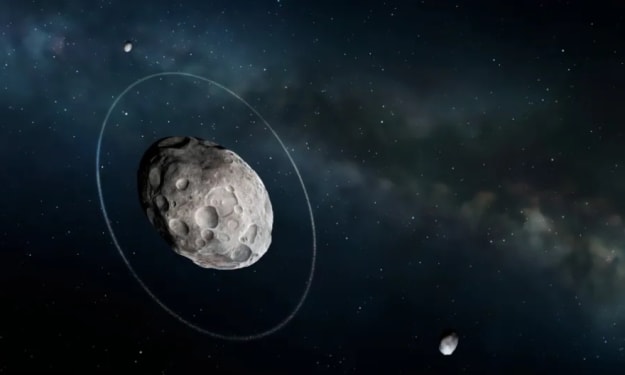
Hunt for the Names of Mysterious Dwarf Planets
Far beyond the familiar planets of our solar system lies a cold, dark region filled with icy bodies, ancient debris, and mysterious worlds yet to be fully understood. Among these distant objects are dwarf planets, many of which orbit on the fringes of our solar system in regions like the Kuiper Belt and beyond. While some, such as Pluto, have captured public imagination for decades, many others remain unnamed, sparking a fascinating hunt among astronomers to discover, study, and ultimately name these elusive celestial bodies.
By Aarif Lashariabout 2 hours ago in Earth
Nvidia CEO Says AI Will Create Jobs for Electricians and Plumbers
For years, artificial intelligence has been associated with job loss fears. From factory automation to office software, the dominant narrative has suggested that AI will replace human workers across industries. But according to Nvidia CEO Jensen Huang, the AI revolution tells a more complex—and surprisingly optimistic—story.
By Muhammad Hassan6 days ago in Earth



Comments
There are no comments for this story
Be the first to respond and start the conversation.