
The Invisible Force That Anchors Life on Earth
Explore the science of Earth's gravity, its fundamental role in shaping our planet, sustaining life

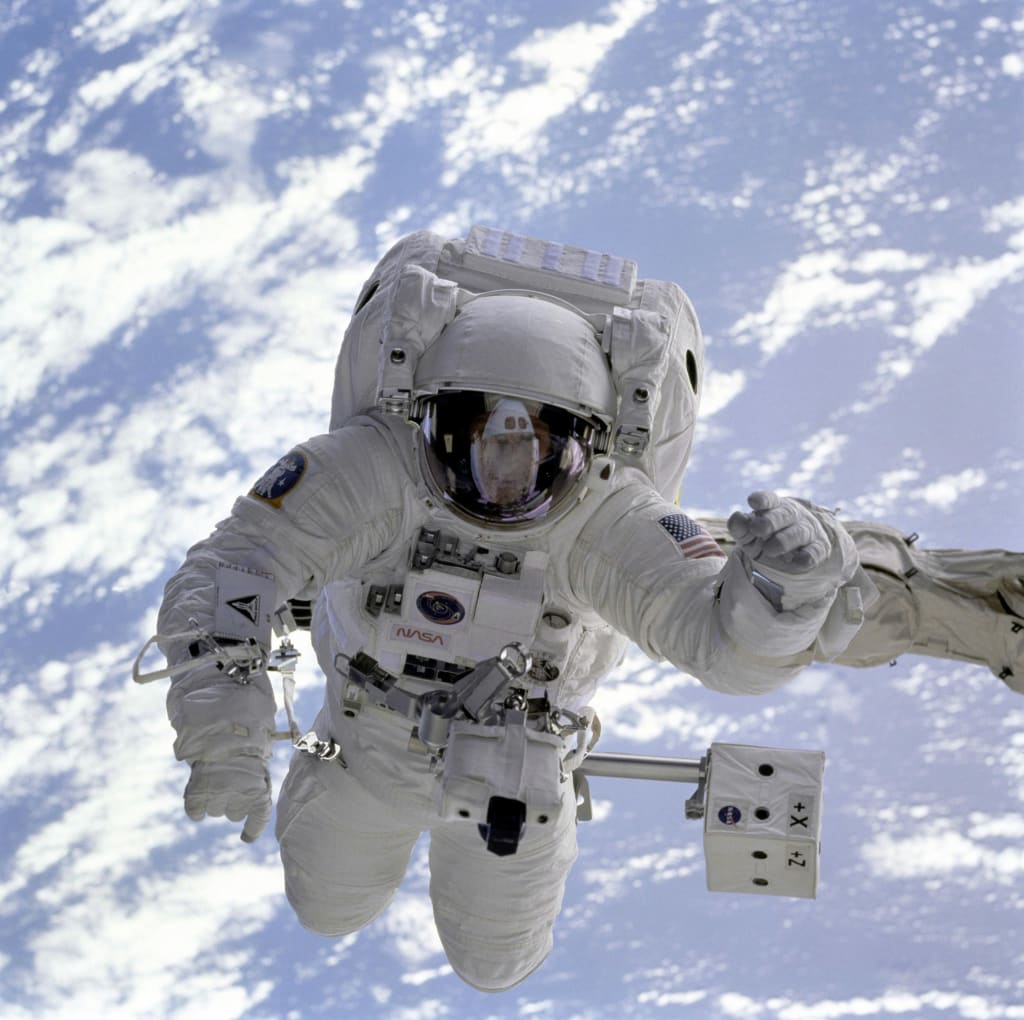
Gravity, though invisible and often taken for granted, is one of the most fundamental forces governing our universe. Without it, there would be no planets, no oceans, and no atmosphere. Life, as we know it, wouldn't exist. This 1500-word exploration delves deep into the mechanics, significance, and mysteries of Earth's gravity, from Isaac Newton's groundbreaking insights to modern-day scientific perspectives.
Understanding Gravity: A Historical Overview
The story of gravity begins in the 17th century with Sir Isaac Newton, who proposed the Law of Universal Gravitation. Legend has it that Newton conceptualized gravity after watching an apple fall from a tree. While the story may be apocryphal, the underlying truth is revolutionary: Newton realized that the same force causing an apple to fall also governs the motion of celestial bodies.
According to Newton, every object in the universe attracts every other object with a force that is proportional to the product of their masses and inversely proportional to the square of the distance between them. This law helped explain not only earthly phenomena but also the movement of planets in our solar system.
Centuries later, Albert Einstein revolutionized our understanding of gravity with his General Theory of Relativity. Einstein proposed that gravity is not a force but a curvature of spacetime caused by massive objects. This theory refined Newton's ideas and explained phenomena like the bending of light around stars and the expansion of the universe.
How Earth's Gravity Works
Earth's gravity is the result of its mass. The planet exerts a gravitational pull that attracts objects towards its center. The strength of this pull depends on two factors: the mass of the objects and the distance between them. For an average person on the surface of the Earth, gravity imparts a force of approximately 9.8 meters per second squared (9.8 m/s^2).

This gravitational pull is what gives us weight. It keeps our atmosphere intact, holds oceans in place, and enables the water cycle. Without gravity, air would disperse into space, and life would be unsustainable.
Interestingly, gravity is not uniform across the Earth's surface. Factors such as altitude, Earth's rotation, and varying geological formations cause slight variations. For example, gravity is slightly weaker at the equator than at the poles due to the centrifugal force created by Earth's rotation.
The Role of Gravity in Daily Life
Gravity is at work in every moment of our lives. It influences how we walk, how objects fall, and even how our bodies function. Our cardiovascular system, for instance, is designed to work against gravity, pumping blood from our feet to our brain. The inner ear relies on gravitational cues for balance and spatial orientation.
Beyond biology, gravity affects engineering, construction, and transportation. Engineers account for gravitational forces when designing buildings, bridges, and roads. Aerospace scientists must calculate escape velocities to overcome Earth's gravitational pull during space launches.
Gravity and the Natural World

Gravity's influence extends to Earth's natural processes. It governs tides through its interaction with the Moon. As the Moon's gravity pulls on Earth's oceans, it causes bulges that result in high and low tides. This gravitational dance between Earth and the Moon stabilizes our planet's axial tilt, contributing to a stable climate over geological time scales.
In geology, gravity drives erosion and sedimentation, shaping landscapes over millions of years. It also plays a critical role in the movement of tectonic plates and the occurrence of natural phenomena like landslides and avalanches.
Gravity in Space Exploration
Understanding gravity is essential for space travel. Satellites orbit Earth due to the balance between their forward momentum and the gravitational pull. This delicate equilibrium allows GPS, weather forecasting, and global communications to function.
In microgravity environments like the International Space Station (ISS), astronauts experience weightlessness, which affects their muscles, bones, and cardiovascular systems. Studying these effects helps scientists understand human physiology and prepare for longer missions to the Moon, Mars, and beyond.
Moreover, gravitational assists or slingshot maneuvers use the gravity of celestial bodies to change the speed and direction of spacecraft, conserving fuel and extending mission capabilities. This technique has been crucial in missions like Voyager and New Horizons.
The Future of Gravity Research
Despite centuries of study, gravity remains partially mysterious. Scientists are investigating how gravity interacts with quantum mechanics, aiming to develop a unified theory of everything. Projects like the Laser Interferometer Gravitational-Wave Observatory (LIGO) have detected gravitational waves, ripples in spacetime caused by massive cosmic events like black hole mergers.
These discoveries open new frontiers in astrophysics, offering insights into the early universe and extreme environments. Understanding gravity at a deeper level could revolutionize technology, energy, and our grasp of the cosmos.
Gravity's Philosophical and Cultural Impact
Gravity has not only scientific but also philosophical and cultural significance. It symbolizes stability, groundedness, and inevitability. From ancient myths to modern literature, gravity often appears as a metaphor for fate or the forces that bind us to reality.
In art and architecture, gravity influences design and expression. Sculptors and architects must consider gravity to create structures that are both functional and aesthetic. Even in dance and sports, the human body constantly negotiates with gravity to achieve grace, strength, and precision.
Conclusion: Embracing the Power of Gravity
Gravity is more than just a force; it's the invisible thread that weaves the fabric of our existence. From the falling of an apple to the orbit of planets, from the tides of oceans to the structure of galaxies, gravity shapes the universe in profound ways.
By understanding gravity, we gain not only scientific knowledge but also a deeper appreciation of our place in the cosmos. It reminds us that even the unseen can be immensely powerful, and that the most fundamental truths often lie beneath the surface of our everyday experiences.
As research continues and new discoveries unfold, gravity will remain a central theme in our quest to comprehend the universe and our role within it.
About the Creator
Keep reading
More stories from Md Muij Ahmed and writers in Earth and other communities.
Beyond the Alps: Discovering the Ultimate Adventure Playground in Switzerland
Beyond the Alps: Discovering the Ultimate Adventure Playground in Switzerland Switzerland, often romanticized for its postcard-perfect villages and precision-engineered watches, is far more than a tranquil destination of chocolates and cowbells. For the adventure seeker, it is a thrilling playground sculpted by nature and refined by centuries of outdoor tradition. From snow-draped summits to emerald valleys, Switzerland offers adrenaline-packed experiences year-round, inviting explorers to test their limits in one of the most spectacular settings on Earth.
By Md Muij Ahmed10 months ago in Wander
Seven Earth-Sized Planets Discovered Beyond Our Solar System
In one of the most exciting breakthroughs in modern astronomy, scientists have discovered a system of seven Earth-sized planets orbiting a distant star. This extraordinary finding has captured global attention because several of these planets exist in the “habitable zone,” where conditions may allow liquid water to exist. The discovery not only expands our understanding of planetary systems but also strengthens the possibility that life might exist beyond our solar system.
By Irshad Abbasi 4 days ago in Earth
A More Human Vocal
When we launched Vocal nearly a decade ago, the world was a very different place. LLMs did not exist, and stories were created one at a time by people sitting down to write, revise, and share something personal. Many of our assumptions about publishing, trust, and participation were built for a world where effort and output were inseparable.
By Justin @ Vocal7 days ago in Resources




Comments (1)
wow