
The Insect That Lives Inside a Bubble of Its Own Pee
This tiny insect builds a protective bubble from its own pee — and lives inside it until it grows up.

It sounds like a bad joke or a made-up children's story—an insect that lives in a bubble of its own urine. But in the strange, sticky world of insects, this is not fiction. It’s pure biology.
Somewhere in a sunny meadow or the edge of a forest, if you look closely at the stems of plants, you might spot a little blob of foam. It looks like someone spat on a leaf. But that foamy lump isn’t spit. It’s a home.
And inside that foamy home? Lives a tiny insect sitting comfortably in a bubble made from its own pee.
Say hello to the spittlebug—a master of survival and foam architecture.
Not Really Spit
Let’s clear something up: the bubbly substance isn’t actually spit. It’s a frothy mix made from the insect’s waste liquid—a combination of plant sap and urine—mixed with a special secretion and whipped into foam using air from its rear end.
In short, the spittlebug literally pees on itself and whips it into bubbles.
It’s gross. It’s genius. And it works.
What Is a Spittlebug?
Spittlebugs are the nymph stage of insects in the family Cercopidae. As adults, they become froghoppers—tiny hopping insects named for their strong back legs.
But before they hop around as adults, they spend their early life as small, soft-bodied nymphs. And during this vulnerable stage, they need protection.
Their solution? Build a fortress of foam.
How the Bubble House Works
The spittlebug nymph feeds by piercing the stem of a plant and sucking out the sap. But plant sap is mostly water and sugar—low in nutrients and full of excess liquid the insect doesn’t need.
Instead of just excreting it and moving on, the spittlebug uses that waste to its advantage.
Here’s the process:
1. It sucks up plant sap and digests what it needs.
2. It excretes the extra liquid through its anus.
3. It mixes this liquid with a special secretion.
4. It pumps air through it using abdominal movements.
5. The result? A protective foam bubble.
It keeps adding to the foam until it’s fully submerged inside—invisible, insulated, and safe.
Why Live in Foam?
The spittlebug’s foam bubble isn’t just a weird choice—it’s a brilliant survival tool.
Here’s what the foam does:
- Protection from predators: The bubble hides the nymph from birds, ants, and other insect-eating creatures.
- Moisture control: It keeps the spittlebug’s soft body from drying out in the sun.
- Temperature regulation: The foam acts like insulation, keeping the insect cool during the day and warm at night.
- Chemical shield: Some compounds in the foam may repel predators with their smell or taste.
In essence, this gross little bubble is a climate-controlled, anti-predator bunker made entirely by a baby insect.
Tiny Architect with a Dirty Trick
Despite how small it is—often no more than a few millimeters—the spittlebug shows remarkable behavior. It monitors its foam home constantly, repairing it when it breaks and making more when it dries out.
And when it’s finally ready to grow up? It leaves the bubble, sheds its skin, and becomes a fully formed froghopper, leaping away to start the adult stage of its life.
The foam is left behind, abandoned—just a pile of bubbly pee on a leaf. But it served its purpose perfectly.
Strongest Hopper in the Insect World
You might think the bubble is the coolest thing about spittlebugs—but wait till you hear this.
As adults, froghoppers are considered the best jumpers in the insect world. Some species can leap over 100 times their body length, faster than the blink of an eye. Their jumping ability is even more powerful, relative to size, than fleas or grasshoppers.
So that little insect hiding in a pee bubble? It grows up to be an Olympic-level jumper.
Nature’s Most Unexpected Hideout
We often think of nature as beautiful and majestic—and it is. But it’s also weird. Sometimes, survival means finding a use for things others throw away. Like… your own pee.
The spittlebug may be tiny, but it’s a master of adaptation. It takes waste and turns it into a weapon, a shelter, and a secret hiding spot.
So next time you see a little foam blob on a plant, don’t wipe it off. That’s someone’s home. A tiny architect is in there, hiding from the world, living in a bubble made from the one thing most creatures would flush away.
It’s weird. It’s gross.
And it’s brilliant.
About the Creator
A Changing Environmental Landscape Impacts the Insurance Industry
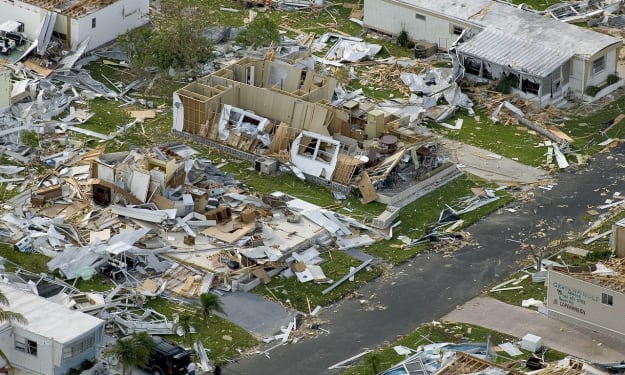
The phrase climate change simply refers to the changes in climate factors such as temperature and precipitation but over the last decade, the phrase has become much more polarizing, politicized and divisive. Non-scientific arguments aside, extreme weather events and natural disasters are increasing in number and severity and the effects of these events are causing more property damage in both commercial and residential spheres. Rising global temperatures can be attributed to the increase in damage causing storms and destructive wildfires. Insurance companies are seeing rising payout costs as an effect of climate change as more claims are submitted to cover losses from these events. As controversial as the phrase climate change is, insurance businesses and carriers are experiencing climate change first hand with increasing claims and losses as a direct result of weather and environmental events.
By doron levy5 days ago in Earth



Comments
There are no comments for this story
Be the first to respond and start the conversation.