
The Importance of the Moon for US policy
US moon policy is integral for the future

The Moon and the Arctic: Parallels in Policy and Governance
As humanity prepares for a new era of lunar exploration and potential settlement, the Moon’s harsh and enigmatic environment has drawn comparisons to Earth’s polar regions—especially the Arctic. Both are extreme frontiers marked by unique scientific value, environmental vulnerability, and complex governance challenges. Given these similarities, there is a compelling case for adapting the successful policy frameworks and international cooperation models developed for the Arctic to guide our approach to the Moon.
Environmental and Physical Similarities
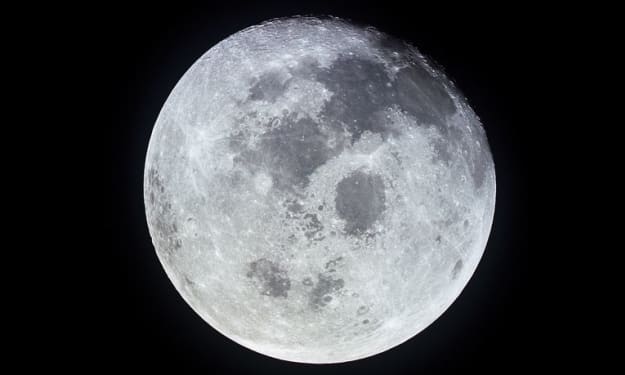
Both the Moon’s polar regions and the Arctic are characterized by extreme and fluctuating conditions. The lunar South Pole, a prime target for exploration, features areas of perpetual darkness and light, with temperatures ranging from a scorching 130°F (54°C) in sunlit spots to an astonishing -334°F (-203°C) in permanently shadowed craters. These craters are believed to trap water ice and other volatiles, much like how the Arctic’s permafrost and ice sheets preserve ancient materials.
Navigation and landing in both environments are complicated by unpredictable lighting and treacherous terrain. For example, the Moon’s deep shadows and bright peaks mirror the Arctic’s long polar nights and blinding, sunlit expanses.
Both regions are scientifically invaluable, offering insights into planetary processes, climate history, and the presence of water and other resources.
Governance and Policy Models: Lessons from the Arctic
The Arctic’s governance framework is a patchwork of international agreements and collaborative bodies, developed to manage a region with overlapping territorial claims, fragile ecosystems, and shared resources. Key elements include:
Multilateral Agreements: The Arctic Council, comprising eight Arctic nations and indigenous representatives, has forged legally binding agreements on search and rescue, oil spill response, and scientific cooperation.
Environmental Protection: The Arctic Environmental Protection Strategy and related treaties focus on preserving the region’s unique ecosystems, mitigating pollution, and managing resource extraction sustainably.
Consensus-Based Decision-Making: Arctic governance emphasizes consensus and respect for sovereignty, while also integrating input from non-Arctic states, NGOs, and indigenous communities.
Adaptive Management: Policies are regularly updated to reflect new scientific knowledge and emerging risks, such as climate change and black carbon emissions.
Applying Arctic Policies to the Moon
Given the parallels, several Arctic policy principles could be adapted for lunar governance:
International Cooperation: Like the Arctic Council, a lunar governance body could facilitate collaboration among spacefaring nations, coordinate scientific research, and manage shared resources such as water ice.
Environmental Safeguards: Just as the Arctic’s fragile environment is protected through strict pollution controls and sustainable development guidelines, lunar activities should prioritize minimizing contamination, preserving pristine regions, and managing resource extraction responsibly.
Crisis Response and Safety: The Arctic’s agreements on search and rescue and oil spill response could inspire similar protocols for lunar emergencies, ensuring that all lunar actors can assist each other in the event of accidents or environmental hazards.
Consensus and Inclusivity: Decision-making structures that value consensus and include a broad range of stakeholders—such as international organizations, private companies, and scientific institutions—would help ensure that lunar governance is fair, effective, and adaptable to new challenges.
Adaptive and Flexible Frameworks: As with the Arctic, lunar policies should be designed to evolve with advances in technology, science, and the changing nature of human activity on the Moon.
Conclusion
The Moon and the Arctic are both frontiers where environmental extremes, scientific opportunity, and geopolitical complexity intersect. The Arctic’s experience demonstrates the value of cooperative, adaptive, and environmentally conscious governance. As we stand on the threshold of a new era of lunar exploration, applying Arctic-inspired policies to the Moon offers a pragmatic and proven pathway to ensure that humanity’s next giant leap is sustainable, peaceful, and beneficial for all.
Furthermore, the United States’ lunar legacy is one of the greatest scientific and technological feats in human history. From the Apollo missions to the Artemis program, the U.S. has invested hundreds of billions of dollars into space exploration. Yet, despite these efforts, there remains one glaring issue: we have no claim to sovereignty over the Moon. If this continues, decades of American investment risk becoming a lost cause, with other nations poised to benefit from our work.
Billions Invested, No Guarantee of Return
NASA’s Apollo program alone cost more than $25 billion in the 1960s and 70s — over $150 billion in today’s dollars. The Artemis program, which aims to return astronauts to the Moon, is projected to cost $93 billion by 2025. These figures represent a monumental commitment from U.S. taxpayers. And yet, under current international law — specifically the 1967 Outer Space Treaty — no nation can claim ownership of any celestial body, including the Moon.
This framework leaves the U.S. in a vulnerable position. While we have spent decades laying the groundwork, there's nothing stopping rival nations from building permanent lunar settlements or harvesting lunar resources based on our technological breakthroughs. The absence of sovereignty undermines the return on investment Americans rightfully expect from their government.
Technological Pioneers Deserve Legal Recognition
Throughout history, pioneering investment has often been tied to ownership. When explorers discovered new lands, they claimed territory in recognition of their risks and costs. The same should apply to space. The U.S. not only landed on the Moon first — it also set the foundation for future missions with its scientific data, mapping, and lunar technology.
Without sovereignty, America opens the door for space freeloaders: nations or corporations that didn't pay the cost of exploration but can now reap the benefits without restriction. We risk letting other powers — especially China or Russia, who are actively expanding their space programs — capitalize on our groundwork. If we fail to assert rights, we forfeit our role as global leaders in space exploration.
Sovereignty Secures Strategic and Economic Interests
Beyond pride and principle, the Moon holds immense strategic value. It offers access to water ice, helium-3 (a potential clean energy source), and critical rare-earth metals used in electronics. The nation that claims sovereignty could control resource extraction, scientific bases, and possibly launch platforms for deeper space travel.
Space Exploration
The Moon serves as humanity’s essential first step toward broader space exploration. Its proximity to Earth makes it an ideal testbed for developing and refining the technologies, life support systems, and operational techniques required for future missions to more distant destinations, such as Mars and beyond. By establishing a sustained presence on the Moon, scientists and engineers can learn how to keep astronauts healthy in lower gravity and higher radiation environments, test advanced materials and robotics, and utilize local resources like water ice for fuel and life support. These experiences reduce the risks and costs of deep space missions while providing vital knowledge that can be applied to longer journeys across the solar system. Ultimately, conquering the challenges of lunar exploration prepares us to extend human presence further into space, making the Moon the gateway to the universe
If America does not take a stand now, others will. The global space race is not theoretical — it’s already underway. Refusing to claim sovereignty isn’t humility; it’s strategic negligence.
Conclusion
The U.S. has already spent the money, taken the risks, and paved the way. To allow others to walk in and benefit from those efforts without challenge is to let that investment go to waste. Claiming sovereignty over the Moon isn't about imperialism — it's about ensuring that American contributions are respected, protected, and rewarded.
About the Creator
Amor Zella Gold
Graduate of California Institute of Technology, Class of 22'. Advid explorer of the moon and possible polices that concern the moon.
Keep reading
More stories from Amor Zella Gold and writers in Earth and other communities.
A Groundbreaking Discovery on the Moon: The Presence of Subsurface Liquid Water and Its Implications
Abstract Recent lunar exploration missions have uncovered evidence of subsurface liquid water beneath the Moon’s surface, a discovery that challenges previous assumptions about the Moon’s dry nature. This paper explores the significance of this finding, including its implications for future lunar exploration, the search for extraterrestrial life, and its potential role in sustaining human presence beyond Earth.
By Amor Zella Gold11 months ago in Earth
Rubio to Warn That US Is ‘Prepared to Use Force’ if Venezuela Does Not Meet Demands
The keyword “Rubio to warn that US is ‘prepared to use force’ if Venezuela does not meet demands” has once again brought international attention to the long-running crisis between the United States and Venezuela. Statements attributed to U.S. Senator Marco Rubio signal a hardline stance that reflects growing frustration in Washington over Venezuela’s political leadership, democratic backsliding, and regional security concerns.
By Aarif Lashari3 days ago in Earth
Man Shot and Killed During Minneapolis Immigration Crackdown Graduated from Preble High School
A man shot and killed during an immigration enforcement operation in Minneapolis has been identified as a graduate of Preble High School, a detail that has added a deeply personal dimension to an already controversial crackdown. As authorities continue to investigate the circumstances surrounding the fatal shooting, community members, former classmates, and civil rights advocates are demanding transparency, accountability, and a broader review of how immigration enforcement actions are being carried out.
By Salaar Jamali6 days ago in Earth


Comments
There are no comments for this story
Be the first to respond and start the conversation.