
The Hundred-Year-Old Tree
A Century-Old Tree That Witnessed Generations and Carried Stories of a Whole Village

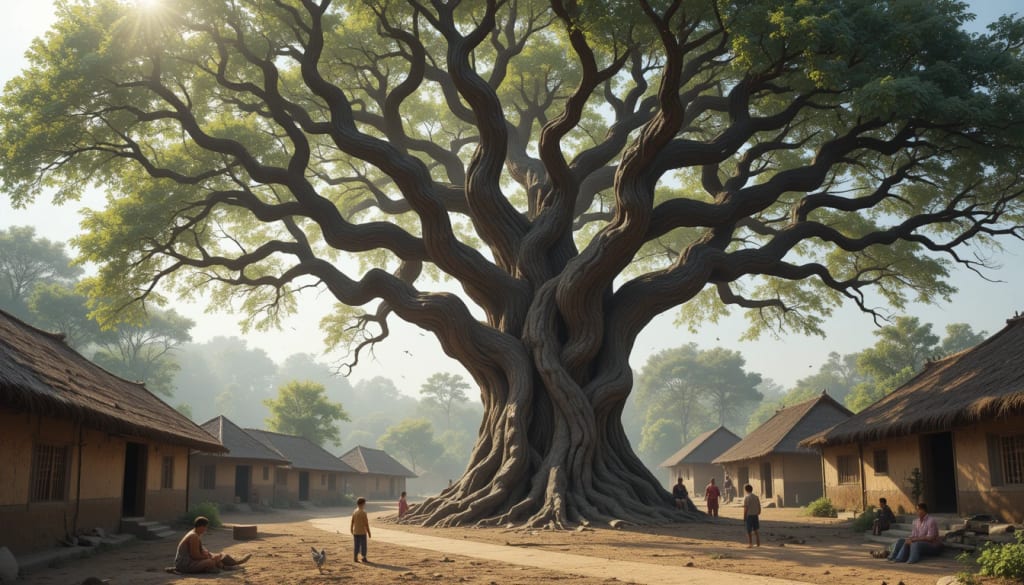
In the quiet village of Darwa, surrounded by golden wheat fields and distant hills, stood a tree that was older than any man or woman who lived there. The villagers simply called it “The Grand Tree.” No one knew exactly what kind it was — some said it was a fig tree, others believed it was sacred. But all agreed on one thing: the tree was over a hundred years old.
It stood in the heart of the village, beside the old water well and across from the mosque. Its roots stretched deep into the earth, and its branches spread wide like protective arms over the nearby stone benches where old men gathered to sip tea and tell stories.
Children climbed it, lovers carved hearts into its bark, and elders sat beneath it during the long summer evenings. To the villagers, it wasn’t just a tree — it was a silent witness to their lives.
Aminah, a twelve-year-old girl with curious eyes and a notebook always in hand, loved the tree more than anyone. Every afternoon after school, she would sit beneath its shade and write short stories, imagining the tree whispering tales into her ears.
One day, as she scribbled away, her grandfather, Baba Hakeem, joined her with his walking stick.
“You know, Aminah,” he said, lowering himself slowly onto the bench, “this tree remembers more than we do.”
She looked up, puzzled. “Trees don’t remember things, Baba.”
“Oh, but this one does,” he replied with a soft chuckle. “When I was a boy, we used to hold village meetings under this tree. I saw a wedding here when I was six, and I saw the tree bloom the same day your mother was born.”
Aminah smiled and began writing his words into her notebook. “Tell me more,” she said.
Baba Hakeem’s eyes lit up. “There was a time when our village had no electricity. On moonlit nights, people would gather here with drums and flutes. The tree danced with the wind, and the leaves would hum with music.”
“Did the tree ever speak?” Aminah asked playfully.
“Only to those who truly listened,” he whispered with a wink.
Weeks passed, and the village prepared for a festival. It was the tree’s 100th anniversary — or so the village elders estimated. A celebration was planned with music, poetry, and food. Banners were strung between branches, and lanterns hung like glowing fruit.
The day arrived with blue skies and laughter. Children painted the roots with bright colors, the women cooked large pots of rice and meat, and the men cleaned the surrounding area, making it shine like never before.
Aminah was asked to read a story for the crowd. Nervous but excited, she stood on a wooden box under the tree’s wide arms and read her story titled “The Tree That Remembered Everything.” It was filled with memories she had gathered from Baba Hakeem and other elders — of weddings, storms, lost love, and laughter under the stars.
When she finished, there was silence. Then applause. People cheered, and some even had tears in their eyes.
That night, as the festival wound down, Baba Hakeem sat under the tree, watching the lanterns flicker. Aminah joined him once more.
“You’ve made the tree proud,” he said.
“I wish it could talk back,” she replied.
It already does,” he said, tapping her notebook gently. “Through you.
Years passed. Seasons changed. The wheat fields turned golden every summer and white with frost in winter. Aminah grew older, went to college in the city, and later became a writer. But she never forgot the tree.
When Baba Hakeem passed away, she returned to the village. Under that same tree, they laid his prayer mat and read verses. Aminah sat there long after everyone left, listening to the wind rustling the leaves.
She opened her notebook — the same one from her childhood — and wrote:
The tree lost a friend today. But it also gained a story.
Years later, the village faced change. Developers came with machines, offering to buy land for a new road. The tree stood in the way. Some villagers saw opportunity, others resisted.
Aminah returned once more. She stood before the town meeting and raised her voice.
“This tree is not just wood and leaves,” she said. “It holds the soul of our village. It has seen births and burials, joy and sorrow. You can’t replace a century of memories with concrete.”
She showed them her stories, now published in a book titled “Whispers of the Grand Tree.” She read aloud the tale of her grandfather’s youth, the festival, the love letters carved into the bark.
Moved by her words, the village decided. The road was redirected. The tree would remain.
Today, the tree still stands in Darwa — older, wiser, and stronger. Tourists come to visit. Schoolchildren gather to read. A plaque beneath it reads:
This tree has stood for over 100 years. May it stand for 100 more.
And every so often, on quiet afternoons, a little girl sits under its shade with a notebook, writing down what the tree whispers.
Because the tree remembers everything.
About the Creator
Bilal Mohammadi
welcome to Bilal Mohammadi articles please follow my page
Keep reading
More stories from Bilal Mohammadi and writers in Earth and other communities.
Golden Fields
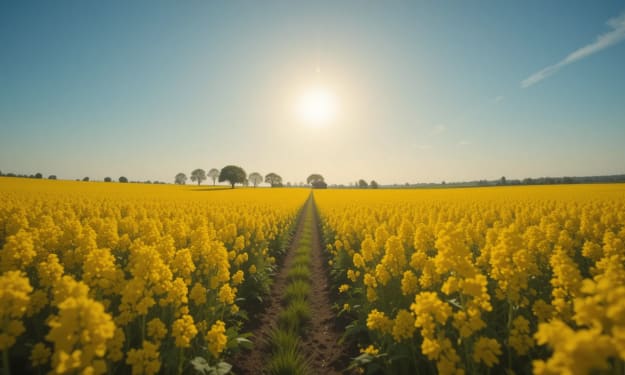
Aarav stood at the edge of the village road, staring at the endless yellow ocean before him. The mustard flowers were in full bloom, stretching far as his eyes could see. It was early morning, and the sun, soft and golden, touched the tops of the flowers, turning the entire field into a shimmering blanket of gold.
By Bilal Mohammadi8 months ago in Earth
Honey, It's Time We Save the Bees
As you are looking outside at the flowers and trees, you might see a bee buzzing by, but did you know these common creatures are endangered? According to Greenpeace, “the number of bee colonies per hectare has declined by 90 percent since 1962” (Greenpeace, 2021). This is alarming as bees are responsible for doing so many things to keep our environment running efficiently. Ironically, we common overlook them like they are any other bug. We forget to appreciate all of the things bees do for us, and we fail to see the beauty that they bring into the world.
By Nicole Higginbotham-Hogue7 days ago in Earth


Comments
There are no comments for this story
Be the first to respond and start the conversation.