
The Hidden World of the Centipede: Nature's Swift and Secretive Predator
With a hundred legs and a venomous bite, the centipede lives in darkness, thriving in the shadows of the natural world.

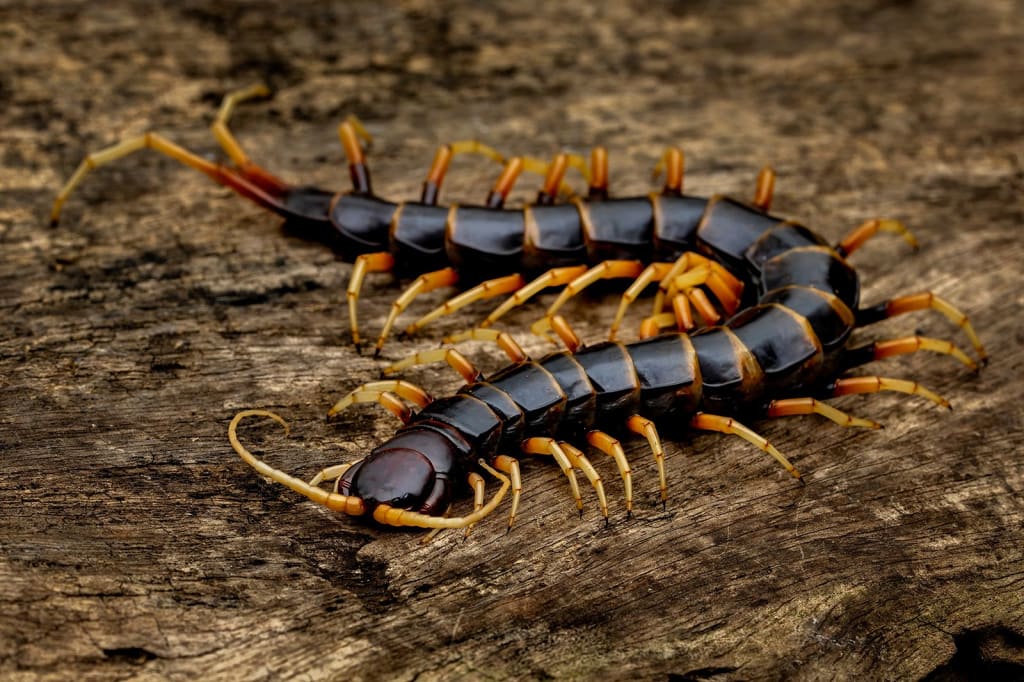
In the damp corners of our homes, beneath rocks in the forest, or buried deep in the soil, a long, segmented creature moves with astonishing speed. The centipede, whose name means "hundred feet," is one of the most misunderstood yet fascinating predators in the insect world. Despite their unsettling appearance, these creatures have a unique and important role in ecosystems.
Anatomy of a Night Hunter
Centipedes belong to the class Chilopoda and can be found on every continent except Antarctica. Ranging in size from a few millimeters to over a foot long, these invertebrates have between 15 and 177 pairs of legs, depending on the species. Contrary to their name, no centipede actually has exactly 100 legs.
Their bodies are flat and flexible, allowing them to slip into narrow cracks and crevices. The first pair of legs has evolved into venomous fangs known as forcipules, used to paralyze their prey. Their antennae are highly sensitive, helping them navigate and hunt in complete darkness.
The Perfect Predator
Centipedes are carnivorous and feed on insects, spiders, and even small vertebrates such as lizards or mice, depending on their size. They are fast, agile, and lethal. A single bite from a large centipede can kill prey quickly, thanks to their venom.
Their hunting style is silent and efficient. They rely on speed and stealth to ambush their prey, wrapping around them and injecting venom before devouring them. This role helps control insect populations, making centipedes beneficial to the balance of natural habitats.
Living in the Shadows
These creatures are nocturnal and prefer moist environments. During the day, they hide under rocks, logs, leaves, or inside walls and basements. At night, they emerge to hunt.
Their preference for darkness and hidden places has earned them a fearful reputation among humans. Many people encounter them in their homes and panic. But while their appearance may be intimidating, most centipedes are harmless to humans. Bites are rare and usually not medically serious, though they can be painful.
A Survivor Through Time
Fossil records show that centipedes have existed for over 400 million years, evolving and adapting through countless environmental changes. Their resilience makes them one of the oldest surviving land arthropods.
Some ancient centipedes, such as the extinct Arthropleura, could grow over two meters long, making them among the largest invertebrates to ever crawl the Earth. Today’s centipedes are much smaller, but their adaptability remains impressive.
Cultural Fascination and Fear
Throughout history, centipedes have appeared in folklore, mythology, and art — often symbolizing fear, mystery, or protection. In some Asian cultures, large centipedes are used in traditional medicine and believed to possess spiritual power.
In horror literature and films, their image is often used to evoke discomfort or fear. Their alien-like body and rapid movement make them an ideal creature for spooky tales. But in truth, they are more helpful than harmful.
Conservation and Curiosity
Though not endangered, centipedes are sensitive to environmental changes, particularly pesticide use and habitat destruction. As we expand cities and alter natural landscapes, their populations may decline in some areas.
Learning about these creatures can help reduce irrational fear and encourage respect for their role in nature. Observing centipedes in their natural environment reveals a creature finely tuned for survival — fast, quiet, and effective.
Final Thoughts
The centipede is a creature of darkness, not evil — a predator, not a pest. Its presence reminds us that nature’s design includes all shapes and strategies. Every creature, even those that crawl in shadow, has its place and purpose.
So the next time you see a centipede, pause your fear. Instead, marvel at its ancient design, its quick movements, and its secret life. For in the quiet corners of the world, the centipede reigns as a silent and swift guardian of the balance of nature.
About the Creator
Keep reading
More stories from Insect Legends and writers in Earth and other communities.
The Butterfly’s Secret: A Journey Through Change, Color, and Courage
In the quiet corners of gardens, forests, and meadows, a tiny creature begins a journey that is nothing short of miraculous. The butterfly, with its delicate wings and graceful flight, wasn’t always a symbol of beauty and transformation. Its life begins humbly, as a caterpillar inching along leaves, focused solely on eating and growing.
By Insect Legends10 months ago in Earth
Verizon Outage Today
A sudden Verizon outage can feel unsettling, especially when your phone switches to “SOS” or “emergency calls only” without warning. Across social media and outage-tracking platforms, users often rush to ask the same questions: Is Verizon down right now? Why is my phone in SOS mode? What happened to Verizon today, and when will Verizon be back up? While outages are never convenient, they are not uncommon for large national carriers like Verizon Wireless. Understanding what a Verizon service outage means—and how to respond—can help reduce confusion during moments when connectivity disappears. Is Verizon Down? Understanding Service Outages A Verizon wireless outage occurs when part of Verizon’s cellular or data network becomes unavailable. This can affect voice calls, text messages, mobile data, or all services at once. Some outages are isolated to specific cities, such as Verizon outage NYC, Atlanta, Houston, or New Jersey, while others expand into a broader Verizon nationwide outage. When service is disrupted, users commonly report: Verizon down today Verizon network down Verizon not working Is Verizon down in my area? Verizon service outage These reports often surface within minutes, especially on outage-monitoring platforms. Why Does My Phone Say SOS? One of the most alarming signs during a Verizon outage today is seeing SOS, SOS only, or emergency calls only at the top of an iPhone. This leads many to ask, “Why is my phone in SOS mode Verizon?” SOS mode does not mean your phone is broken. It indicates that your device cannot connect to the Verizon network but can still place emergency calls using any available carrier signal. Common searches during outages include: Why does my phone say SOS only? iPhone stuck in SOS mode Why is my phone on SOS Verizon? What does SOS mean on iPhone? How to get phone out of SOS mode In most cases, the issue resolves automatically once Verizon restores network connectivity. What Caused the Verizon Outage Today? When connectivity drops, users naturally want immediate answers to what caused the Verizon outage today. Verizon does not always publish technical details right away, but outages are typically linked to: Network maintenance or system upgrades Fiber or backend routing failures Power outages affecting Verizon towers Severe weather or environmental damage Unexpected network congestion Despite online speculation, most Verizon outages are not related to cyberattacks. Searches like “Verizon cyber attack today” often trend during disruptions, but confirmed causes are usually infrastructure-related and temporary. How to Check Verizon Outage Status in Real Time If you’re wondering “Is Verizon still down?”, there are several reliable ways to check. Downdetector Verizon Platforms like Downdetector and Down Detector Verizon track real-time user reports. A spike in complaints usually confirms a Verizon outage before official statements are released. Verizon Outage Map Verizon provides a Verizon wireless outage map, sometimes including outage views by ZIP code. This helps answer questions like: Is there a Verizon outage near me? Is Verizon down in my area? My Verizon App and Network Status Pages The My Verizon app and Verizon’s official network status tools may display service alerts and updates during larger outages. Verizon Customer Service During an Outage During a widespread Verizon service outage, many users attempt to call Verizon customer service or search for the Verizon customer service number. While support teams remain active, wait times often increase significantly during major disruptions. Important things to keep in mind: Customer service representatives usually cannot provide exact repair timelines Rebooting your phone repeatedly during an outage rarely helps Network restoration often happens region by region Monitoring Verizon outage updates is typically more effective than calling support during peak outage periods. When Will Verizon Be Back Up? The most pressing question remains: When will Verizon service be restored? The answer depends on: Whether the outage is local or nationwide The cause of the disruption Whether physical repairs are required Minor outages may resolve within minutes or hours. Larger incidents—such as a Verizon cellular outage affecting multiple states—can take longer. Verizon generally prioritizes emergency communications before restoring full voice and data services. Search trends during outages often include: When will Verizon be fixed? How long will Verizon be down? When is Verizon going to be back up? While exact times are rarely guaranteed, service usually returns gradually rather than all at once. Verizon, Competition, and Broader Impact High-profile outages often spark comparisons with competitors like AT&T and T-Mobile. Searches for AT&T outage or T-Mobile outage frequently rise at the same time, as users explore alternative networks. Although outages generate headlines and social media frustration, they rarely have lasting effects on Verizon stock unless disruptions become frequent or prolonged. What to Do If Your Phone Is in SOS Mode If your phone shows SOS only during a Verizon outage: Enable Wi-Fi calling if available Avoid changing SIM or resetting network settings mid-outage Keep your device charged and updated Check Verizon outage updates periodically Once Verizon’s network stabilizes, most phones exit SOS mode automatically. Final Thoughts A Verizon outage can be disruptive, especially when communication suddenly feels out of reach. However, seeing SOS mode does not mean your phone is damaged—it simply reflects a temporary network issue. Staying informed through trusted sources like Downdetector, Verizon’s outage maps, and official Verizon updates can help users navigate these moments with clarity. While outages are frustrating, they are typically temporary, and service restoration is usually a matter of time rather than cause for alarm.
By Saboor Brohi 4 days ago in Earth
El Niño is likely to return in 2026. Here's what that means for Houston and Texas.
La Niña has been active since mid-October. However, according to the January update from the National Oceanic and Atmospheric Administration, it’s likely to end over the next couple of months, and a transition to El Niño is likely to occur later this year.
By Dena Falken Esq4 days ago in Earth
Rachel Reviews: The Spiral Archive by Pieter Hendrik
It's difficult for me to know where to start with a review of this book as it was, for me, an entirely unique experience and one that I'll probably never have again. I don't want that to be interpreted as unenjoyable but it has left me scratching my head a little and ruminating on its content, its themes and its characters.
By Rachel Deemingabout 23 hours ago in BookClub



Comments
There are no comments for this story
Be the first to respond and start the conversation.