
The Hidden Depths of the Ocean
Unveiling the Mysteries Beneath the Waves

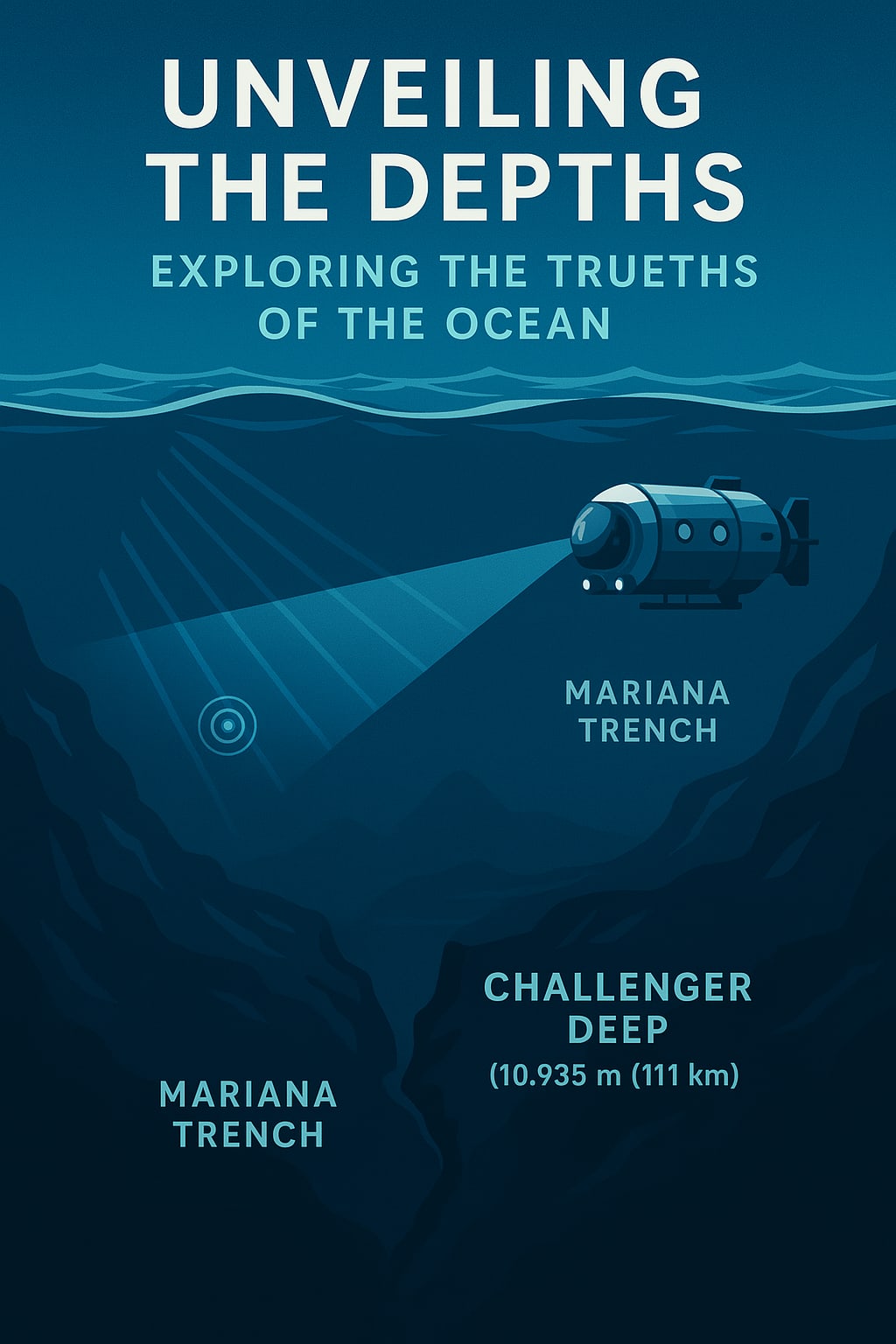
The ocean is an immense and mysterious world, filled with countless secrets yet to be uncovered. One of the most intriguing questions scientists and explorers continue to pursue is the true depth of the ocean. While its vastness has been recognized for centuries, accurately measuring its depth has been a formidable challenge.
The Early Quest to Measure Ocean Depth
More than 500 years ago, navigators and explorers began creating maps of the world’s oceans, charting their vast expanses. However, determining their depth was nearly impossible with the limited technology of the time. The first significant attempt to measure ocean depths on a large scale came in 1872 when the British Royal Navy’s HMS Challenger embarked on a pioneering expedition.
During its journey, the Challenger made a groundbreaking discovery: one of the deepest regions in the Pacific Ocean, known today as the Mariana Trench. This discovery marked the beginning of deep-sea exploration and provided valuable insights into the ocean’s hidden landscapes.
The Deepest Point on Earth: Challenger Deep
Modern technology has revolutionized our understanding of ocean depths. Scientists now use SONAR (Sound Navigation and Ranging), a technology that emits sound pulses and measures their return time to determine underwater topography. Through this method, researchers have estimated that the average depth of the ocean is approximately 3.7 kilometers (2.3 miles). However, some regions are significantly shallower or much deeper.
The deepest known point in the ocean is the Mariana Trench, located in the Pacific Ocean. In June 2020, a team of researchers utilized one of the most advanced deep-diving submersibles to measure its depth. They identified the deepest section, known as Challenger Deep, which reaches an astonishing depth of 10,935 meters (nearly 11 kilometers or about 36,000 feet). This makes it the lowest known point on Earth’s surface.
The Importance of Studying the Ocean Floor
Studying the ocean’s depths is not just about measuring its extreme points; it also helps scientists understand the Earth’s dynamic processes. The ocean floor is constantly shifting due to tectonic activity, where massive plates move and interact beneath the water’s surface. When two tectonic plates pull apart, they create new oceanic crust, allowing material from deep within the Earth to rise and form new seabeds. In some cases, superheated fluid escapes through cracks in the ocean floor, forming hydrothermal vents—underwater geysers that support unique ecosystems.
Life in the Deepest Abyss
Surprisingly, even in the ocean’s most extreme depths, life thrives. Scientists have discovered a variety of deep-sea creatures, including shellfish fossils, tube worms, and other unique organisms that have adapted to the intense pressure and darkness. These findings shed light on the resilience of life and provide clues about the evolution of marine species over millions of years.
Furthermore, the sediment that accumulates on the ocean floor serves as a historical archive of Earth’s past. By studying these layers, researchers can gain insights into climate changes, past marine life, and the geological transformations that have shaped our planet. Understanding these processes not only enriches our knowledge of Earth's history but also helps predict future environmental changes.
The Future of Deep-Sea Exploration
As technology advances, scientists are developing even more sophisticated tools to explore the ocean’s hidden realms. Unmanned submersibles, improved sonar systems, and AI-driven mapping technologies are paving the way for new discoveries. With each expedition, researchers get closer to unraveling the mysteries that lie beneath the waves.
The ocean remains one of the last great frontiers of our planet. Its depths hold secrets that could revolutionize our understanding of Earth’s past, present, and future. As long as curiosity drives human exploration, the quest to uncover the ocean’s mysteries will continue, taking us deeper into the unknown than ever before.
About the Creator
Eleanor Grace
"Dream big.Start small.Act now."
Keep reading
More stories from Eleanor Grace and writers in Earth and other communities.
The Endless Quest of the Periodic Table
The periodic table is more than just an organized list of elements; it is a vast encyclopedia that reveals the intricate relationships between the building blocks of the universe. From the early 19th century, when Humphrey Davy discovered a handful of basic elements, to the 118 elements we know today, every addition has been more than just a numerical increase. Each discovery has propelled human understanding of the natural world to new heights, unlocking deeper insights into the nature of matter itself.
By Eleanor Grace10 months ago in Earth
Icy Chaos in Central and Eastern Europe
Winter has unleashed its fury across central and eastern Europe, leaving travelers frustrated and transport networks struggling to keep up. Over the past few days, freezing rain and ice have wreaked havoc on airports, train stations, and highways — forcing flight diversions, delaying trains, and making roads treacherously slippery. From Vienna to Budapest, Prague to Bratislava, this icy grip has brought travel to a near standstill. Let’s take a closer look at what’s happening, how it’s affecting people on the move, and what it tells us about winter travel in Europe. A Sudden Winter Blow A sudden wave of freezing rain swept across the region, coating runways, rail tracks, and roads with a dangerous layer of ice. Major airports in Austria, Hungary, Slovakia, and the Czech Republic were particularly affected. At Vienna International Airport, operations were temporarily suspended when runways became too slick for flights to land safely. Travelers already in the air had to divert to alternative airports in Munich, Frankfurt, and Venice. Meanwhile, Budapest’s Ferenc Liszt International Airport paused all arrivals and departures, and Prague’s Václav Havel Airport continued operating but at limited capacity. Trains Crawling Through Ice Rail networks weren’t spared. Across Austria, Hungary, and the Czech Republic, ice on tracks and power lines caused delays and cancellations. Austria’s national rail operator, ÖBB, urged passengers to postpone non-essential journeys. In the Czech Republic, travelers at Prague’s main station faced long waits as trains struggled to maintain schedules. Hungary’s tram and suburban rail services were temporarily suspended due to ice buildup on power lines. This combination of black ice, frozen switches, and heavy snowfall has tested the limits of winter infrastructure in Europe. Roads Turn Into Skating Rinks The icy weather didn’t just affect public transport — roads became treacherous, too. Authorities in Slovakia and the Czech Republic warned residents to avoid non-essential travel as highways turned into slippery skating rinks. Accidents and minor collisions were reported, and emergency services were busy responding to dozens of injuries from slips and falls. Even schools weren’t immune: parts of Romania shifted to online learning, keeping children safe during the extreme temperatures, which dropped to around -13°C in some areas. Why This Weather Is So Disruptive Meteorologists point to several factors that made this storm particularly severe: Freezing rain on top of existing snow creates an icy layer that’s extremely hard to clear. Rapidly refreezing surfaces make conditions unpredictable. Temperatures hovering around freezing prevent efficient melting during the day. This “perfect storm” scenario underscores just how vulnerable transport systems are to extreme weather. Even well-prepared airports and rail networks can struggle when weather transitions from snow to freezing rain. Voices From the Ground Passengers took to social media to express their frustration: Crowded airports as travelers scrambled to rebook flights. Train stations packed with delayed commuters, unsure when the next train would depart. Warming centers opened to provide shelter and hot drinks for stranded travelers. For many, a simple trip turned into a test of patience and resilience. Tips for Traveling in Freezing Conditions If you must travel during winter storms, experts recommend: Check flight and train schedules regularly, as delays can change quickly. Allow extra time for travel to avoid missing connections. Consider travel insurance that covers weather-related disruptions. If driving, carry winter essentials: blankets, food, water, and check road conditions before departure. Most importantly, prioritize safety over schedules — icy conditions can change rapidly, making travel risky. A Reminder From Winter This recent chaos in central and eastern Europe serves as a stark reminder of how interconnected transport systems are, and how vulnerable they can be to extreme weather. Flights grounded, trains stalled, and highways turned icy show that winter can bring travel to a halt — sometimes with very little warning. As Europe continues to face volatile winter conditions, travelers and authorities alike are reminded: preparation and flexibility are key. Sometimes, the weather truly has the final say. ❄️🛫🚆
By Muhammad Hassan7 days ago in Earth
Chameleon: Nature’s Master of Disguise
When most people think of camouflage in the animal kingdom, the chameleon immediately comes to mind. These small reptiles have fascinated scientists, photographers, and wildlife enthusiasts for centuries, not only for their astonishing color-changing abilities but also for their incredible adaptations that make them masters of survival. The chameleon is more than just a showpiece of nature’s artistry; it is a symbol of evolutionary ingenuity and adaptability. The Science of Color Change Chameleons are perhaps best known for their ability to change color, a trait that has captivated observers for generations. While many assume this ability is solely for hiding from predators, the reality is far more complex. Color change serves multiple purposes, including: Camouflage: Blending with surroundings to avoid predators or ambush prey. Communication: Displaying bright colors during courtship or aggressive interactions with rivals. Thermoregulation: Adjusting skin color to absorb or reflect sunlight, helping regulate body temperature. The process of color change is made possible by specialized cells called chromatophores in the chameleon’s skin. These cells contain pigments, and by expanding or contracting them, chameleons can create an array of colors. Beneath the chromatophores, iridophores and guanophores reflect light in ways that produce iridescence, enabling even more intricate patterns. Scientists have discovered that chameleons’ color change is not purely reactive; it is also influenced by mood, social signals, and environmental conditions, making it one of the most sophisticated forms of adaptive behavior in the animal kingdom. Physical Adaptations That Enhance Survival Color change is just one aspect of the chameleon’s impressive survival toolkit. These reptiles have evolved several other features that reinforce their mastery of disguise: Eyes: Chameleons have independently rotating eyes, which allow them to observe nearly 360 degrees around them. This unique vision helps them spot predators and prey while remaining stationary and hidden. Tongue: Chameleons are equipped with a rapidly extending tongue that can be up to twice the length of their body. This allows them to catch insects from a safe distance without revealing their position. Feet and Tail: Chameleons have zygodactylous feet (two toes pointing forward, two backward) and prehensile tails, which allow them to grip branches securely while moving slowly and deliberately—perfect for stealthy navigation through trees. Body Shape and Movement: Many species have laterally flattened bodies and move in a rocking, slow-motion gait, mimicking leaves swaying in the wind. This natural motion enhances camouflage and reduces detection by predators. Chameleons Around the World Chameleons are primarily found in Madagascar, Africa, and parts of southern Europe and Asia. Madagascar is home to the most diversity, with hundreds of unique species adapted to various habitats, from tropical rainforests to arid deserts. Panther Chameleon (Furcifer pardalis): Native to Madagascar, males display spectacular colors during mating rituals, with bright reds, blues, and greens. Jackson’s Chameleon (Trioceros jacksonii): Recognizable by its three horns, this species originates from East Africa and is often found in cooler highlands. Veiled Chameleon (Chamaeleo calyptratus): Known for its prominent casque (helmet-like head), it inhabits Yemen and Saudi Arabia and can exhibit dramatic color changes depending on mood and temperature. Each species has evolved specific adaptations for its environment, demonstrating the chameleon’s remarkable ecological versatility. Chameleons as Masters of Stealth The combination of color change, movement, and physical adaptations makes chameleons extraordinarily difficult for predators to detect. Birds, snakes, and small mammals may prey on them, but chameleons’ stealthy strategies give them a fighting chance. Moreover, the ambush hunting technique of chameleons is equally impressive. By remaining motionless and blending into foliage, they can capture unsuspecting insects with precision and efficiency. This makes them both predator and prey masters of disguise, a dual role that is rare in the animal kingdom. Threats and Conservation Despite their incredible adaptations, chameleons face growing threats from human activity. Habitat destruction, climate change, and the exotic pet trade have put several species at risk. In Madagascar, deforestation has significantly reduced available habitat, threatening endemic chameleon species. Conservation efforts are underway in some regions, including: Protected areas and national parks to preserve habitats. Captive breeding programs to maintain population diversity. Regulations on pet trade to prevent over-collection of wild specimens. Educating the public about the ecological importance and unique biology of chameleons is crucial to ensure these masters of disguise continue to thrive in the wild. The Fascination with Chameleons Chameleons have captured human imagination for centuries. They are featured in art, folklore, and modern media, symbolizing adaptability, secrecy, and transformation. In modern science, studying chameleons has inspired research in camouflage technology, color-changing materials, and robotics, showing that nature’s ingenuity can inform human innovation. Their behavioral complexity, visual mastery, and survival strategies continue to fascinate scientists, highlighting how evolution crafts creatures perfectly adapted to their environments. Conclusion Chameleons are more than just colorful reptiles; they are nature’s ultimate masters of disguise. Their ability to change color, move stealthily, and adapt to diverse environments demonstrates an extraordinary blend of physical and behavioral evolution. From the tropical forests of Madagascar to arid mountains of Yemen, chameleons continue to amaze, reminding us of the creative power of nature. In a world where many species face extinction, understanding and protecting these remarkable reptiles is more important than ever. By studying chameleons, we not only gain insight into evolutionary brilliance but also learn valuable lessons about adaptation, survival, and the hidden wonders of our natural world.
By Muhammad Hassana day ago in Earth



Comments
There are no comments for this story
Be the first to respond and start the conversation.