
The Guardians of Blue Horizons
A story about ocean pollution and its implication on earths life.

Once upon a time in a quaint coastal village named Azurehaven, the villagers' lives were intrinsically connected to the vibrant sea that hugged their shores. For generations, the azure waters had provided them with sustenance, inspiration, and boundless beauty.
However, as the years rolled on, a shadow began to fall upon Azurehaven. Plastic debris, discarded bottles, and the remnants of human negligence started to wash up on the once-pristine beaches. The ocean, which had been a source of life and wonder, was now becoming a victim of humanity's disregard.
Amidst this unsettling change, three young friends named Maya, Liam, and Aiden shared a deep love for the sea. Their hearts ached as they witnessed the encroachment of pollution upon the waves that had been their playground since childhood. Determined to make a difference, they decided to become the guardians of the blue horizons.
They organized beach cleanups, gathering volunteers from the village to join them. With gloves on their hands and bags in hand, they diligently combed the shoreline, collecting plastic, cans, and other refuse. Their efforts inspired the villagers, and soon, everyone was participating in the cleanup drives.
One day, while picking up a particularly large heap of plastic near a rocky cove, Maya stumbled upon an injured seagull. Its wings were entangled in a mess of discarded fishing lines and plastic netting. The sight struck a chord deep within Maya's heart. With the help of the village veterinarian, they managed to free the seagull and nurse it back to health.
The incident served as a turning point for the village. Maya, Liam, and Aiden decided to channel their passion into raising awareness about ocean pollution. They organized educational workshops, movie screenings, and art exhibitions that showcased the heartbreaking reality of marine life suffering due to human actions.
Their efforts reached far beyond the village, capturing the attention of the media and even local officials. Maya's impassioned speech about the interconnectedness of all life on Earth went viral, leading to policy changes and stricter regulations against plastic usage.
As seasons changed, so did the village of Azurehaven. The once-polluted beaches began to regain their pristine beauty. The villagers, inspired by the unwavering dedication of Maya, Liam, and Aiden, adopted eco-friendly practices in their daily lives. Single-use plastics were replaced with reusable alternatives, and recycling became a communal endeavor.
Years passed, and Azurehaven transformed into a model for sustainable living and environmental stewardship. The ocean, which had been on the brink of despair, rebounded with newfound vitality. Marine life returned to the waters, and the villagers witnessed pods of dolphins leaping joyfully beneath the golden sunsets.
Maya, Liam, and Aiden continued to be the guiding lights of change, proving that even the smallest actions could create ripples of transformation. Their story spread across the world, igniting a global movement against ocean pollution. The legacy of the guardians of blue horizons lived on, reminding everyone that with love, determination, and a shared commitment, humanity could mend what it had once broken.
Conclusions
Ocean pollution, primarily caused by plastic waste, chemical runoff, and industrial discharge, poses a significant threat to marine ecosystems. It disrupts the delicate balance of marine life, leading to the loss of biodiversity, disruption of food chains, and alteration of habitats.
Human Health: Polluted oceans can directly affect human health, as contaminated seafood can introduce harmful toxins into the human food chain. Chemical pollutants, including heavy metals and persistent organic pollutants, have been linked to a range of health issues, including cancers, neurological disorders, and hormonal imbalances.
Economic Consequences: The degradation of marine ecosystems can have severe economic repercussions, particularly for coastal communities that rely on fishing and tourism. The decline of fish stocks and the deterioration of beachfronts can lead to unemployment, poverty, and economic instability.
Global Climate: Oceans play a crucial role in regulating the Earth's climate by absorbing carbon dioxide and heat. However, pollution can hinder their ability to perform these functions, contributing to global climate change and sea level rise.
Plastic Crisis: Plastic pollution is one of the most pressing challenges, with vast amounts of plastic debris accumulating in the ocean, forming massive garbage patches. This not only harms marine life through ingestion and entanglement but also breaks down into microplastics that can enter the food chain and even affect human health.
Cross-Border Issue: Ocean pollution knows no borders. It requires international cooperation and comprehensive strategies to address its root causes. Efforts must be made at both local and global levels to reduce pollution, improve waste management, and implement stricter regulations.
Prevention and Remediation: Prevention is key to tackling ocean pollution. This involves reducing plastic consumption, improving waste disposal practices, and promoting sustainable alternatives. Remediation efforts, such as cleaning up plastic from beaches and oceans, are also important but should be seen as part of a broader solution.
Education and Advocacy: Raising awareness about ocean pollution is crucial to drive behavioral change and policy reforms. Governments, non-governmental organizations, and individuals all have roles to play in advocating for policies that promote ocean conservation and responsible consumption.
Innovation: Technological advancements and innovative solutions are essential for addressing ocean pollution. From biodegradable materials to advanced filtration systems, new ideas can contribute to reducing pollution and cleaning up existing waste.
Long-Term Commitment: Resolving ocean pollution is a long-term commitment that requires sustained efforts across generations. By acknowledging the interconnectedness of all life on Earth and understanding that the health of the oceans reflects the health of the planet, we can pave the way for a cleaner, healthier, and more sustainable future.
About the Creator
Keep reading
More stories from Jasper Hull and writers in Earth and other communities.
Bionic reading
The bionic reading method – a fascinating approach that blends technology and reading comprehension to enhance our ability to process and understand written information. This method is like a futuristic chapter in the book of reading techniques. Let's dive into it and explore what makes it so intriguing.
By Jasper Hull2 years ago in Education
I Never Imagined This!’ How KPop Demon Hunters Could Make History at the Grammys and the Oscars
When KPop Demon Hunters was first announced, even its creators likely did not expect it to spark serious awards-season conversations. Blending high-energy K-pop music, supernatural action, animation, and global storytelling, the project initially seemed like a bold experiment aimed at younger audiences and niche fandoms. Today, however, it is being discussed as a potential history-maker—one that could break barriers at both the Grammys and the Academy Awards.
By Aarif Lashariabout 7 hours ago in Earth
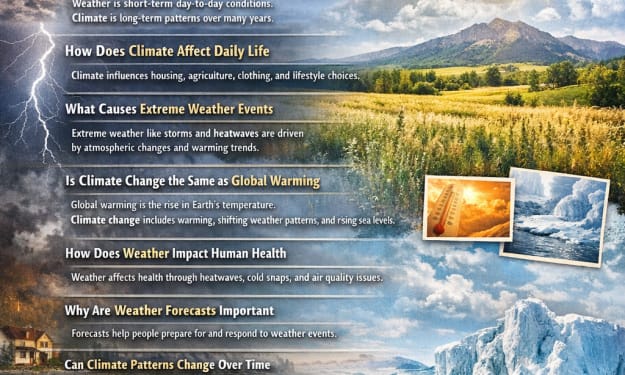
Weather and Climate Understanding the Forces That Shape Our Daily Lives
Weather and Climate Understanding the Forces That Shape Our Daily Lives Weather and climate play a central role in how people live work travel and plan for the future. From daily temperature changes to long term climate patterns these natural systems influence agriculture health economies and even global stability. Understanding the difference between weather and climate and knowing how they affect human life has become more important than ever especially as the world experiences more extreme conditions.
By America today 7 days ago in Earth



Comments
There are no comments for this story
Be the first to respond and start the conversation.