
The Green Heart of the Earth: A Journey into the Amazon Rainforest
A Journey into the Amazon Rainforest

There are places in the world that seem almost too vast, too alive, to be contained by words. The Amazon rainforest is one of them. Stretching across nine countries in South America and covering more than 2.1 million square miles, it is not only the largest rainforest on Earth but also its beating green heart. Every breath we take, every drop of rain that nourishes our crops, is tied in some way to this sprawling wilderness.
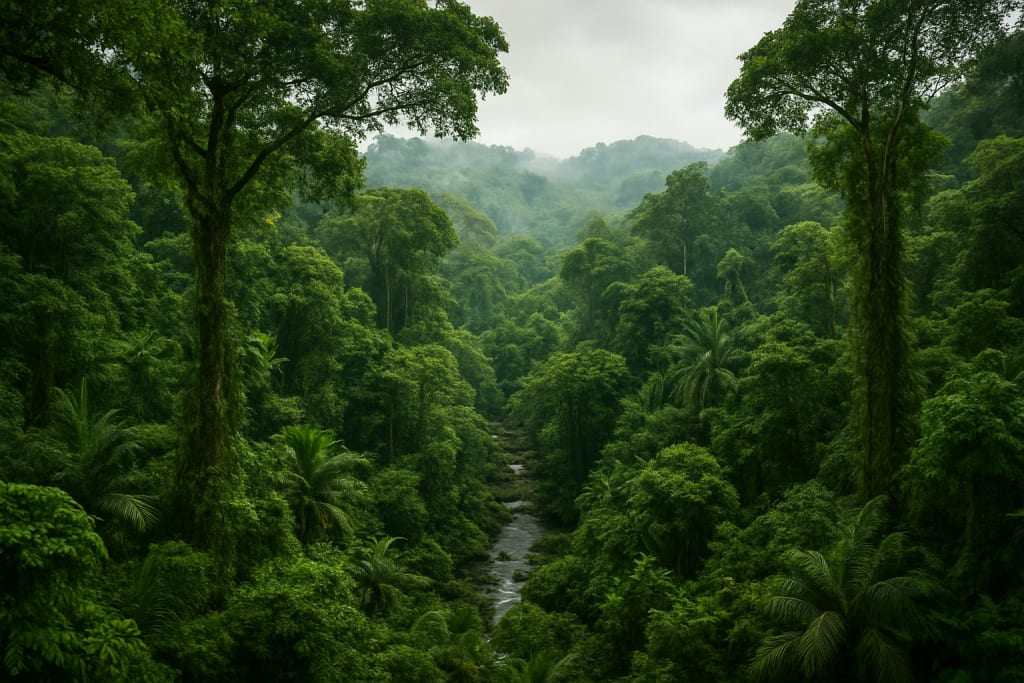
From above, the Amazon appears as an endless sea of green, treetops rising and falling like waves. Mist lingers in the valleys, rivers snake through the dense foliage, and the forest canopy hides mysteries that scientists are still uncovering. Within this lush ecosystem thrives an incredible diversity of life: jaguars stalking silently through the shadows, monkeys swinging with playful ease, parrots filling the air with their dazzling colors and sounds.
But the Amazon is not just about what can be seen—it is about what it gives. Scientists call it the "lungs of the Earth," a title that captures its role in producing oxygen and absorbing carbon dioxide. Its trees act as guardians of our climate, storing billions of tons of carbon and helping to regulate temperatures across the globe. Without the Amazon, the world would be a harsher, hotter, and more fragile place.
The Amazon is also a treasure chest of biodiversity. Nearly one in ten known species on Earth can be found here. Plants with healing properties grow hidden among the foliage, some of which have already contributed to medicines that save lives. Yet, even today, vast portions of the rainforest remain unexplored. For every plant and animal catalogued, there may be countless others waiting to be discovered—proof that the Amazon is a living library of nature’s secrets.
And then there are the people of the Amazon. Over 400 indigenous tribes call this forest home, many of whom have lived in harmony with its rhythms for thousands of years. Their knowledge of the land—its plants, animals, and cycles—is profound. They see the forest not as a resource to be exploited but as a living being, a provider to be respected. Their stories, traditions, and practices are woven into the fabric of the jungle, reminding us that the Amazon is not only a natural wonder but also a cultural treasure.
Yet, despite its resilience, the Amazon faces an uncertain future. Each year, deforestation claims large swathes of the forest. Trees are felled for timber, land is cleared for cattle ranching and agriculture, and fires are deliberately set to expand human territory. This destruction not only threatens the animals and plants that depend on the forest but also destabilizes global climate systems. The more trees we lose, the more carbon is released into the atmosphere, accelerating the pace of climate change.
The consequences ripple far beyond South America. Weather patterns shift across continents, rainfall decreases in areas that depend on the Amazon’s cycles, and species vanish before we even know they exist. To lose the Amazon would be to lose a part of ourselves, a thread in the delicate web of life that sustains us all.
But there is still hope. Around the world, movements are growing to protect this sacred forest. Environmental groups work tirelessly to establish protected areas, replant destroyed regions, and campaign against destructive practices. Indigenous communities are leading the way, defending their ancestral lands and showing the world what it means to live in balance with nature. Technology, too, is playing a role—satellite monitoring systems now track illegal deforestation in real-time, empowering governments and activists to respond swiftly.
For those of us who may never step foot beneath its towering trees, we are not powerless. Our choices matter. Supporting sustainable products, reducing meat consumption, and raising awareness about deforestation are all small but significant ways to contribute. Each decision is like planting a seed—a commitment to ensuring that the Amazon’s song of life continues for generations to come.
Standing before a picture of the Amazon, one cannot help but feel humbled. The trees rise like cathedrals, the river glistens like a silver thread, and the mist curls through the branches as if whispering ancient secrets. It is beautiful, yes, but it is also fragile. And beauty that fragile must be protected.
The Amazon is more than a rainforest—it is a promise. A promise of life, of abundance, of balance. A reminder that the Earth is alive, and that we are not apart from it but a part of it. To protect the Amazon is to protect ourselves, our children, and the countless lives yet to come.
So the next time you see an image of its vast green canopy, remember: this is not just a forest. This is the heart of our world. And it beats for all of us.
About the Creator
Keep reading
More stories from Fazal wahid and writers in Earth and other communities.
The Secret Life of a Honeybee: A Sting of Beauty
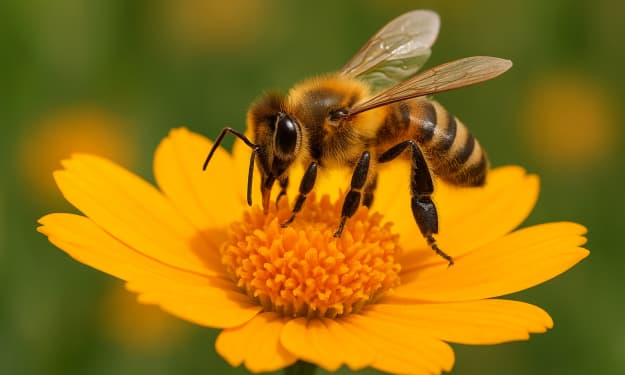
In the quiet corners of our world, where the air hums with life and the earth offers blossoms to the sky, there exists a small but mighty creature that carries the weight of ecosystems on its fragile wings—the honeybee. At first glance, it seems delicate, a fleeting visitor dancing from petal to petal. Yet within its tiny frame lies a story of survival, resilience, and an unbreakable connection to the planet we share.
By Fazal wahid 5 months ago in Earth
Greenland: New Shipping Routes, Hidden Minerals – and a Frontline Between the US and Russia?
Once seen as a remote and largely isolated Arctic territory, Greenland is rapidly emerging as a focal point of global geopolitics. Climate change, melting ice, and technological advances are transforming the island into a strategic hub defined by new shipping routes, vast mineral resources, and growing rivalry between major powers, particularly the United States and Russia. As the Arctic opens up, Greenland’s geographic position and untapped potential are pushing it to the center of international attention, raising questions about security, sovereignty, and sustainable development. Melting Ice and the Opening of New Shipping Routes One of the most visible impacts of climate change in the Arctic is the reduction of sea ice, which is making previously inaccessible waters navigable for longer periods each year. New Arctic shipping routes, including passages near Greenland, promise shorter travel times between Europe, Asia, and North America. Compared to traditional routes like the Suez Canal, Arctic pathways can reduce shipping distances by thousands of kilometers, cutting fuel costs and emissions. For global trade, this could be transformative. Greenland’s coastal waters are increasingly important as potential transit corridors and support hubs for these routes. However, the expansion of Arctic shipping also raises concerns about environmental risks, maritime safety, and the lack of robust emergency infrastructure in the region. Hidden Mineral Wealth Beneath the Ice Beyond shipping, Greenland holds significant reserves of critical minerals, many of which are essential for modern technologies and the global energy transition. These include rare earth elements, lithium, graphite, uranium, and other strategic resources used in electric vehicles, wind turbines, batteries, and defense systems. As demand for these materials grows, Greenland is being viewed as a potential alternative to existing supply chains dominated by a small number of countries. This has increased interest from Western governments seeking to diversify mineral sourcing and reduce strategic dependencies. However, mining in Greenland is controversial. Local communities and policymakers must balance economic opportunities with environmental protection and cultural preservation. Greenland’s harsh climate and fragile ecosystems make resource extraction both technically challenging and politically sensitive. The United States’ Strategic Interest in Greenland The United States has long considered Greenland strategically vital, largely due to its location between North America and Europe. The US already maintains a military presence at Pituffik Space Base (formerly Thule Air Base), which plays a key role in missile warning systems and space surveillance. In recent years, Washington has renewed its focus on Greenland, emphasizing Arctic security, infrastructure investment, and cooperation with Denmark, which oversees Greenland’s foreign and defense policy. US interest is driven by several factors: protecting transatlantic security routes, countering rival powers in the Arctic, and ensuring access to critical minerals. Greenland is increasingly viewed as a frontline in maintaining Western influence in the High North. Russia’s Arctic Ambitions Russia, meanwhile, sees the Arctic as central to its economic and military strategy. It has invested heavily in Arctic military bases, icebreaker fleets, and energy projects, particularly along its northern coastline. Although Greenland is geographically distant from Russia’s main Arctic territories, Moscow closely monitors developments there. The island’s proximity to key Arctic sea lanes and North Atlantic routes makes it strategically relevant in any broader confrontation between Russia and NATO. As tensions between Russia and the West remain high, Greenland’s location places it near the intersection of competing security interests, increasing its geopolitical significance. Greenland Between Global Powers The growing attention from major powers puts Greenland in a delicate position. While the island seeks greater economic independence and development, it must navigate complex relationships with Denmark, the United States, and other international actors. Greenland’s government has emphasized the importance of maintaining control over its resources and ensuring that development benefits local populations. At the same time, geopolitical competition risks turning Greenland into a strategic chessboard rather than a partner in decision-making. This balancing act is becoming more difficult as Arctic competition intensifies. Environmental and Social Challenges Greenland is on the front lines of climate change. Melting ice sheets contribute to global sea-level rise, while local communities face changes to traditional livelihoods such as fishing and hunting. The expansion of shipping and mining could bring jobs and infrastructure, but it also threatens fragile ecosystems and raises concerns about pollution, habitat disruption, and long-term sustainability. Any future development in Greenland will require careful regulation, international cooperation, and meaningful engagement
By Aarif Lashari4 days ago in Earth



Comments
There are no comments for this story
Be the first to respond and start the conversation.