
The Secret Life of a Honeybee: A Sting of Beauty
A Sting of Beauty

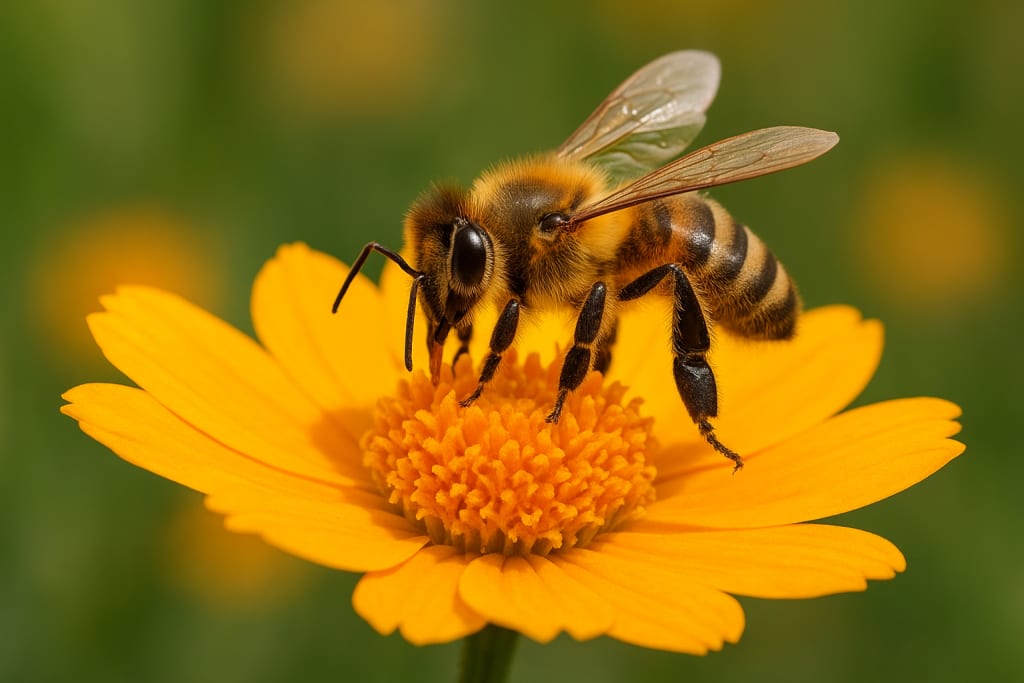
In the quiet corners of our world, where the air hums with life and the earth offers blossoms to the sky, there exists a small but mighty creature that carries the weight of ecosystems on its fragile wings—the honeybee. At first glance, it seems delicate, a fleeting visitor dancing from petal to petal. Yet within its tiny frame lies a story of survival, resilience, and an unbreakable connection to the planet we share.
On a warm afternoon, one might pause to watch a honeybee rest on the golden crown of a flower. It leans forward, legs brushing against soft petals, its body dusted in pollen like flecks of sunlight. The bee is busy, not simply existing but performing one of nature’s most essential tasks: pollination. In this silent transaction between flower and bee, the cycle of life continues. Fruits grow, seeds spread, and forests breathe.
But beneath this beauty lies a paradox. Honeybees are known equally for their gift and their sting. Their stinger, barbed and sharp, is both a defense mechanism and a final sacrifice. Unlike other insects, when a honeybee stings, it often gives its life. The sting tears from its body, and yet the bee does not hesitate if it believes the hive is in danger. It is an act of loyalty, a declaration that even the smallest creatures embody courage beyond measure.
The flower, too, plays a role in this delicate drama. To us, its petals are a splash of color in the garden, a fleeting decoration. To the bee, it is a lifeline. Nectar provides energy for flight, while pollen sustains the hive. Every visit to a flower is a transaction—nectar in exchange for pollination, beauty in exchange for survival. When the bee digs deep into the blossom’s center, it is as if the flower and insect share a secret language, one older than humankind itself.
This relationship, so fragile yet so enduring, reminds us of the interconnectedness we often forget. A single bee, hovering in the summer air, can influence the food on our tables and the balance of our environment. Apples, almonds, blueberries, cucumbers—the list of crops dependent on pollinators stretches far beyond what most of us realize. Remove the honeybee from the equation, and entire food chains begin to tremble.
And yet, honeybees are under threat. Habitat loss, pesticides, and climate change weigh heavily on their survival. Colonies collapse, hives weaken, and the hum of the fields grows fainter each year. The sting of beauty turns bittersweet as we face the reality that the creatures who give us so much may not endure without our help.
Still, there is hope. Around the world, communities are rising to protect the pollinators. Rooftop hives in cities, wildflower corridors along highways, organic farming practices—all these efforts echo a shared understanding: to save the bees is to save ourselves. For every garden that blooms with bee-friendly flowers, for every farmer who turns away from harmful chemicals, a small victory is won.
Standing before a flower with a honeybee nestled in its center, one can’t help but feel a sense of reverence. This tiny insect, wings shimmering in the sun, is not just an insect but a reminder of life’s fragility and strength. Its sting warns us of danger, but its labor blesses us with abundance.
The next time you see a honeybee hovering in your garden, take a moment to watch. Notice the precision of its movements, the way it clings to the petals, the shimmer of pollen clinging to its legs. In that moment, you are witnessing more than a simple act of gathering nectar. You are witnessing survival, devotion, and the silent poetry of nature itself.
And perhaps, just perhaps, you will walk away with a new respect for the sting that protects, the wings that endure, and the tiny heart that beats for the survival of us all.
About the Creator
Keep reading
More stories from Fazal wahid and writers in Earth and other communities.
Santorini: A Jewel of the Aegean Sea
There are places on earth that feel like they were painted by an artist’s brush, where nature, culture, and history blend into one breathtaking masterpiece. One such destination is Santorini, a Greek island that has become a symbol of beauty, romance, and timeless wonder. Located in the Aegean Sea, Santorini attracts travelers from across the globe who are eager to experience its dramatic cliffs, dazzling sunsets, and rich cultural traditions.
By Fazal wahid 4 months ago in Earth
How Much Do You Need in an ISA for a Passive Income That Beats the State Pension?
For many people in the UK, the State Pension is expected to form the backbone of retirement income. But with rising living costs and growing uncertainty about the future, more savers are asking a crucial question: Can I build a passive income that beats the State Pension — and how much would I need in an ISA to do it?
By Aarif Lashariabout 10 hours ago in Earth
Tiny Lion Cubs Struggle To Keep Up With Mom
In the heart of the African savannah, life is a constant lesson for young animals. Few scenes are as endearing — or as heartwarming — as tiny lion cubs trying to keep pace with their mother. These little bundles of fur face a world full of challenges, from learning to hunt to avoiding dangers, all while depending on the guidance and protection of their experienced mom. Watching cubs wobble and tumble as they attempt to keep up with their mother reminds us that growing up, even in the wild, is a journey full of struggle, determination, and adorable missteps. The Early Days of Lion Cubs Lion cubs are born blind and helpless, usually in litters of two to six. For the first few weeks, they rely entirely on their mother for warmth, food, and safety. Even after opening their eyes and beginning to explore, the cubs are far from independent. The first months are crucial. Cubs learn social cues, hunting basics, and survival skills simply by watching their mother and the pride. But as anyone who has observed them knows, there’s often a huge gap between observation and action. Tiny cubs often struggle to match their mother’s pace, especially when she moves through long stretches of savannah or leads the family on patrols. A Mother’s Role in the Wild For a lioness, raising cubs is a full-time commitment. She hunts, defends her territory, and teaches her young, all while staying alert to predators such as hyenas, leopards, and even rival lions. The cubs, meanwhile, attempt to mimic her every move — often with clumsy yet charming results. A mother lion’s patience is remarkable; she frequently slows down, nudges them along, or stops to ensure no cub is left behind. These moments, while stressful for the tiny cubs, are vital learning opportunities. Struggling to Keep Up: Why It’s So Hard There are several reasons why tiny lion cubs have trouble keeping pace with their mother: Short Legs, Big Steps: Lion cubs’ legs are tiny and their coordination is limited, making it difficult to cover the same distance as an adult lioness. Curiosity: Cubs are naturally curious. A single butterfly or rustling bush can distract them, leaving mom to pause repeatedly. Energy Levels: Young lions tire quickly. Even with frequent naps, the cubs’ stamina is far lower than their mother’s. Learning Through Play: Play is not just fun; it teaches hunting, balance, and social skills. Running off to pounce on a sibling or chase an insect is all part of their education. Despite these challenges, the cubs’ determination to keep up demonstrates their resilience and growing understanding of the wild world. Lessons in Teamwork and Survival Every cub struggling to keep up is also learning crucial survival skills. The journey across the savannah is more than a test of speed — it’s a lesson in: Coordination: Cubs learn how to move efficiently across different terrains. Patience: They begin to understand the rhythms of adult life and the pace required for survival. Social Skills: Staying with the group teaches cubs how to interact with siblings and the pride, which is essential for their future roles. Observation: By following their mother, cubs study hunting techniques, territorial behavior, and predator awareness. Even the moments when cubs stumble or lag behind are essential for their development. These experiences prepare them for independence, which comes sooner than many might expect. The Cutest Moments in the Wild Anyone who has watched tiny lion cubs knows that their struggles are often irresistibly cute. Video clips from wildlife reserves frequently show cubs toddling along, tumbling over each other, or getting distracted mid-step. Observers often comment that these little stumbles reveal personality, determination, and playfulness, making them one of nature’s most heartwarming spectacles. While their mother is serious and focused, the cubs inject a sense of humor and lightness into life on the savannah. Why This Matters The struggles of lion cubs aren’t just adorable — they’re vital for understanding wildlife behavior. Conservationists and animal behaviorists use these moments to study growth patterns, social structures, and survival strategies in lion populations. These observations also highlight the importance of preserving natural habitats. Cubs must learn in a safe environment to survive; habitat loss, poaching, and climate change make these early struggles even more dangerous. Protecting the African savannah ensures that future generations of lions can experience the same lessons and playful tumbles. The Road to Independence Within a year, these tiny cubs will be more agile, faster, and more confident. By the time they reach two to three years old, males may begin to leave the pride, while females often stay and become caretakers themselves. Every misstep, tumble, and lagging moment is part of the journey toward strength, coordination, and independence. Watching them now gives us a glimpse of the challenges they will overcome, and the survival skills they will carry for life. A Celebration of Motherhood Ultimately, these scenes remind us of the incredible bond between mother and cubs. Her patience, vigilance, and teaching are the foundations of their future. The cubs’ struggles highlight the trials of growing up, while their determination showcases the resilience and beauty of wildlife. For those observing, it’s a powerful lesson in care, guidance, and perseverance, not just in lions but in the natural world as a whole. Final Thoughts Watching tiny lion cubs try to keep up with their mother is both entertaining and enlightening. It’s a story of growth, struggle, and resilience — a reminder that even the fiercest creatures start small, learning step by step. These little lions capture hearts while teaching life lessons: patience, determination, teamwork, and the importance of guidance. As they tumble and waddle across the savannah, they show us that growth is a process, one adorable misstep at a time. For wildlife enthusiasts, animal lovers, and anyone enchanted by nature, these tiny cubs are proof that even in the wild, love, care, and persistence are universal truths.
By Aarif Lashariabout 11 hours ago in Earth



Comments
There are no comments for this story
Be the first to respond and start the conversation.