
The Great Galveston Hurricane of 1900: Nature’s Deadliest Strike
How a powerful storm reshaped Texas and the nation’s approach to disaster preparedness

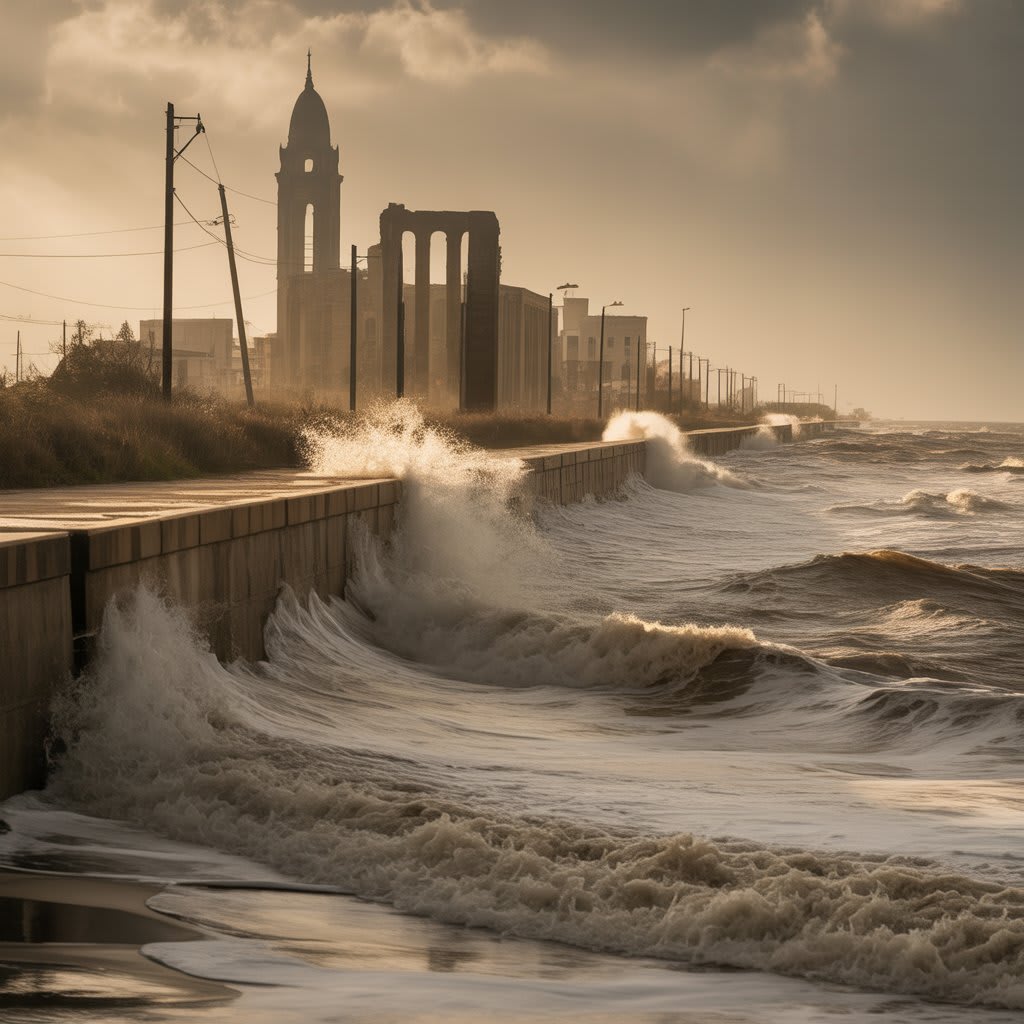
On the night of September 8, 1900, the city of Galveston, Texas, was thriving. Known as the “Wall Street of the South,” Galveston was one of the busiest ports in the United States. Elegant homes lined the streets, commerce flowed through its harbors, and its future seemed limitless.
But as the sun set that Saturday evening, a monster from the Gulf of Mexico was approaching. By dawn the next day, Galveston would be changed forever. The 1900 Galveston Hurricane remains the deadliest natural disaster in U.S. history, claiming between 6,000 and 8,000 lives.
It was not only a tragedy of wind and water—it was a wake-up call that reshaped how America understood weather, preparedness, and resilience.
A City Unprepared
At the turn of the century, Galveston stood proud. With nearly 40,000 residents, it rivaled Houston as the economic center of Texas. Yet despite warnings from Cuban meteorologists of a powerful hurricane moving across the Caribbean, U.S. forecasters underestimated the storm.
The Weather Bureau in Washington, D.C. (the predecessor of today’s National Weather Service) believed the storm would curve north toward Florida, not crash directly into Texas. Without modern satellite images or radar, forecasts were limited. The people of Galveston carried on with daily life, unaware of the catastrophe brewing offshore.
The Storm Arrives
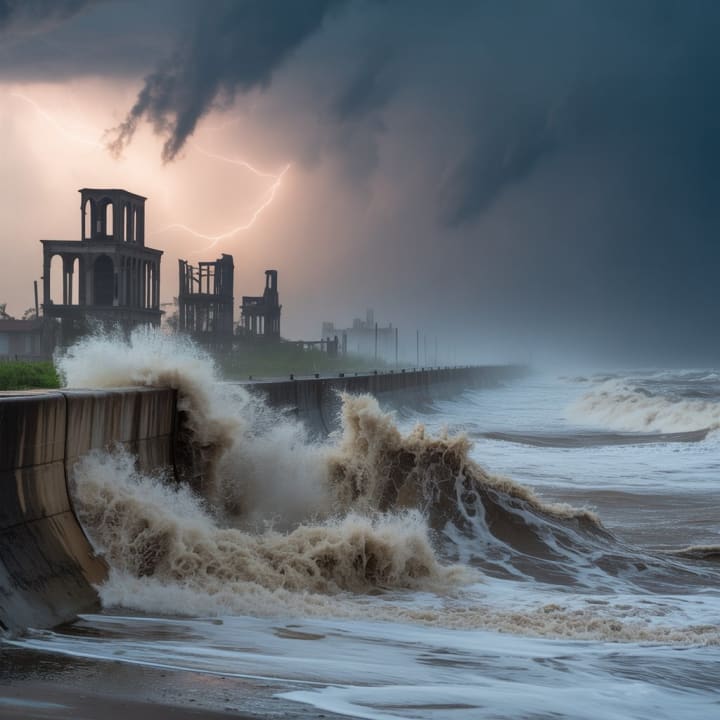
Winds began to pick up on September 8, tearing at rooftops and rattling windows. By late afternoon, the Gulf surged inland. Without a seawall to block it, water poured into the low-lying island city. Streets became rivers, and houses began to collapse under the pressure of waves and wind.
As darkness fell, the full fury of the hurricane hit. Winds reached an estimated 140 miles per hour. Wooden homes splintered like matchsticks. Families clung to rafters or floated on debris in desperate attempts to survive. Entire neighborhoods disappeared beneath the rising water.
By midnight, Galveston was a city under siege. Survivors later described the sounds of the storm as “a thousand freight trains” crashing through the night.
The Morning After
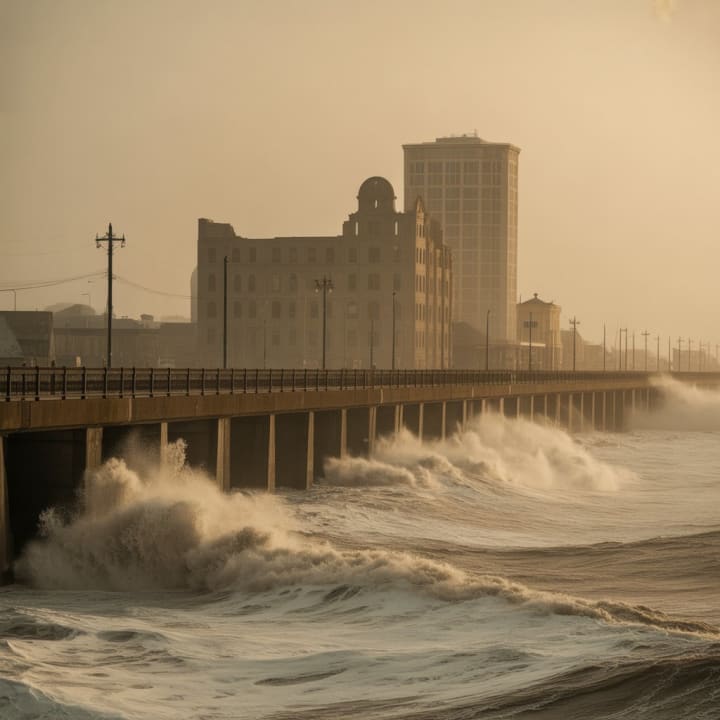
When the storm finally passed, Galveston was unrecognizable. Eight thousand homes were destroyed, and thousands of bodies lay scattered among the wreckage. Survivors faced a grim reality: disease, hunger, and the overwhelming task of rebuilding from ruin.
Relief efforts were slow. With telegraph lines down, news of the disaster spread only after rescuers arrived from Houston and beyond. Across the nation, people were shocked by the scale of the tragedy. The hurricane forced America to confront the devastating power of nature in a way it never had before.
The Human Spirit in the Face of Disaster
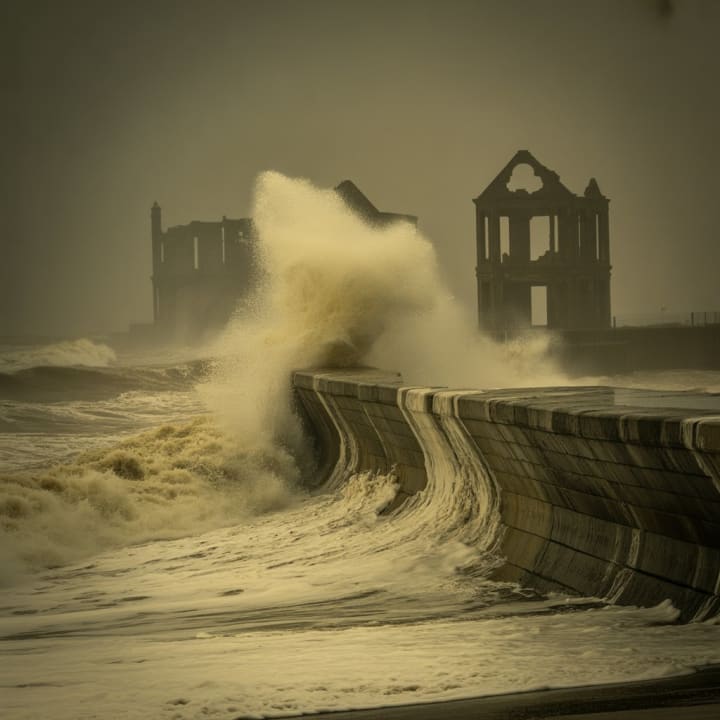
Even in the midst of destruction, stories of courage and compassion emerged. Citizens organized bucket brigades, makeshift hospitals, and burial crews. Religious groups, civic leaders, and ordinary residents united in recovery efforts.
One of the most heartbreaking yet inspiring accounts came from the Sisters of Charity Orphanage. Ten nuns and 90 orphans faced the rising waters. The sisters tied the children to themselves with rope, refusing to abandon them. Tragically, all but three children perished, but the sacrifice of the sisters became a lasting symbol of faith and devotion.
Galveston Rebuilds
Despite the devastation, Galveston refused to vanish. City leaders launched one of the most ambitious rebuilding efforts of the era. Engineers constructed a seawall, eventually stretching over 10 miles, to protect against future surges. The city was literally raised—entire blocks were lifted by jacks and filled with sand to elevate the island.
These engineering feats transformed Galveston into a model of disaster preparedness. Yet Houston, with its inland location and growing port facilities, gradually eclipsed Galveston as Texas’s economic powerhouse.
Lessons That Shaped a Nation
The Galveston Hurricane exposed the need for better forecasting, communication, and disaster planning. In its aftermath:
The U.S. Weather Bureau expanded its cooperation with Cuban meteorologists, whose warnings had been ignored.
Cities nationwide reconsidered building codes and coastal defenses.
The disaster sparked a cultural shift, reminding Americans that progress and prosperity could not erase vulnerability to nature.
The storm also highlighted the importance of clear communication between scientists and the public—a lesson that remains vital today as we face hurricanes, wildfires, and climate-driven disasters.
Remembering the Deadliest Storm
Today, Galveston honors the memory of the hurricane’s victims with monuments and museums. Visitors can walk along the seawall, gaze at the Gulf, and imagine the night when the sea rose and claimed thousands of lives.
The storm’s legacy is not only one of loss but also of resilience. Galveston rebuilt, adapted, and endured. Its story is a testament to the power of human spirit in the face of unimaginable tragedy.
Why the Galveston Hurricane Still Matters
More than a century later, the Great Galveston Hurricane reminds us of the delicate balance between humanity and nature. It warns of the dangers of underestimating storms and ignoring scientific expertise. At the same time, it demonstrates how tragedy can inspire innovation, unity, and lasting change.
As climate change intensifies hurricanes around the world, the story of Galveston is more relevant than ever. It tells us that preparation saves lives, resilience is possible, and history’s hardest lessons should never be forgotten.
About the Creator
Echoes of Life
I’m a storyteller and lifelong learner who writes about history, human experiences, animals, and motivational lessons that spark change. Through true stories, thoughtful advice, and reflections on life.
Keep reading
More stories from Echoes of Life and writers in Earth and other communities.
Hurricane Irene and the Viral “Stadium Effect” (USA)
A Storm That Refused to Be Normal. Hurricanes are nothing new to coastal communities. Every year, residents of the Atlantic Seaboard brace for storms that bring heavy rain, flooding, and destructive winds. But in 2025, Hurricane Irene became more than just a weather event. It became a viral phenomenon — thanks to a mysterious atmospheric display that storm chasers and residents alike have dubbed the “stadium effect.”
By Echoes of Life5 months ago in Earth
Chinese Planetary Engineering: The Great Green Wall and the Reclamation of Climate
There are junctures in history where a civilization no longer chooses between comfort and progress, but between adaptation and extinction. At the dawn of the new millennium, China hit one of those silent thresholds where geography ceases to be a backdrop and becomes an adversary. The desert was advancing, not as a metaphor for decay, but as a physical, methodical, and relentless force. Sand was devouring the horizon, winds grew heavy with dust, and the soil lost its fertile memory, taking with it the promise of social stability.
By Laurenceau Porte4 days ago in Earth
US Warns Airlines About Military Activity in Parts of Latin America
Commercial aviation is built on predictability—clearly defined airspace, coordinated air traffic control, and shared international rules. When that predictability is disrupted, even subtly, the ripple effects can stretch far beyond the cockpit. That is exactly why a recent warning from the United States has caught the attention of airlines, governments, and travelers alike. In early 2026, US aviation authorities issued an advisory warning airlines about military activity in parts of Latin America, urging pilots to exercise heightened caution when flying over certain regions. While no immediate restrictions or flight bans were imposed, the message itself was clear: something in the skies has changed, and the risks—however limited—can no longer be ignored. This development is not just about aviation safety. It reflects a growing intersection between geopolitics, military operations, and civilian infrastructure in a region that has long balanced cooperation with tension. What Exactly Did the US Warn About? The advisory, released through official aviation safety channels, highlighted concerns over potential military activity affecting airspace across parts of Mexico, Central America, South America, and nearby oceanic regions. Airlines were advised to remain vigilant during all phases of flight, including cruising at high altitudes, takeoff, and landing. Unlike routine notices related to weather systems or airport congestion, this warning explicitly referenced security-related risks. These include the possibility of unexpected military movements, temporary airspace disruptions, and interference with navigation systems that modern aircraft rely on for safe operations. Importantly, the warning did not accuse any specific country of wrongdoing, nor did it suggest an immediate danger to passengers. Instead, it served as a precaution—one designed to ensure airlines adjust flight planning, monitoring, and communication protocols accordingly. Why Military Activity Matters to Civil Aviation To the average traveler, military exercises or operations may seem distant from the experience of flying on a commercial jet. In reality, the two worlds often share the same skies. Civilian aircraft depend heavily on satellite navigation, coordinated air traffic control, and stable airspace rules. Military operations—especially those involving fast-moving aircraft, surveillance systems, or electronic equipment—can introduce uncertainty into that environment. Some of the key risks aviation authorities monitor include: Unplanned military aircraft movements that may not follow civilian flight patterns Temporary airspace closures or restrictions that require last-minute rerouting Navigation signal disruptions, whether accidental or intentional Increased congestion in strategic corridors used by both civilian and military flights While these risks are typically managed through coordination and communication, heightened military activity raises the stakes. The FAA’s advisory suggests that such activity has reached a level where additional caution is warranted. The Geopolitical Context Behind the Warning The timing of the advisory is not accidental. Latin America has seen a noticeable rise in security operations and military coordination involving the United States over the past year. These efforts are largely focused on counter-narcotics missions, maritime security, and regional stability, particularly in areas with strategic shipping routes or ongoing political tension. At the same time, broader global dynamics—ranging from great-power competition to shifting alliances—have increased the strategic importance of air and sea routes across the Western Hemisphere. From Washington’s perspective, issuing an aviation warning is not about alarmism. It is about acknowledging that military and security activities in the region may temporarily affect civilian systems, including aviation. How Airlines Are Responding For airlines, advisories like this are not unusual—but they are taken seriously. Most major carriers already operate with layered safety systems that allow them to respond quickly to changing conditions. In practical terms, this warning may lead to: Slight route adjustments to avoid specific airspace Enhanced pilot briefings before flights Increased coordination with air traffic controllers Closer monitoring of navigation and communication systems So far, there have been no widespread flight cancellations or suspensions linked directly to the warning. That suggests airlines view the risk as manageable, provided proper precautions are followed. Reactions from Latin American Governments Some governments in the region have been quick to reassure the public. Officials have emphasized that their national airspace remains safe and fully operational, and that civilian flights continue without disruption. This response highlights an important tension: while the US warning is precautionary, it can still affect public perception. Tourism, business travel, and investor confidence are all sensitive to suggestions of instability—even when no immediate danger exists. As a result, many countries are walking a careful line between cooperating on aviation safety and defending their reputation for stability. What This Means for Passengers For travelers, the key takeaway is simple: commercial aviation remains safe. Warnings like this are designed to prevent incidents, not predict them. Passengers flying through or over affected regions may experience slightly longer flight times or minor schedule adjustments, but there is no indication of increased danger to civilian aircraft. In fact, the existence of such advisories demonstrates how seriously aviation authorities take even low-probability risks. A Sign of a More Complex World The US warning to airlines is a reminder that modern air travel does not exist in a vacuum. As military operations, security concerns, and geopolitical rivalries evolve, civilian systems—from shipping lanes to flight paths—are increasingly affected. This moment underscores a broader reality: the skies are becoming more crowded, more contested, and more interconnected with global politics. Managing that complexity will require continued transparency, cooperation, and vigilance from governments, regulators, and airlines alike. For now, planes continue to fly, passengers continue to travel, and the system continues to work. But behind the scenes, aviation authorities are quietly adjusting to a world where safety is shaped not just by weather and mechanics—but by geopolitics as well.
By Muhammad Hassana day ago in Earth



Comments
There are no comments for this story
Be the first to respond and start the conversation.