
The Giant Flower That Doesn’t Have Leaves, Stems, or Roots
Rafflesia, the silent thief of the rainforest

Deep in the tangled heart of the rainforest, where sunlight filters through layers of ancient leaves, a strange phenomenon waits quietly beneath the forest floor. No stems. No roots. No leaves. Not even a green color.
But then, without warning, the forest floor cracks open—and there it is.
A massive red bloom, speckled with pale markings, spreading out like a five-lobed crown. This is Rafflesia, a flower like no other. Often called the corpse flower of the rainforest (not to be confused with Amorphophallus titanum), Rafflesia is one of the world’s largest individual flowers, and one of its most mysterious.
The Plant That’s Not Really a Plant
Most people think of flowers as part of a plant—growing from a stem, supported by leaves, anchored by roots.
But Rafflesia breaks all the rules.
It doesn’t photosynthesize. It has no leaves or stems. In fact, most of the time, you wouldn’t even know it exists. That’s because Rafflesia lives entirely inside another plant. It’s a parasite, hiding within the tissues of a tropical vine from the genus Tetrastigma.
For months—or even years—it feeds in secret, stealing nutrients from its host like a hidden tenant. Then suddenly, it bursts through the host’s surface, revealing a flower up to one meter (3 feet) wide. Some species can weigh up to 10 kilograms.
It’s not a tree. Not a bush. Not even a plant in the traditional sense.
It’s a bloom without a body.
A Flower That Smells Like Death
The moment Rafflesia opens, the air changes.
The bloom emits a strong odor of rotting meat, attracting carrion flies and beetles. These insects are its pollinators, tricked by the smell into thinking they’ve found a decaying animal. As they crawl over the flower, they unknowingly pick up or deposit pollen.
The smell might be unpleasant to humans, but it’s a clever strategy for a flower with no nectar, no bright petals, and no sweet perfume.
In a forest full of color and fragrance, Rafflesia wins attention with deception.
A Bloom That Doesn’t Last
Despite the energy it takes to grow such a large flower, the bloom itself is short-lived.
After about five to seven days, the flower begins to rot, collapsing into the very image it once imitated: decay.
That’s it. One short bloom, then silence again.
The process of blooming is rare and unpredictable. Rafflesia doesn’t bloom on a schedule. Some individuals may go years without flowering. And when they do, there’s no warning. No buds. No leaves. Just a sudden appearance from the forest floor.
It’s nature’s vanishing magic trick.
Difficult to Study, Harder to Grow
Scientists find Rafflesia both fascinating and frustrating. Because it cannot live without its host vine and cannot be easily cultivated outside its native rainforest, Rafflesia is almost impossible to grow in labs or gardens.
Attempts to propagate it have largely failed. The flower seems to depend on a delicate balance of host, humidity, and mystery.
And because the bloom is so rare, researchers often miss it. By the time someone discovers a Rafflesia in the forest, it might already be fading.
A Hidden Giant in Danger
Rafflesia is a quiet giant. It doesn’t grow in fields or meadows. It doesn’t spread seeds in the wind.
It exists in specific rainforests, and only through a complicated relationship with its host vine. As those forests disappear due to human activity, Rafflesia faces serious threat. Some species are now classified as endangered.
It’s a reminder that even the most unusual creatures — the ones we may never notice — are part of a delicate system. When we lose a rainforest, we don’t just lose trees. We lose secrets. We lose stories like this.
The Flower That Lives in Shadows
Rafflesia doesn’t bloom for beauty. It doesn’t feed itself. It doesn’t follow the rules.
It hides. It steals. It tricks.
And yet, when it emerges, it commands attention — not because of elegance, but because of the sheer oddity of its existence.
It’s not here to impress. It’s here to survive.
And somehow, in its fleeting, foul-smelling bloom, Rafflesia reminds us that not all flowers are meant to be picked, or even understood.
Some are meant to haunt the rainforest floor, waiting for their moment in the light — before vanishing again into the green silence.
About the Creator
Tea of Silence
The snow had covered the hills for days, turning the land into a quiet white world where sound seemed afraid to exist. On the highest of these hills, beneath a dry, leafless tree, a young man sat alone. The tree had long ago lost its strength, its branches thin and broken, but it still stood, as if refusing to disappear. The young man chose this place often, not because it was comfortable, but because it was honest.
By Bilal Mohammadi6 days ago in Earth
Microbiota, microbiome or microflora: how to speak correctly and why it is for health.
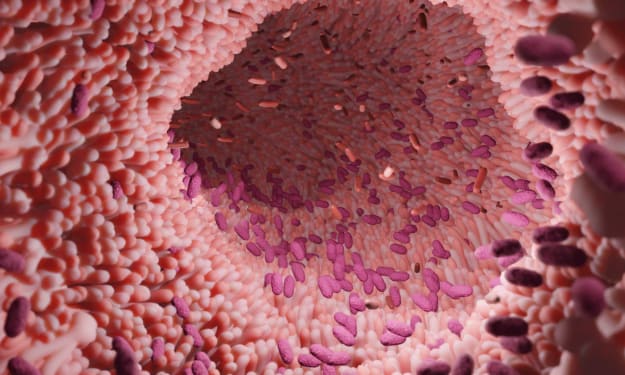
You've probably heard the phrase, "We are what we eat." But modern science says more precisely: we are also those who live in us. Until 2016, it was believed that there are many times more bacteria in our body than our own cells. The latest calculations by mathematicians show that we divide the body with our microorganisms by about 50/50: about 30 trillion of our cells versus 38 trillion bacterial ones.
By Yaroslav Gorohov2 days ago in Earth



Comments
There are no comments for this story
Be the first to respond and start the conversation.