
The Forgotten Meadow
The Sanctuary of Inner Solitude
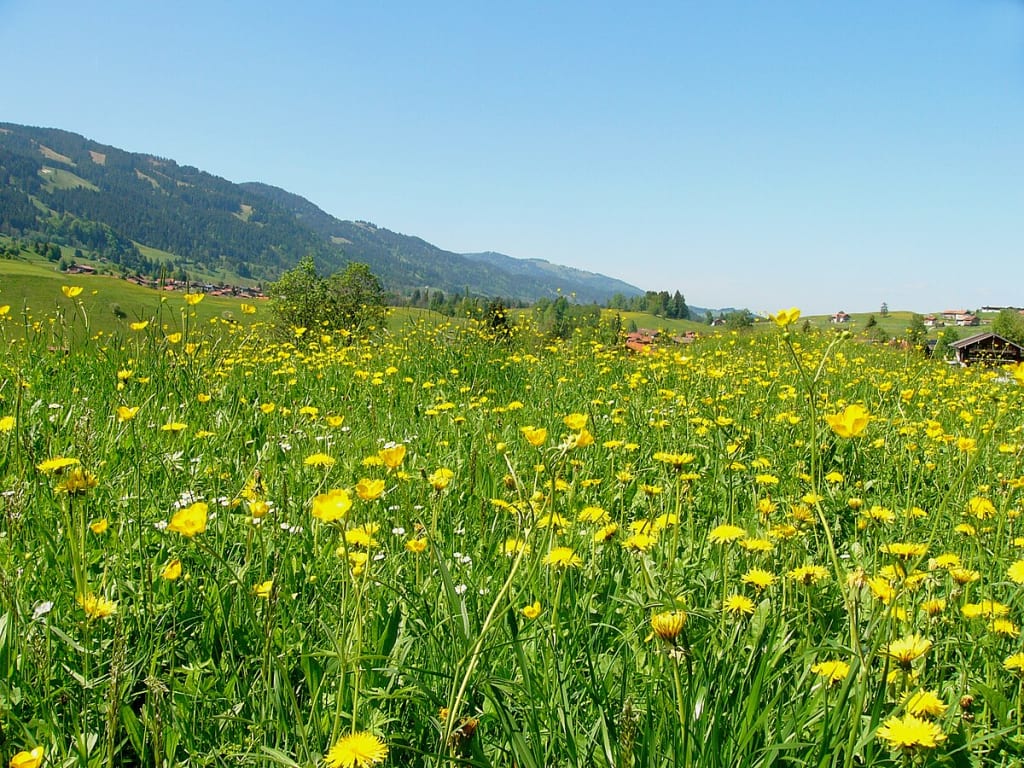
In the hollow of my mind, there exists a meadow that time has abandoned. Here, I lay motionless in grass that grows wild and untamed, each blade reaching toward a sky that remembers neither prayer nor plea. The stems whisper against my skin with the weight of centuries, and I am both visitor and ghost in this place that exists nowhere but within.
Flowers bloom in impossible profusion around me—scarlet poppies that bleed into violet lupines, golden marigolds that give way to midnight hollyhocks, their faces turned not toward the sun but toward something darker, something that pulls at the edges of vision. They grow without pattern or purpose, a riot of color that seems almost desperate in its beauty, as if beauty itself were the last rebellion against forgetting.
The grass cradles my body like water, cool and yielding, and I sink into it as if into memory itself. My breath moves in rhythm with the meadow's own breathing—the subtle rise and fall of earth that speaks of roots deep and ancient, of soil that has never known the bite of plow or the weight of boot. This is ground unbroken by human need, unsanctified by human hope.
But beyond the meadow's embrace, the mountain watches.
It rises like a question mark against the horizon, its peaks sharp with something that resembles hunger. Not malevolent, but not benevolent either—simply aware in a way that makes the flowers turn their faces downward and the grass grow still around my body. The mountain pulses with curiosity of the most dangerous kind: the curiosity that dissects, that pulls apart the delicate machinery of peace to see what makes it tick.
I feel its attention like pressure against my closed eyelids. It wonders why I have come to this forgotten place, why I choose to lie so perfectly still among the wildflowers while it shifts and murmurs in the distance. Its curiosity is patient but relentless, the kind that waits in the spaces between heartbeats, in the pause between inhale and exhale.
The meadow knows the mountain's nature and grows its flowers brighter in defiance, grows its grass thicker as shelter. But even the meadow cannot protect what it cannot understand—the human need to find sanctuary in places that exist only in the geography of the mind, places where we can lay our bodies down and pretend, for a moment, that we are as simple as flowers, as permanent as mountains, as forgotten as grass.
The air here tastes of secrets—not the bitter secrets of shame, but the sweet secrets of things that have never needed to be spoken. Butterflies that exist in no field guide drift between the flowers, their wings painted with colors that have no names, colors that exist only in the pause between sleep and waking. They land on my arms, my face, weightless as wishes, and I wonder if they are real or if I am dreaming them into being with the simple act of lying still.
Time moves differently in forgotten places. Minutes stretch into hours, or perhaps hours collapse into heartbeats—I cannot tell which, and it doesn't matter. The sun overhead is not the sun of the waking world; it is softer, more amber, like honey poured through gauze. Its light touches everything except the mountain, which seems to exist in its own shadow, defining itself by what it is not.
Sometimes the mountain speaks—not in words, but in the language of shifting stone and settling earth. It asks questions I cannot answer: Why do you come here? What do you seek in this place that seeks nothing? Why do you make yourself small and still when the world outside demands you be large and moving? Its curiosity is not cruel, but it is relentless, the way water is relentless against stone, wearing away at certainty until only the essential remains.
I have no answers for the mountain, but I have offerings. I offer it my stillness, my willingness to be observed without understanding. I offer it the sight of a human being choosing to be as quiet as grass, as patient as flowers, as forgotten as this meadow itself. Perhaps this is enough. Perhaps the mountain's curiosity is not meant to be satisfied but simply witnessed, acknowledged as part of the landscape of the mind.
The flowers around me seem to pulse with their own heartbeat, or perhaps I am feeling my own pulse through the earth. Red roses bleed into orange tiger lilies, which fade into yellow daffodils that transform into blue cornflowers before deepening into purple asters. They are all seasons at once, all possibilities flowering simultaneously in a place where the usual rules of growth and decay do not apply.
Sometimes I imagine I have been here forever, that I grew from this soil like the wildflowers, that my bones have become roots and my breath has become wind through grass. Other times I remember that I am only visiting, that somewhere beyond this meadow there is a world that expects me to stand up, to move, to be useful and productive and present in ways that have nothing to do with lying still among impossible flowers.
But not yet. Not while the mountain watches with its patient, disturbed curiosity. Not while the grass holds me like a secret it has never told. Not while the forgotten meadow exists in the space between what is and what could be, in the geography of the mind where beautiful things can grow wild and untended, where peace and unease dance together like partners who have known each other since the world began.
In this place where guided light has never fallen, I close my eyes and listen to the conversation between beauty and disturbance, between the meadow's gentle breathing and the mountain's patient, terrible interest. I am the bridge between them—flesh and thought, temporary and yearning, lying still in tall grass while something ancient and curious watches from the heights, waiting to understand what it means to need a place like this at all.
About the Creator
Parsley Rose
Just a small town girl, living in a dystopian wasteland, trying to survive the next big Feral Ghoul attack. I'm from a vault that ran questionable operations on sick and injured prewar to postnuclear apocalypse vault dwellers. I like stars.
Keep reading
More stories from Parsley Rose and writers in Earth and other communities.
The Reclamation
The entrance gates hang askew, rust bleeding down their painted iron like wounds that never quite healed. You step through where children once ran, their ticket stubs and cotton candy dreams scattered to decades of wind. The turnstile is frozen in place, wrapped in morning glory vines that have wound through its mechanical heart.
By Parsley Rose 5 months ago in Earth
Pearl
1980 something. we all hung out at Pearl and you and i were nothing special, or so i thought. i mean we all danced, drenched in our own sweat, our own saline solution of fear, too many beers, shots, laughter, tears, fucks in the bathroom and i don't know when we began to be afraid. do you?
By ROCK aka Andrea Polla (Simmons)6 days ago in Fiction


Comments (1)
beautifully written