
The first drone war opens a new chapter in India-Pakistan conflict
How Emerging Drone Warfare Is Escalating Tensions and Redefining Military Strategy in South Asia

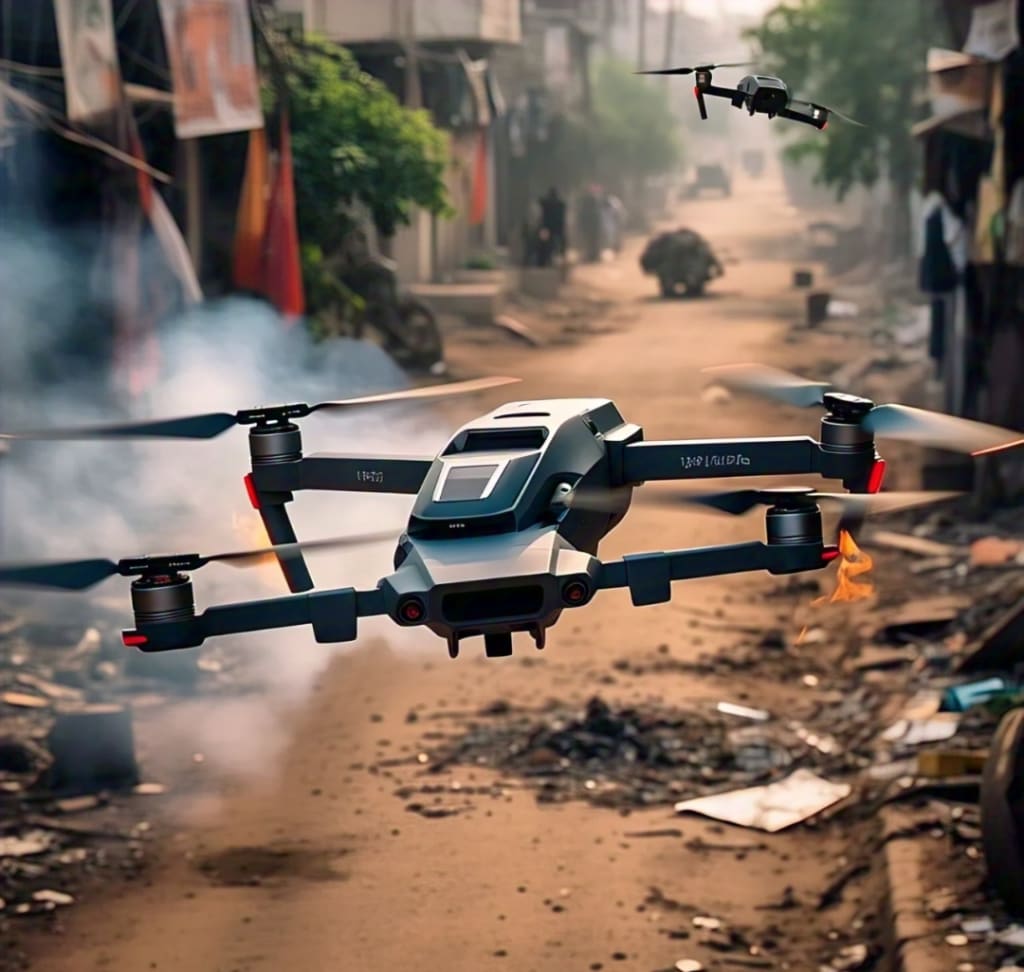
In the ever-evolving landscape of global warfare, South Asia has entered a new and ominous era. The India-Pakistan conflict, one of the world’s longest-running geopolitical tensions, has now been redefined by the use of unmanned aerial vehicles (UAVs). What was once a battleground of soldiers and artillery is now witnessing the rise of drone warfare—a technological shift that is opening a dangerous new chapter in the region.
The Drone Revolution in South Asia
The use of military drones in South Asia is not new, but the first drone war between India and Pakistan marks a turning point. For decades, border skirmishes along the Line of Control (LoC) and diplomatic hostilities have dominated the bilateral narrative. Now, with drones taking center stage, the conflict is entering an asymmetric phase where technology—not manpower—is the new front line.
Pakistan has historically used commercial and tactical drones for surveillance and border operations. However, recent developments suggest a marked shift toward armed drone incursions, challenging India’s airspace integrity and military readiness. In retaliation, India has deployed domestically produced drones alongside Israeli and U.S. technologies, aiming to gain air superiority in this invisible battlefield.
The Trigger: How the Drone War Began
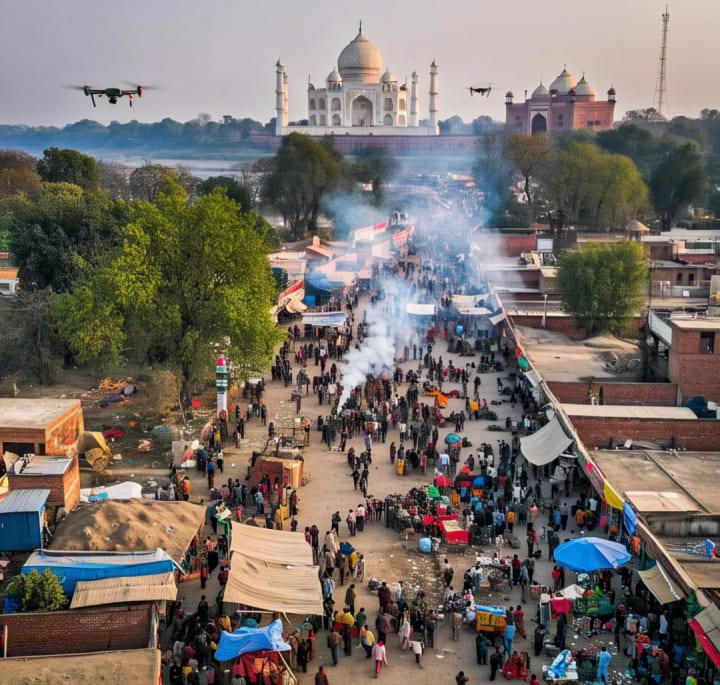
The first confirmed drone strike in the India-Pakistan conflict occurred near the Jammu border region in late 2024. Indian intelligence intercepted what appeared to be a surveillance drone, which later dropped improvised explosive devices (IEDs) on a military installation. The attack, though limited in physical damage, sent shockwaves through New Delhi. It was the first time that a drone had been used to carry out an attack deep inside Indian territory.
Indian defense analysts now refer to this as the "drone war incident"—a strategic inflection point that has prompted a military and technological overhaul. India’s defense establishment responded with Operation Sky Shield, a comprehensive plan involving radar jamming, AI-powered detection systems, and aggressive counter-drone tactics.
Rising Stakes and Regional Instability
The use of drones escalates the conflict into new and uncertain territory. Unlike conventional weapons, drones provide a level of plausible deniability. Their small size, low radar profile, and remote operation capabilities make them ideal tools for covert operations. This increases the risk of misidentification, accidental escalation, and even proxy drone warfare via non-state actors operating in Kashmir or along sensitive border zones.
Moreover, drone technology is no longer limited to state actors. The proliferation of low-cost drones, often sourced from global commercial markets like China, has made them accessible to militant groups operating in the region. These groups now have the capability to strike with deadly precision—undermining both Indian and Pakistani security architectures.
India's Technological Counteroffensive
In response to these threats, India has accelerated its indigenous drone development programs. DRDO (Defence Research and Development Organisation) has unveiled new models capable of surveillance, reconnaissance, and strike missions. The inclusion of artificial intelligence, facial recognition, and thermal mapping enables Indian drones to perform complex tasks autonomously.
The Indian Air Force has also partnered with private tech startups to develop anti-drone defense systems. These include laser interceptors, drone swarms for aerial defense, and even cyberwarfare tools to jam and hijack enemy drones mid-flight. These innovations not only reflect India's growing military tech base but also its strategic resolve to maintain air dominance in the subcontinent.
Pakistan’s Drone Diplomacy and Strategic Calculus
Pakistan, meanwhile, has leaned heavily on its strategic partnership with China to boost its drone capabilities. The acquisition of the Wing Loong II combat drone and Chinese-made loitering munitions has significantly enhanced Islamabad’s deterrence posture. However, this also risks deepening South Asia’s reliance on external military suppliers, increasing the complexity of the regional arms race.
Pakistan’s military doctrine now includes drone deployments along the Siachen Glacier and Punjab border, indicating a tactical shift to confront India not just on land, but in the air. The emphasis on remote precision strikes is a calculated response to India’s conventional military superiority.
International Response and Future Outlook
The global community has expressed concern over the use of drones in an already volatile region. The United Nations has called for stricter regulations on the use of autonomous weapons, especially in areas prone to high tension. Human rights groups warn of the potential for civilian casualties and violations of international law.
But for both India and Pakistan, drone warfare is not a temporary phenomenon—it is the future of conflict. As both nations continue to invest in UAVs, cyber defenses, and AI, the next confrontation may not occur on the battlefield but in the skies above—silent, swift, and devastating.
Conclusion: A Turning Point in the India-Pakistan Rivalry
The first drone war between India and Pakistan signals more than a shift in tactics—it represents a new era of conflict defined by intelligence, innovation, and remote warfare. It challenges traditional notions of engagement and deterrence, forcing both countries to rethink their security paradigms.
As drone warfare continues to evolve, it will undoubtedly reshape the India-Pakistan strategic landscape. The world must watch closely, for the silent hum of a drone may well be the harbinger of the next great geopolitical upheaval in South Asia.
, first drone war, drone warfare in South Asia, military drones, UAV technology, border tensions, anti-drone defense, Pakistan drone strikes, Indian military drones, drone arms race
__________________________________________
Thank you so much for reading this! 🥰 If you liked my writing, please leave a comment, click the heart and subscribe for free
About the Creator
Muhammad
Explore deeply emotional stories and poems about future love, heartbreak, and healing. Each piece captures real moments of connection, loss, and personal growth—crafted to resonate with readers seeking authentic, relatable experiences.
The Heat We Inherited
Long before satellites circled the Earth and scientists measured carbon in the sky, humanity lived closely with nature, reading its moods through wind, water, and fire. The changing of seasons guided harvests. The rhythm of rain shaped survival. Today, however, that rhythm is faltering. The planet’s climate—once steady enough to nurture civilizations—is shifting in ways both subtle and catastrophic. Global warming is no longer a distant warning whispered by experts; it is the defining story of our era.
By LUNA EDITH3 days ago in Earth
Tatt~Master
— Assembly Line Tatt Machine ~ Impressions to Impress — As I begin to understand more about the Tattoo Phenomenon. I've written silly, yet verbatim, dating site anecdotes in 'Frazzled.' So let me ask you: Would you be More attracted to someone slathered with tattoos, or Less?
By Jay Kantor5 days ago in Humor


Comments (1)
Interesting!!!