
The Fiery Symphony
Kilauea's Dance of Creation and Destruction

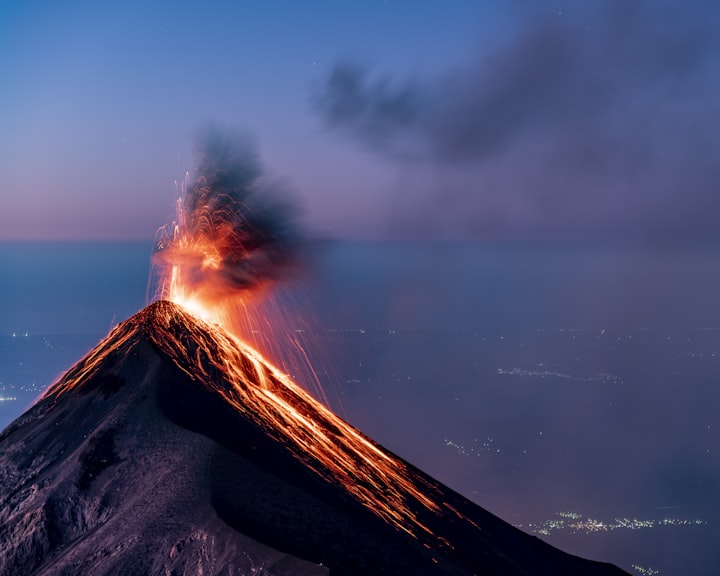
Deep within the heart of the Big Island of Hawaii, a mighty force of nature lies dormant, patiently awaiting its moment to unleash its fiery power. This force is Kilauea, one of the world's most active and captivating volcanoes. Its story is one of both creation and destruction, a symphony played out over millions of years.
Kilauea's origins trace back to the formation of the Hawaiian Islands themselves. Beneath the surface of the vast Pacific Ocean, a hotspot of molten rock, known as the Hawaiian hot spot, rises from the Earth's mantle. Over time, as the Pacific tectonic plate shifts, a series of islands are born, and Kilauea takes its place as one of the youngest among them.
For centuries, the native Hawaiians revered Kilauea as the home of Pele, the goddess of fire and volcanoes. They believed that the eruptions were her divine manifestations, both creating and destroying with the flick of her powerful fingers. The volcano's mesmerizing lava flows and explosive eruptions became the backdrop for countless legends and myths, a testament to the awe and respect it commanded.
Kilauea's modern era of volcanic activity began in 1983 when a new eruption started in the eastern rift zone. Molten lava emerged from the depths, slowly but relentlessly, forging a path of destruction in its wake. Entire neighborhoods were consumed, and the landscape was forever changed. Yet, even amidst the chaos, there was a sense of wonder and fascination as the volcano unveiled its raw power.
Scientists and geologists flocked to Kilauea, eager to study this living laboratory of volcanic activity. They meticulously monitored its every rumble and recorded its every tremor, seeking to unravel the mysteries of its inner workings. Through their efforts, they gained insight into the intricate processes that drive volcanic eruptions and learned to better predict their behavior, a knowledge that would prove invaluable in mitigating the risks posed by such natural phenomena.
But Kilauea's story was not just one of destruction; it was also a tale of creation. With every eruption, new land emerged, adding to the island's size and diversity. Lava flowed and cooled, forming rugged coastlines and fertile plains. Life, against all odds, found a way to thrive in this harsh and unforgiving environment. From resilient plants to endemic species found nowhere else on Earth, Kilauea became a cradle of biodiversity, a testament to the resilience of life itself.
In 2018, Kilauea embarked on a new chapter of its saga. An eruption in the lower East Rift Zone created a dramatic spectacle, capturing the attention of the world. Rivers of molten lava cascaded down the slopes, engulfing everything in their path. Fiery fountains shot into the air, illuminating the night sky with their ethereal glow. The Earth seemed alive, pulsating with the raw energy of creation. It was a reminder that, in the grand scheme of things, we are but mere spectators in the face of nature's might.
As Kilauea continued its fiery performance, communities rallied together, demonstrating the indomitable spirit of the human spirit. Evacuees found refuge in shelters, and volunteers worked tirelessly to provide support and assistance. It was in these moments of adversity that the strength and resilience of the people shone brightest, echoing the very spirit of Kilauea itself.
Today, Kilauea remains a captivating testament to the power and beauty of nature. Its eruptions continue to shape the landscape and captivate the hearts and minds of those who bear witness to its might. Scientists strive to understand its inner workings, ever mindful of
When it comes to volcanic activity, government intervention plays a crucial role in safeguarding the lives and well-being of people living in volcanic-prone areas. Here are some ways in which governments can help protect communities from the potential hazards associated with volcanoes:
About the Creator
Keep reading
More stories from hiren prajapati and writers in Earth and other communities.
The Unbreakable Bond
Once upon a time in the vibrant city of Rosario, Argentina, a young boy named Lionel Messi dreamed of conquering the world of football. From a tender age, he displayed an unparalleled passion for the beautiful game, with a raw talent that set him apart from his peers. Born into a humble family, Messi's journey was far from easy, but his determination and unwavering spirit would propel him to become one of the greatest footballers of all time.
By hiren prajapati3 years ago in Motivation
Tragic Chapter on the Trains Sends Rail Superpower Spain Into Crisis
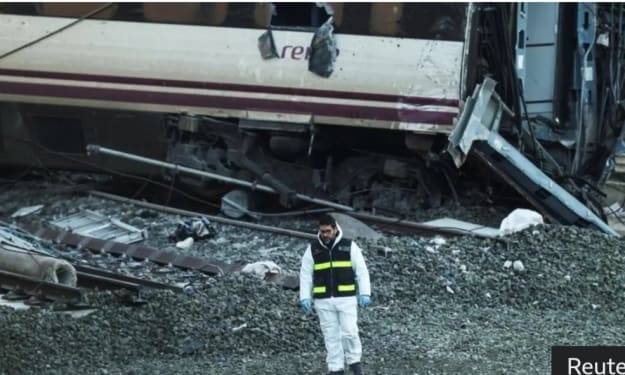
Spain, long celebrated as a railway superpower thanks to its high-speed AVE network and extensive commuter services, is now grappling with a rail crisis following a series of tragic incidents. Recent events have triggered public outrage, investigations, and calls for urgent reforms, highlighting vulnerabilities in what was once considered one of Europe’s safest and most efficient rail systems.
By Aarif Lashari6 days ago in Earth



Comments
There are no comments for this story
Be the first to respond and start the conversation.