
The Eta Aquarid meteor shower peaks tonight: Here's how to see fragments of Halley's comet burn up in the atmosphere.
The Eta Aquarid meteor shower peaks tonight


The Eta Aquarid meteor shower peaks tonight: Here's how to see fragments of Halley's comet burn up in the atmosphere.
Get ready for a celestial show! This evening marks the peak of the Eta Aquarid meteor shower, one of the most spectacular displays of shooting stars this spring. Skywatchers will be able to see fragments of the famous Halley's Comet disintegrate in Earth's atmosphere in a brilliant flash of light. This annual meteor shower is renowned for its fast, bright meteors, some of which leave glowing trails that linger for seconds. If you’ve ever wanted to catch a glimpse of Halley’s Comet—which won’t return until 2061—this is your chance to see its cosmic debris put on a stunning show
When and Where to Catch the Best of the Eta Aquarids
The highest meteor rates are visible from late at night until sunrise during the pre-dawn hours on May 5 and 6. The shower is most common in the Southern Hemisphere, where observers can see 30-40 meteors per hour. However, observers in the Northern Hemisphere, particularly in the southern states of the United States, the Mediterranean, and areas with similar latitudes, can still see 10-20 meteors per hour. Conditions for optimal viewing: The best time is between 2:00 AM and 5:00 AM local time, when Aquarius' radiant point is at its highest. Where: Get away from the city lights! The darkest skies can be found in beaches, mountains, or rural areas. Direction: Meteors can be seen anywhere if you look east or southeast. You don't need a telescope—just relax, let your eyes adjust, and enjoy the show with your naked eye.
What Makes This Meteor Shower So Unique?
One of the most well-known comets in history, Halley's, left behind cosmic mementos in the form of the Eta Aquarids. Even though the comet itself only passes close to Earth once every 76 years, its smoky trail of debris produces two meteor showers each year: (May) The Eta Aquarids (October) The Orionids Small comet fragments, some as small as sand grains, slam into our atmosphere at 148,000 mph (238,000 km/h) as the Earth passes through this debris field, vaporizing into meteor-like streaks of light. Amusing Fact: Halley's Comet was last seen from Earth in 1986, and it won't be seen again until 2061. Therefore, the meteor shower of tonight is like a preview of the comet's spectacular return!
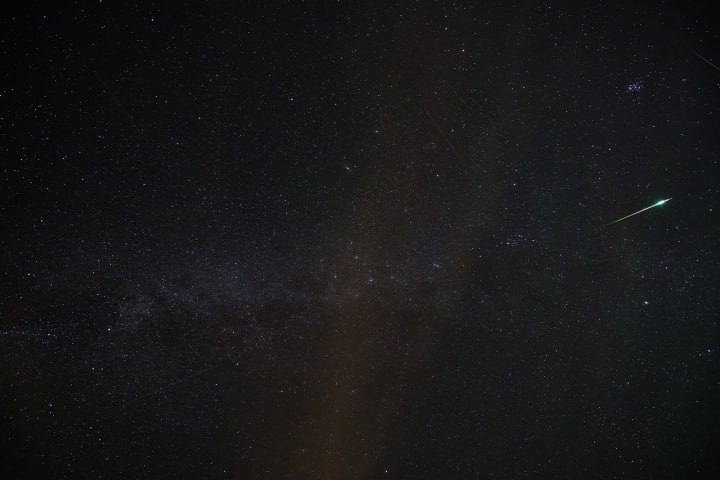
It's important to have clear skies. Cloudy? Tomorrow, try again—the shower lasts for a few days. Use apps like Dark Sky Finder or Light Pollution Map to find the best viewing spots to avoid light pollution. Bring a reclining chair or blanket—you'll want to look up for at least 30 minutes for the best show—and dress warmly. To see meteors that are fainter, be patient and let your eyes adjust to the darkness by avoiding lights and phones for at least 20 minutes.
This cosmic fireworks display is not to be missed!
The Eta Aquarids are a must-see event whether you are an amateur astronomer or just enjoy a stunning night under the stars. Do you intend to watch?
Share your meteor sightings in the comments! Also, tag any stunning photos you take—we'd love to see them!
About the Creator
Muntasir Mahmud Saad
I'm Muntasir Mahmud Saad, your guide to the most recent viral trends, breaking news, and must-know topics shaping our world. Uncovering the stories behind the headlines.
Keep reading
More stories from writers in Earth and other communities.
Dubai Food District Unveiled as DP World Expands Al Aweer Market
In a significant move that will shape the future of Dubai’s food industry, DP World has unveiled its latest project, the Dubai Food District, as part of an expansion of the Al Aweer Market. This new development is set to revolutionize the region’s food trade, offering state-of-the-art facilities designed to streamline the supply chain, foster innovation, and bolster Dubai’s position as a global hub for food trade. With the rise of global demand for fresh, high-quality food products, this ambitious expansion promises to elevate the UAE’s food sector and enhance the efficiency of food distribution across the region.
By Muhammad Hassan7 days ago in Earth
UK-China Relationship in a ‘Good, Strong Place,’ Starmer Says After ‘Productive’ Talks With Xi
The United Kingdom’s relationship with China is in a “good, strong place,” Prime Minister Keir Starmer has said, following what he described as productive talks with Chinese President Xi Jinping. The comments signal a potential recalibration of UK-China relations after years marked by tension, mistrust, and strategic caution.
By Aarif Lashariabout 2 hours ago in Earth
🅼🅸🅳🅽🅸🅶🅷🆃 🆂🅽🅰🅲🅺🆂
"It's 10 in Tuscon! We all know what that means... It's Time for Midnight Snacks with your man, Gerald Gee! Ready to spend the night together? Me too! I'm full of snacks and can't wait to regurgitate them all back into your hungry ears. Crack a brew! Pop some corn! Anything to get ready for one hell of a show where the talk maybe cheap but the words cut deep...
By Lamar Wiggins6 days ago in Fiction


Comments (1)
I wish it wasn't so cloudy here would love to see it!