
The Enigmatic Journey
Unveiling the Life of a Star in the Sky

Introduction:
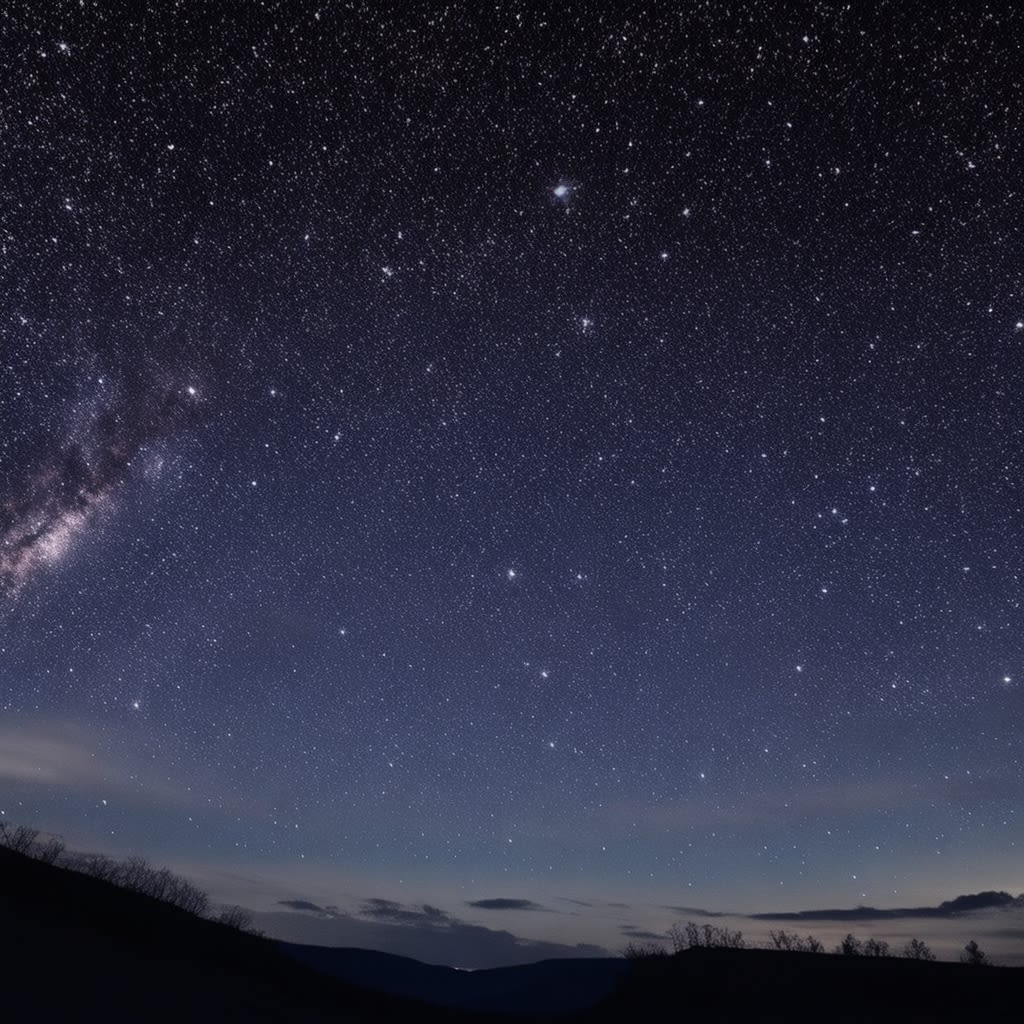
Gazing up at the night sky, we are captivated by the twinkling stars that have fascinated humanity for millennia. These celestial objects, which appear as mere pinpricks of light, hold within them stories of cosmic birth, evolution, and eventual demise. Understanding the life of a star is a captivating exploration into the wonders of the universe and the forces that shape our existence. In this article, we embark on a journey to unravel the enigmatic life of a star, from its formation to its glorious end.
Birth: The Stellar Nurseries
Stars are born within vast regions of interstellar gas and dust called molecular clouds. These clouds, composed primarily of hydrogen and helium, undergo gravitational collapse due to disturbances such as shockwaves from supernova explosions or the gravitational pull of nearby stars. As the cloud contracts, it forms a dense core, known as a protostar.
Protostars: The Infantile Glow
Within the protostar, gravity continues to pull matter inward, causing the core to heat up. As the temperature rises, nuclear fusion reactions ignite within the core, fusing hydrogen atoms into helium. At this stage, the protostar emits energy in the form of infrared radiation. The protostar's luminosity gradually increases as it gains mass from the surrounding material.
Main Sequence: Stellar Adolescence
Once the protostar reaches a state of equilibrium between gravity and the outward pressure generated by nuclear fusion, it enters the main sequence phase. The main sequence is characterized by stable fusion reactions within the core, with hydrogen converting to helium. This process releases an immense amount of energy, causing the star to shine brightly. The star's size, temperature, and luminosity are determined by its mass, with more massive stars burning brighter and hotter.
Evolutionary Paths: Stellar Variety
Stars follow diverse paths of evolution based on their initial mass. Low-mass stars, like our Sun, continue fusing hydrogen into helium for billions of years, steadily increasing in size and luminosity until they exhaust their hydrogen fuel.
Red Giants and Super Giants: Aging Gracefully
As hydrogen in the core depletes, the star's internal balance is disrupted, leading to its expansion into a red giant. During this phase, the outer layers of the star grow immensely, while the core contracts and heats up. Red giants are often characterized by their reddish hue and immense size. Some massive stars may evolve into supergiants, becoming the brightest objects in the night sky.
Stellar Deaths: Supernovae and Stellar Remnants
For stars more than eight times the mass of the Sun, their journey ends in a spectacular explosion called a supernova. Supernovae release an extraordinary amount of energy and are responsible for seeding the universe with heavy elements forged within the star's core. The remnants of a supernova can manifest as neutron stars or black holes, depending on the mass of the original star.
White Dwarfs: The Fading Ember
When low-mass stars reach the end of their lives, they shed their outer layers, creating beautiful planetary nebulae. What remains is a hot, dense core known as a white dwarf. White dwarfs gradually cool and fade over billions of years, ultimately becoming dark, cold stellar remnants.
Conclusion:
The life of a star is an awe-inspiring cosmic journey that spans billions of years, illuminating the darkness of the universe and shaping the very fabric of existence. From their humble beginnings as protostars within molecular clouds to their final act as supernovae or fading white dwarfs, stars leave an indelible mark on the cosmos. Understanding the life cycle of stars not only deepens our appreciation for the beauty of the night sky but also provides valuable insights into the nature of our own existence in this vast and mysterious universe.
About the Creator
Saad Dar
i love the beauty of nature which is crafted by ALLAH
A $170 Million Gemstone Discovery Shocks Myanmar’s Mining World
Myanmar, a country long known for its rich natural resources, has once again captured global attention after the discovery of an extraordinary gemstone estimated to be worth around $170 million. The remarkable find has stunned geologists, gem traders, and mining experts, reaffirming Myanmar’s reputation as one of the world’s most important sources of precious stones.
By Irshad Abbasi 6 days ago in Earth
Top tipple tricks
Been thinking a lot about drinking, lately. Not least because of a recent episode of over-indulgence and the inevitable after effects. Some readers may recall the earlier articles I wrote about beating the booze. Here I set out an experiment in techniques for cutting down on my alcohol intake. The experiment was successful, the techniques worked, and I have armed myself with an arsenal of weapons in the war against the demon drink. I have yet to fire the first round however. It's all a question of timing (perhaps procrastination).
By Raymond G. Taylor7 days ago in Psyche




Comments
There are no comments for this story
Be the first to respond and start the conversation.