
"The effects of climate change on oceanic ecosystems and earth"
"Saving Our Oceans, Saving Our Planet: The Importance of Addressing Climate Change Impacts on the Ocean"
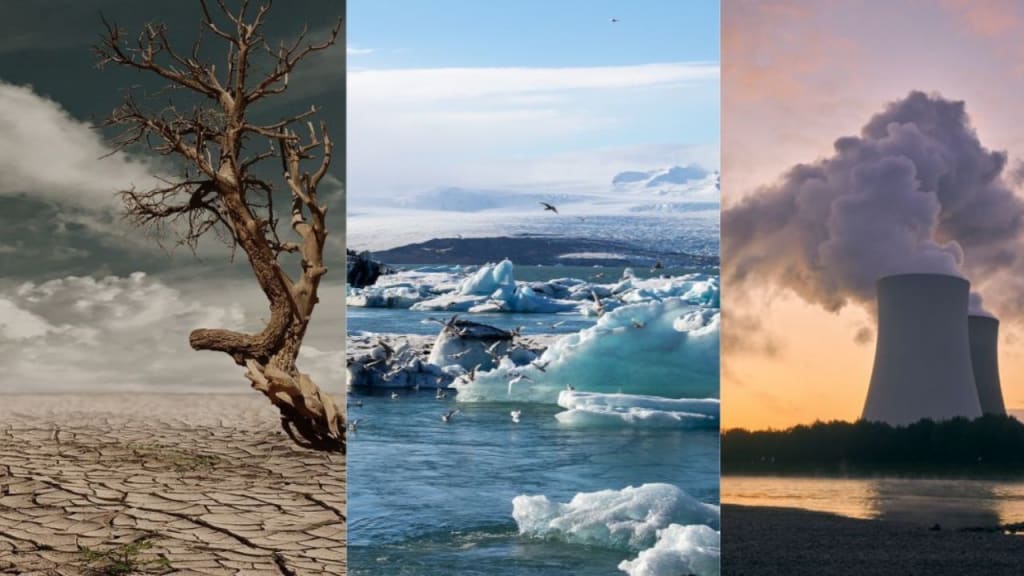
Climate change is a phenomenon that has been affecting the entire planet, and its effects are being felt in every aspect of life. From melting ice caps to more intense and frequent natural disasters, the impact of climate change is far-reaching and undeniable.
One area where the effects of climate change are particularly pronounced is in the oceanic ecosystems that cover the majority of the earth's surface.
These ecosystems are complex and interconnected systems that play a critical role in maintaining the health of the planet and the life that depends on it.
In this story we shall explore the effects of climate change on oceanic ecosystems and how these changes are impacting the earth.
One of the most obvious effects of climate change on oceanic ecosystems is the rise in sea levels.
As ice caps and glaciers continue to melt, the volume of water in the ocean increases, causing sea levels to rise.
This rise in sea level not only impacts coastal communities, but it also has a profound effect on the ecosystems that exist in these areas.
For example, saltwater intrusion into freshwater ecosystems, such as estuaries, can result in the displacement of native species and the introduction of invasive species.
Another major effect of climate change on oceanic ecosystems is ocean acidification.
As carbon dioxide (CO2) emissions continue to increase, the amount of CO2 in the atmosphere also increases.
A portion of this CO2 is absorbed by the ocean, where it reacts with seawater to form carbonic acid.
This increase in acidity can have significant impacts on the health of marine species, particularly those that build their skeletons or shells from calcium carbonate.
For example, ocean acidification has been linked to declines in the populations of shellfish, such as clams, oysters, and sea urchins.
The effects of climate change on oceanic ecosystems also extend to changes in water temperature.
As the planet warms, the ocean absorbs a significant portion of this increased heat, causing the water to become warmer.
This increase in water temperature can have a profound effect on marine species, particularly those that are adapted to specific temperature ranges.
For example, warmer water temperatures can lead to the expansion of warm-water species into areas that were previously too cold for them to inhabit.
This can result in the displacement of native species and the introduction of invasive species.
Another way in which climate change is impacting oceanic ecosystems is through changes in ocean circulation patterns.
The ocean acts as a massive heat sink, helping to regulate the planet's temperature by moving heat around the globe.
As the ocean warms, changes in ocean circulation patterns can have far-reaching impacts on marine ecosystems.
For example, changes in ocean currents can result in changes in the distribution of phytoplankton, the tiny organisms that form the base of the ocean's food chain.
This, in turn, can impact the entire food chain, including larger species such as whales, seals, and sea birds.
The impacts of climate change on oceanic ecosystems are not limited to just physical changes.
There are also significant impacts to the chemical composition of the ocean.
As the ocean absorbs more CO2 from the atmosphere, it also becomes more acidic, which can impact the health of marine species and the entire food chain.
Additionally, changes in water temperature and circulation patterns can impact the distribution of nutrients in the ocean, which can impact the growth and reproduction of marine species.
The impacts of climate change on oceanic ecosystems also extend to the entire planet.
For example, the ocean acts as a carbon sink, helping to remove CO2 from the atmosphere.
As the ocean becomes more acidic, it is less able to absorb CO2, which can result in higher levels of CO2 in the atmosphere, further exacerbating the effects of climate change.
Additionally, changes in ocean temperature and circulation patterns can impact weather patterns, causing more frequent and intense natural disasters, such as hurricanes and typhoons.
The impacts of these events can ripple through the entire planet, causing damage to both coastal and inland communities and ecosystems.
Another important aspect to consider is the impact of climate change on ocean biodiversity.
The ocean is home to an incredible variety of species, many of which are still unknown to science.
However, as the effects of climate change continue to increase, many of these species are becoming threatened or are already extinct.
This loss of biodiversity can have far-reaching impacts on the health of the ocean and the entire planet.
Finally, it's important to consider the impact of climate change on the livelihoods of coastal communities.
For example, fishing communities that depend on the ocean for their livelihoods are being impacted by changes in fish populations, water temperature, and acidification.
This, in turn, can result in economic hardship and social disruption.
Additionally, as sea levels continue to rise, many coastal communities are at risk of being lost, as they are being slowly engulfed by the ocean.
In the last, the effects of climate change on oceanic ecosystems and the earth are far-reaching and significant.
From rising sea levels to changes in ocean chemistry and biodiversity, the impacts of climate change are impacting the health of the planet and the life that depends on it.
It is imperative that we take action to mitigate the effects of climate change and work towards a more sustainable future for our planet and all its inhabitants.
This can include reducing greenhouse gas emissions, investing in renewable energy, and protecting and preserving our oceanic ecosystems.
By taking action, we can ensure that future generations inherit a healthy and thriving planet.
About the Creator
Keep reading
More stories from Salman Nasim and writers in Earth and other communities.
China’s Ambitious Satellite Plan: 200,000 Satellites and Counting
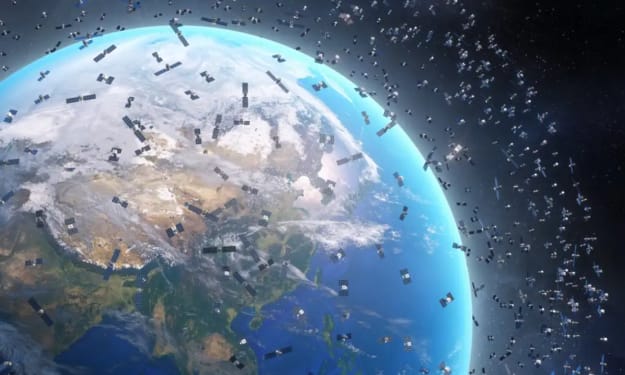
China has submitted an astonishing application to the International Telecommunication Union (ITU) to launch 200,000 satellites over the coming years. To put this into perspective, the entire world currently operates far fewer than this number. Even SpaceX’s Starlink project, one of the largest satellite networks globally, has plans for around 42,000 satellites. China’s proposal signals an unprecedented escalation in space activity and raises important questions: what are these satellites for, and what implications do they hold for global technology, security, and the environment? The Purpose Behind the Numbers At first glance, launching 200,000 satellites may seem excessive, but China’s goals are strategic and multifaceted. Experts suggest that these satellites could serve several purposes: 1. Global Internet Coverage China is aiming to build a massive low-Earth orbit (LEO) satellite network, similar to Starlink and OneWeb. By positioning thousands of satellites closer to Earth, they can provide high-speed internet to remote regions, rural areas, and even ships or aircraft in the oceans. This could help China expand its digital influence globally, offering connectivity in areas where traditional internet infrastructure is weak or non-existent. 2. Enhanced Military and Surveillance Capabilities A satellite network of this scale is also a game-changer for defense and surveillance. Satellites can monitor troop movements, track ships, and provide early warning systems. China’s military has been investing heavily in space-based technology, and these satellites could be a crucial part of modernizing its intelligence, surveillance, and reconnaissance (ISR) capabilities. 3. Scientific Research and Earth Observation Some of these satellites may be dedicated to Earth observation, collecting data on climate, agriculture, natural disasters, and urban development. With thousands of satellites constantly orbiting the planet, China could achieve near real-time monitoring of environmental changes and resource management, giving scientists and policymakers an unprecedented level of insight. 4. Competition in the Commercial Space Sector China’s plan is not purely for government use. The commercial potential of satellite networks is massive, from providing satellite internet services to supporting the burgeoning space economy. Companies under Chinese state and private ownership could leverage this infrastructure to offer services domestically and internationally, challenging Western tech giants in global space markets. The Scale of the Ambition Launching 200,000 satellites is not just ambitious; it’s historic. If approved and executed, China would operate more satellites than all other countries combined, fundamentally reshaping how space is utilized. However, there are serious logistical challenges. Manufacturing, launching, and maintaining hundreds of thousands of satellites requires enormous resources, advanced technology, and careful orbital planning to avoid collisions. China has made major progress in its space launch capacity, with frequent missions through the Long March rocket family and ongoing developments at the Wenchang and Jiuquan Spaceports. Yet, sustaining such a colossal fleet will test even the most advanced space programs. Global Implications The potential consequences of China’s satellite plan are profound, both technologically and geopolitically. 1. Space Traffic Management A network of 200,000 satellites could drastically increase the risk of collisions in orbit. Space debris is already a growing concern, and introducing tens of thousands of new satellites may exacerbate this problem. International cooperation and sophisticated traffic management systems will be essential to prevent catastrophic accidents in space. 2. Geopolitical Tensions China’s space ambitions may intensify global rivalry in space technology, particularly with the United States, Europe, and other spacefaring nations. Control over satellite networks can translate into strategic advantages, from military surveillance to dominance in global communications infrastructure. This may lead to a new phase of space competition reminiscent of the Cold War’s space race. 3. Impact on Astronomy Astronomers have already expressed concern over satellite mega-constellations interfering with observations. Thousands of bright satellites moving across the night sky can distort telescope images and hinder research into deep space phenomena. If China proceeds with 200,000 satellites, the challenge to professional and amateur astronomers will be enormous. 4. Global Connectivity Revolution On the positive side, if managed responsibly, China’s satellite network could revolutionize global connectivity, bringing internet access to millions of people who currently have none. It could accelerate digital development in underserved regions, support education, and foster global commerce in unprecedented ways. Regulatory Hurdles The ITU regulates global satellite usage, including frequency allocation and orbital slots. For China to launch 200,000 satellites, it must secure approval from the ITU, which evaluates whether such an immense network could interfere with other countries’ satellites or violate international agreements. This is not a mere formality—approval for a project of this scale could take years and may require negotiations with multiple nations. Conclusion: A Bold Step Toward the Future China’s application to launch 200,000 satellites is a bold statement about the future of space and global technology. It reflects the country’s ambition to dominate in digital infrastructure, military capability, and commercial space enterprise. While challenges abound—from space debris and regulatory hurdles to geopolitical tensions—the potential benefits are significant, particularly for connectivity and scientific advancement. As the world watches China’s next steps, one thing is clear: the age of satellite mega-constellations is here. How humanity navigates the risks and rewards of this new frontier will shape the future of communication, security, and our presence in space for decades to come.
By Muhammad Hassan6 days ago in Earth
The Ultimate Snake Plant Care Guide: Hard to Kill, Easy to Love
There’s a reason you see snake plants everywhere—from sleek office lobbies to cozy, sun-drenched living rooms. Their architectural spears of green and gold seem to silently defy neglect, earning them a reputation as the ultimate “hard to kill” houseplant. But what if we shifted that perspective? In my years of working with plants and data at AI Plant Finder, I’ve learned that the most rewarding relationships with our green companions aren’t built on mere survival, but on understanding. The snake plant (now botanically reclassified as Dracaena, though we all still call it Sansevieria) isn’t just surviving your care; it’s thriving on a biological logic all its own. This guide is your key to moving from simply keeping it alive to helping it flourish, deepening that easy love with a little expert insight.
By Emma Wallaceabout 7 hours ago in Earth



Comments
There are no comments for this story
Be the first to respond and start the conversation.