
The documentary Elizabeth Bathory: The Blood Countess Part 2.
The historical figure known as Countess Elizabeth Báthory de Ecsed, also known as The Blood Countess,

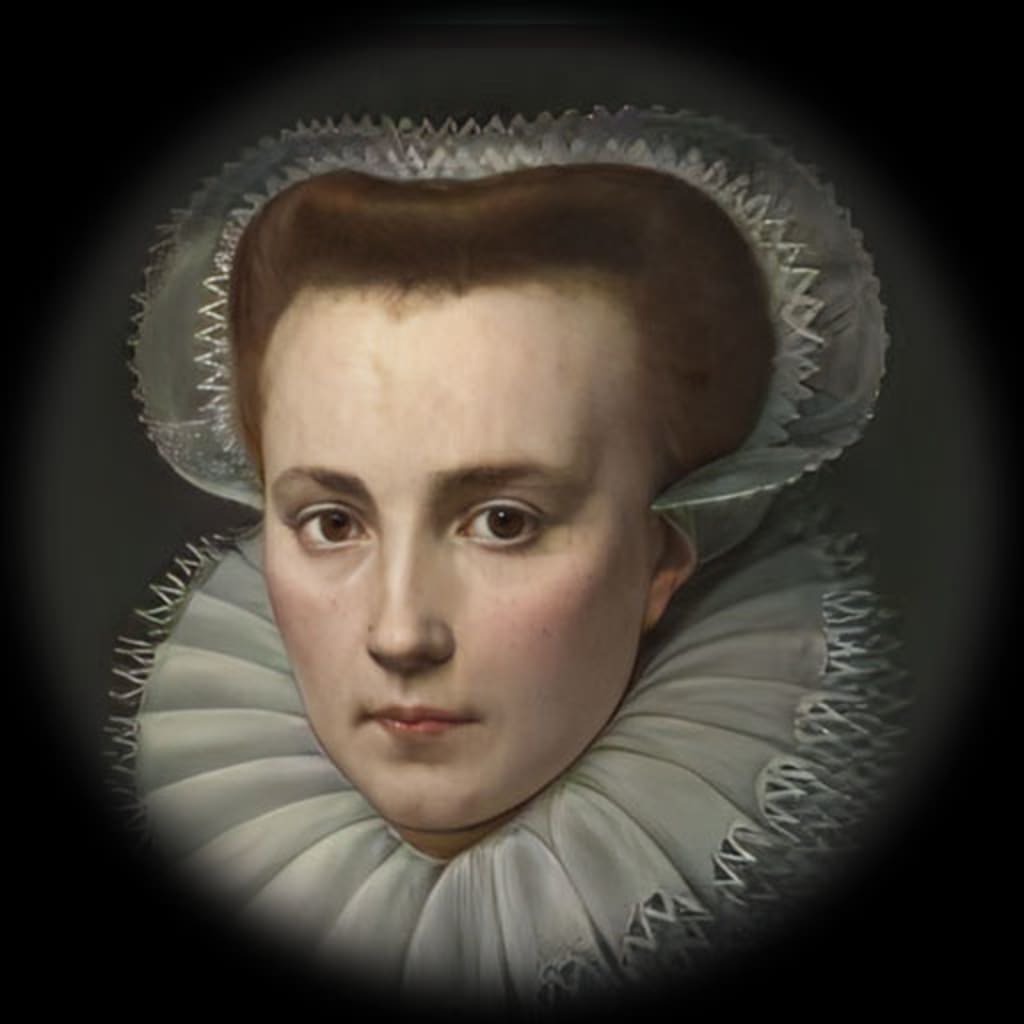
The **Voivode of Transylvania**, **Andrew Bonaventura Bathory**, was the highest-ranking authority in the region and also held the title of **Hungary's Chief Justice**. His prominence in both local and regional matters placed him among the most powerful figures of the time.
Adding to the significance of the Bathory family, **Stephen Báthory**, a maternal uncle of **Elizabeth Bathory**, wed the Queen of Poland and later became **King Stefan Batory** of Poland. In **1575**, he expanded his authority further by adding the title of **Grand Duke of Lithuania** to his impressive list of noble positions. He was also made **Prince of Transylvania** and became a prominent figure in the **Commonwealth of Poland and Lithuania**. His marriage and subsequent rise in status reflected the growing influence of the Bathory family in the politics of Central and Eastern Europe during this period.
Throughout the time of **Elizabeth Bathory’s** life, many members of her extended family held the title **Prince of Transylvania**. This included two of her cousins, **Sigismund** and **Gabriel Bathory**, who carried on the legacy of their powerful ancestors after Elizabeth’s death.
The **Báthory family** was not only influential politically but also incredibly wealthy. Their property spanned regions in what are now **Slovakia**, **Romania**, and the **Kingdom of Hungary**. This vast territory allowed the Báthory family to lend money to many powerful families, including the **Austrian Habsburgs**, further solidifying their prominence in European politics and finance. The Báthorys' strategic wealth and influence made them key players in the power dynamics of East-Central Europe during the 16th century.
The **Austrian Habsburgs**, one of the most renowned royal families in medieval and early modern Europe, played a central role in the history of the time. The Habsburg dynasty lasted for an impressive **636 years**, from **1282 to 1918**, and was one of the most influential families in Europe. They controlled large territories across **East-Central Europe**, with their capital in **Vienna**, Austria. From **1583 to 1611**, during the time of Elizabeth Bathory, the Habsburgs temporarily moved their seat to **Prague**, reflecting the shifting political and military concerns of the time.
The **Habsburg family** produced monarchs in various European countries, including **Spain**, **Portugal**, **Bohemia**, and **Galicia-Lodomeria**, as well as in colonies around the world. The dynasty expanded through a combination of military conquest and strategic marriages. Later in history, the Habsburgs also controlled regions in **Italy** and the **Low Countries** and even produced a **Mexican emperor** in the 19th century.
The family’s political maneuvering, particularly through marriage alliances, enabled them to cement their dominance. However, by the **mid-16th century**, the Habsburg dynasty had split into two branches: the **Spanish** and the **Austrian** branches, following the abdication of **Charles V**. This division marked a pivotal moment in European history and was accompanied by complex political shifts that would shape Europe’s future.
One of the key strategies of the Habsburgs was their use of **interfaith marriage**, which helped to retain diplomatic ties between the family branches. While this was a practical approach to maintaining power, it had a long-term consequence: the family’s gene pool became increasingly limited, leading to genetic impairments such as the famous **Habsburg jaw**, a physical anomaly that became emblematic of the family’s decline.
By the time **Elizabeth I** was queen of England in the late **1500s**, the Habsburgs had reached the zenith of their power. From **1438 to 1806**, they held the title of **Holy Roman Emperor**, a position that was theoretically chosen by the **prince-electors** but was often dominated by the Habsburgs due to their vast landholdings within the Holy Roman Empire. The Habsburgs ruled over a sprawling empire that included modern-day **Germany**, **Austria**, **Czechia**, **Switzerland**, parts of **Eastern France**, **Slovenia**, and the **Low Countries**, as well as **northern Italy** and parts of **western Poland**.
The Holy Roman Empire, which sought to position itself as the heir of **Imperial Rome’s** tradition, aggressively enforced the **Roman Catholic faith** across its territories. During this period, Protestantism began to take hold in the Empire, especially after **Martin Luther** posted his **95 Theses** in **Wittenberg** in **1517**, challenging the Catholic Church’s practices and sparking the **Protestant Reformation**.
During the **Middle Ages**, a nation like **Hungary**, located in **East-Central Europe**, faced constant challenges due to its proximity to powerful neighbors. The **Austrian Habsburgs** to the west and the **Ottoman Turks** to the east created a volatile environment for Hungary’s political and social structures. The **Ottoman Empire** presented a constant military threat, as it sought to expand its territory into Europe.
The geopolitical landscape in Hungary during Elizabeth Bathory’s lifetime was shaped by these external pressures. The ongoing conflict with the **Ottoman Turks** and the influence of the Habsburgs had significant personal and political repercussions for Elizabeth and her family. Despite her family’s vast wealth and power, these larger geopolitical dynamics were beyond their control, influencing their fate and contributing to the complex web of intrigue that surrounded **Elizabeth Bathory's** infamous legacy.
**King Matthias Corvinus of Hungary**, a notable **Renaissance monarch**, ruled Hungary from **1490** until his death. After his passing, Hungary fell into political decline, setting the stage for the tumultuous events that would unfold in the coming decades. The capture of **Constantinople** by the **Ottoman Turks** in **1453** marked the fall of the **Byzantine Empire**, further destabilizing the region and setting the stage for the era in which Elizabeth Bathory would live.
About the Creator
Nora Ariana
Empowering through stories and sound igniting purpose, sparking growth, and awakening the power within.
Keep reading
More stories from Nora Ariana and writers in Earth and other communities.
A goal is a dream with a deadline
A goal is a dream with a deadline. This powerful quote reminds us that without action, dreams remain just that wishes floating in our imagination. But when we set a timeline and commit to achieving them, they evolve into goals, bringing clarity, direction, and purpose. Many people go through life holding on to dreams, hoping they will come true someday. But someday is not a day on the calendar. Dreams without structure often fade with time or get buried under the weight of daily responsibilities. Turning a dream into a goal is what separates those who achieve from those who continue to wish.
By Nora ArianaExclusive • 9 months ago
If You Love Me, You'll Do It
I met Jason when I was five years old. I could say that I loved him from the moment I saw him. He was so handsome to me and I felt in awe by his presence. When they introduced him as the new kid in school, I wanted to be his friend right away. I remember it like it was yesterday. I remember his smile and how he didn't seem shy. He appeared confident and ready to learn. I waved at him and said "hello," before anyone else could even say a word. He sat next to me, and I asked him if he wanted to be friends. He looked so happy as he said, "Yes!"
By Sidney Smith (Sid Smith)7 days ago in Fiction




Comments
There are no comments for this story
Be the first to respond and start the conversation.