
The Deepest Places on Earth: Exploring the Mariana Trench
Mariana Trench

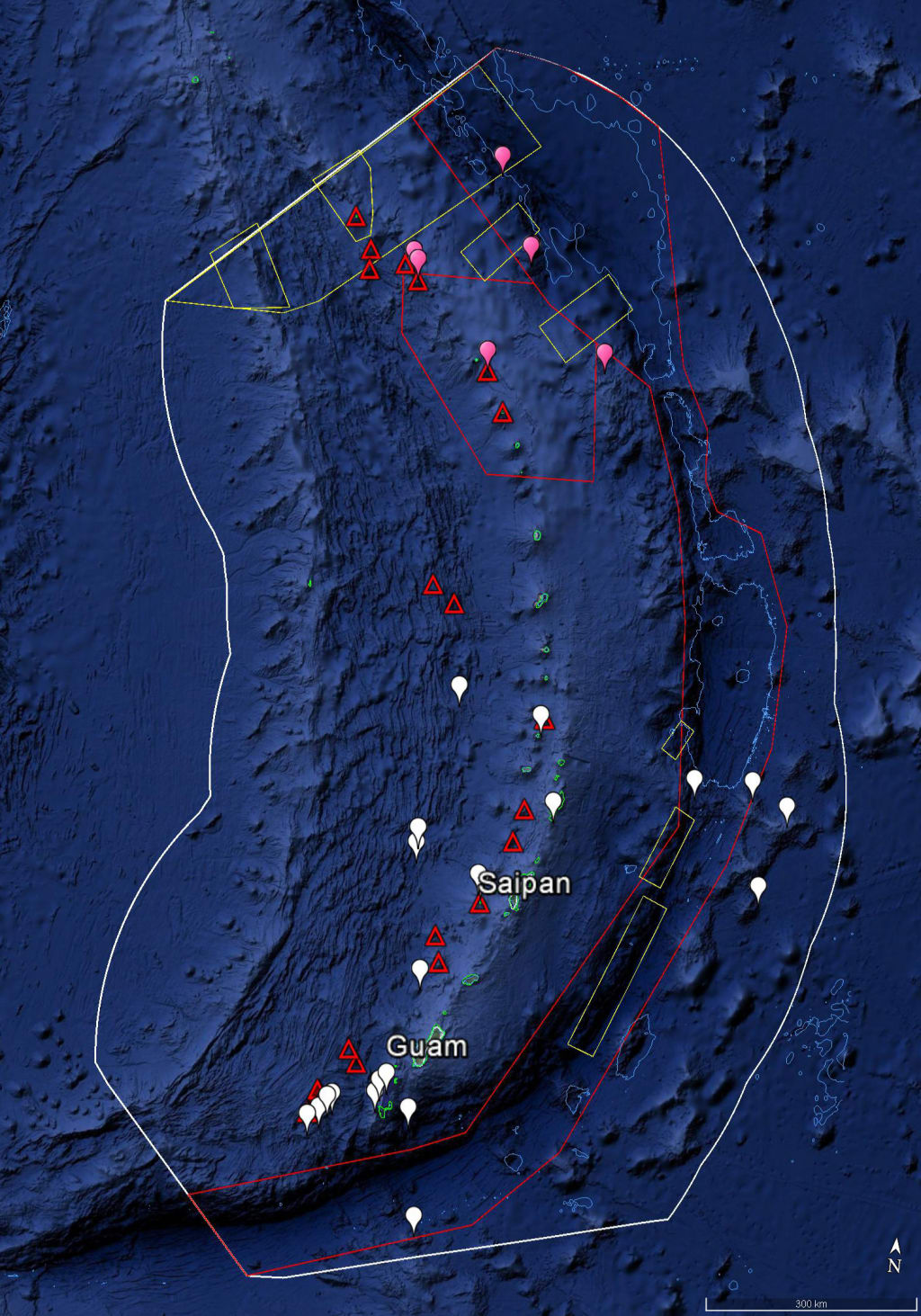
The Deepest Places on Earth: Exploring the Mariana Trench
Beneath the vast expanse of the Pacific Ocean lies a chasm so deep and enigmatic that it challenges our understanding of Earth's final frontiers. The Mariana Trench, stretching over 2,550 kilometres (1,580 miles) in length and plunging to depths exceeding 10,900 metres (35,800 feet), is the deepest known part of the world's oceans . This crescent-shaped trench, located about 200 kilometres (124 miles) east of the Mariana Islands, represents not just a geographical marvel but a realm of scientific intrigue and discovery .
A Geological Marvel: Formation and Structure
The Mariana Trench is a product of tectonic activity, specifically the process of subduction where the Pacific Plate is forced beneath the smaller Mariana Plate . This interaction creates a deep oceanic trench, characterized by immense pressure and geological activity. The trench is part of the larger Izu-Bonin-Mariana subduction system, a region known for its earthquakes, volcanic activity, and the formation of island arcs .
At its deepest point, known as the Challenger Deep, the trench reaches approximately 10,984 metres (36,037 feet) below sea level . To put this into perspective, if Mount Everest were placed into the trench, its peak would still be over 2,000 metres (6,600 feet) underwater.
Chronicles of Exploration: Human Endeavours into the Abyss
The quest to understand the Mariana Trench began in earnest in 1875 when the HMS Challenger conducted the first sounding using a weighted rope, recording a depth of 8,184 metres (26,850 feet) . Subsequent expeditions have utilized advanced technologies to explore and map the trench with greater precision.
In 1960, the bathyscaphe Trieste, piloted by Jacques Piccard and Don Walsh, made the first manned descent to the Challenger Deep, reaching a depth of approximately 10,916 metres (35,814 feet) . This historic dive paved the way for future explorations, including filmmaker James Cameron's solo descent in 2012, where he reached a depth of 10,908 metres (35,787 feet) .
More recently, in 2019, explorer Victor Vescovo descended to a depth of 10,924 metres (35,840 feet) in the DSV Limiting Factor, setting a new record for the deepest manned dive . These missions have not only expanded our knowledge of the trench's topography but have also highlighted the challenges of deep-sea exploration, including the immense pressure and technical limitations.
Life in the Abyss: Adaptations and Discoveries
Despite the extreme conditions—complete darkness, near-freezing temperatures, and pressures over 1,000 times that at sea level—the Mariana Trench is home to a variety of life forms uniquely adapted to this environment.
One notable discovery is the Mariana snailfish (Pseudoliparis swirei), found at depths of around 8,000 metres (26,247 feet) . These translucent creatures have adapted to the high-pressure environment by developing flexible bones and specialized proteins.
Other remarkable inhabitants include the Dumbo octopus, named for its ear-like fins; the anglerfish, known for its bioluminescent lure; and the amphipods, small crustaceans that thrive in the trench's depths . These species have evolved unique features to survive in an environment with scarce food sources and no sunlight.
The Soundscape of the Deep: Acoustic Discoveries
In addition to visual observations, researchers have utilized hydrophones to study the acoustic environment of the Mariana Trench. In 2015, a hydrophone deployed into the Challenger Deep recorded a variety of sounds, including those from earthquakes, passing ships, and marine life .
One particularly intriguing recording was a mysterious sound dubbed the "alien song," characterized by its unique frequency and duration. Initially baffling scientists, further analysis attributed the sound to the vocalizations of baleen whales, specifically Bryde's whales, highlighting the trench's role as a habitat for deep-diving marine mammals .
Conservation and Ethical Considerations
The Mariana Trench, while remote, is not immune to human impact. During his 2019 dive, Victor Vescovo reported encountering plastic debris at the trench's bottom, underscoring the pervasive issue of ocean pollution.
Furthermore, the trench has been proposed as a site for nuclear waste disposal, based on the assumption that subduction zones could sequester waste deep within the Earth's mantle. However, such proposals raise significant environmental and ethical concerns, given the potential for ecological disruption and the trench's unique biodiversity .
Efforts to protect this fragile ecosystem have led to the establishment of the Mariana Trench Marine National Monument in 2009, aiming to preserve the trench's natural and cultural resources .
The Final Frontier: Ongoing Research and Future Prospects
The Mariana Trench continues to be a focal point for scientific research, offering insights into geology, biology, and the limits of life on Earth. Advancements in technology, such as autonomous underwater vehicles and deep-sea submersibles, are enabling more comprehensive explorations.
Understanding the trench's ecosystems can inform broader studies on climate change, biogeography, and the potential for life in similar extreme environments elsewhere in the solar system. As we delve deeper into this abyssal world, the Mariana Trench stands as a testament to Earth's enduring mysteries and the human spirit of exploration.
About the Creator
Jeno Treshan
Story writer Jeno Treshan creates captivating tales filled with adventure, emotion, and imagination. A true lover of words, Jeno weaves unforgettable stories that transport readers to far-off lands.
Keep reading
More stories from Jeno Treshan and writers in Earth and other communities.
The Mysterious Moving Rocks of Death Valley
The Mysterious Moving Rocks of Death Valley: Nature’s Slow-Motion Mystery Deep in one of the hottest, driest places on Earth, stones the size of footballs — and even refrigerators — seem to defy the laws of nature. They move. Not quickly, not dramatically, but slowly and almost imperceptibly, leaving long, winding trails behind them across the cracked, barren surface of Racetrack Playa in California’s Death Valley. For decades, this baffling phenomenon puzzled scientists, adventurers, and the simply curious. How could lifeless rocks, some weighing hundreds of pounds, glide across the desert floor with no human or animal intervention?
By Jeno Treshan 8 months ago in Earth
The Reality of the Illusion of Time
Recently, as I strolled along the short stretch to my strength training session, I aimlessly took in the row of tatty shops and shabby buildings along the route and passed an off-street, in which one of my sisters used to live, around thirteen years ago.
By Chantal Christie Weiss2 days ago in Earth
Why Putin Went Quiet When Challenged by Trump Over Venezuela
When U.S. forces captured Venezuelan President Nicolás Maduro in early January 2026, the world was stunned. Venezuela has long been a Russian ally, yet Russian President Vladimir Putin remained almost completely silent when challenged directly by U.S. President Donald Trump. Why would a leader so often outspoken on the world stage hold back in such a dramatic moment? Let’s unpack the story and explore what it means for global politics. A Bold Move That Shocked the World On January 3, U.S. forces executed a daring operation in Venezuela, taking Maduro into custody in New York to face charges including drug trafficking and narco‑terrorism. The operation was framed by the U.S. as a step to enforce justice, but critics saw it as an extraordinary overreach of power. Venezuela is no ordinary country for Russia. Since the days of Hugo Chávez, Moscow has cultivated close ties with Caracas, offering military support, energy deals, and diplomatic backing on the global stage. Past actions included Russian bombers visiting Venezuela and high-profile defense agreements. Given this history, many expected a fiery response from Putin. Yet, the Kremlin remained calm, issuing measured statements rather than sharp threats. Why Silence Was Strategic Experts suggest there are several reasons for Putin’s muted reaction, each revealing the careful calculation behind the Kremlin’s foreign policy. 1. Focus on the War in Ukraine Russia’s primary priority remains Ukraine. Engaged in a high-stakes military and diplomatic battle, Putin cannot afford distractions or new confrontations far from home. Escalating tensions with the United States over Venezuela could jeopardize Moscow’s position in Europe. A New York Times report highlighted that Russia is “subordinating all other interests to the war in Ukraine,” suggesting that even a high-profile ally like Venezuela takes a back seat to Moscow’s strategic goals. 2. Limited Military Options While Russia’s alliance with Venezuela is longstanding, much of the support has been symbolic rather than operational. Defense systems and military cooperation exist on paper, but Russia lacks the immediate ability to counter a U.S. operation thousands of miles away. Putin may have recognized that responding aggressively would be both ineffective and costly, potentially risking military and economic consequences that Moscow cannot afford. 3. Maintaining Diplomatic Channels with Washington With Donald Trump back in the White House since 2025, there has been cautious optimism in Moscow about recalibrating U.S.–Russia relations. Avoiding a dramatic confrontation over Venezuela keeps diplomatic channels open, allowing Russia to negotiate on other high-priority issues like Ukraine and sanctions relief. In other words, silence can be a calculated strategy, signaling restraint rather than weakness. 4. Russia’s Global Influence Is Waning The Maduro episode also highlights a broader geopolitical reality: Russia’s global reach has limits. Since the 2022 invasion of Ukraine, Moscow’s influence in regions like the Middle East and parts of the former Soviet Union has weakened. Venezuela remains one of its few high-profile allies outside Europe, but even there, Russia’s power is largely symbolic. By not escalating, Putin is acknowledging a practical truth: Russia cannot be everywhere at once, and some battles are not worth fighting. 5. Choosing Battles Wisely Some analysts emphasize that Putin’s quiet response is more about strategic prioritization than capitulation. In a world dominated by nuclear powers and volatile global politics, direct confrontation with the United States over Venezuela could spiral into a far larger crisis. By staying silent, the Kremlin may be signaling that it picks its battles carefully, focusing resources on Ukraine, where the stakes are highest. What This Means for the World Putin’s silence sends several messages: Russia is currently stretched, economically and militarily. Moscow is prioritizing Ukraine over symbolic allies. Strategic restraint is sometimes more powerful than public confrontation. The limits of Russian influence are becoming more visible to the world. This episode reflects a new reality in geopolitics: power is as much about choosing when not to act as when to assert force. The Bigger Picture The capture of Maduro is a defining moment not just for Venezuela, but for global politics. It shows the United States asserting power in a way not seen for decades, while Russia’s quiet reaction underscores its current limits and priorities. For observers, Putin’s silence is a lesson in modern geopolitics: even the most assertive leaders exercise restraint when stakes are high and risks are global. In the end, the Maduro affair reminds us that in today’s world, the loudest response is not always the most effective one — sometimes, quiet calculation speaks volumes. Sources and Further Reading The US capture of Maduro reveals Russia’s weakness – Atlantic Council ‘It sends a horrible signal’: US politicians react to capture of Nicolás Maduro – The Guardian Russia slams 'neocolonial threats' against Venezuela – Reuters
By Muhammad Hassan6 days ago in Earth



Comments
There are no comments for this story
Be the first to respond and start the conversation.