
The Day the Earth Spoke
It began quietly. No earthquakes, no storms, no sudden fire in the sky
M Mehran
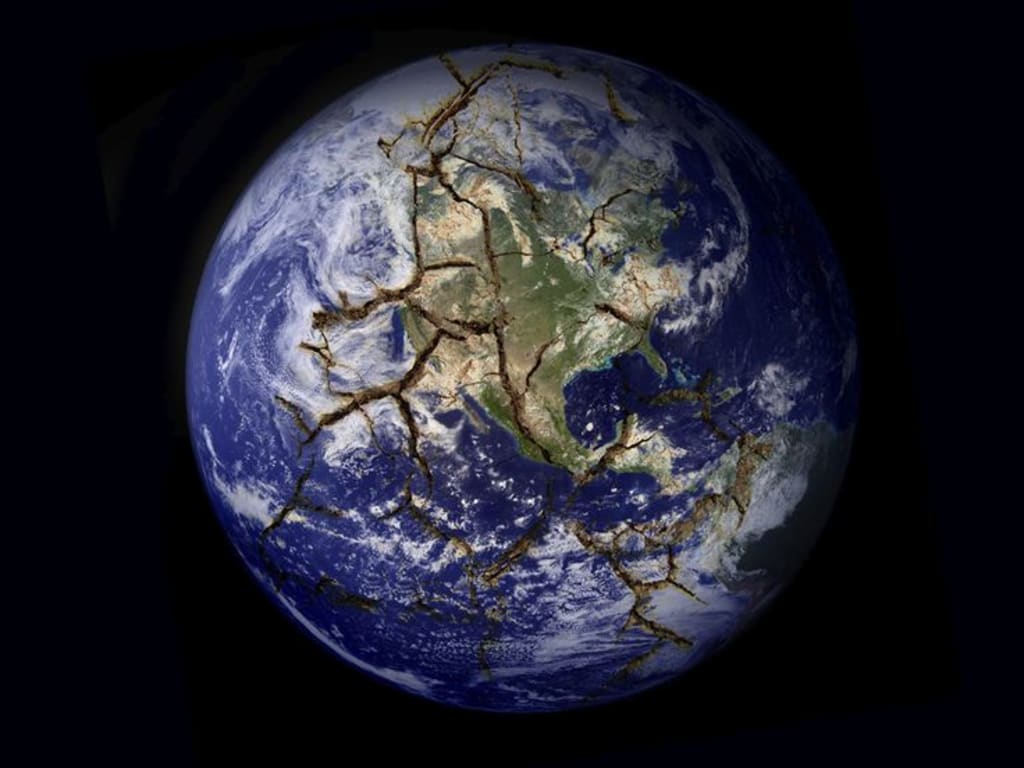
It began quietly. No earthquakes, no storms, no sudden fire in the sky. Just a sound, deep and low, that rippled beneath the feet of every person across the world. At first, people thought it was construction, or thunder rolling in from some unseen storm. But when it continued for minutes, then hours, scientists confirmed what no one wanted to believe.
It was the Earth itself. Speaking.
In Greenhaven, a small town nestled between hills and farmland, the strange hum felt like a heartbeat under the ground. Children pressed their ears to the soil and swore they could hear words—slow, heavy syllables that didn’t belong to any human tongue.
Among them was twelve-year-old Lila Perez, who had always felt a strange closeness to the land. Her grandmother used to tell her, “The Earth listens, mija. Every footstep, every seed, every tear—it remembers.”
That evening, when the sky burned with sunset, Lila stood barefoot in her backyard. The hum grew stronger. And then, in her mind—not her ears—she heard it:
“I am tired.”
Lila gasped. She stumbled backward, her heart hammering. The voice was immense, like an ocean given language, but it was also… sad.
The news spread quickly. Around the world, people reported the same experience: the Earth was communicating, though not everyone could hear words. Some only felt emotions—weariness, pain, longing. Others, like Lila, received clear messages.
In Greenhaven, the town gathered at the community center to discuss it. Farmers, teachers, shopkeepers—everyone buzzed with worry. Could the planet really speak? And if so, what did it want?
Dr. Elias Monroe, a geologist who had studied earthquakes for decades, shook his head. “It must be a natural phenomenon. Vibrations through the crust, misunderstood by our brains.”
But Lila, sitting in the back row, whispered, “It isn’t vibrations. It’s a voice.”
The mayor laughed gently. “And how do you know that, young lady?”
“Because,” Lila said, standing now, her small frame trembling, “the Earth told me it is tired.”
The room fell silent.
Days turned into weeks, and the phenomenon grew impossible to dismiss. Crops withered overnight in some places, while rivers suddenly surged in others. It was as though the planet’s exhaustion had become physical, reshaping the land. Scientists scrambled, governments panicked, but ordinary people—especially children—seemed to understand best.
One night, as Lila lay in bed, the voice returned.
“You take and take. Dig deep, cut forests, burn the air. I cannot breathe.”
Tears welled in her eyes. “I’m sorry,” she whispered. “We didn’t know.”
“You knew.” The Earth’s voice was heavy, like stone crumbling. “But you forgot how to listen.”
The next morning, Lila told her parents. They didn’t laugh. Her father, a farmer, looked at his fields of dry soil and nodded grimly. “If the Earth is speaking, we’d better start listening.”
Greenhaven changed first. The townsfolk planted trees along empty lots, turned off lights at night to give the stars back their shine, and shifted the farms to use less water. They called it “The Listening Project.”
Word spread. Other towns and cities began doing the same. A global movement stirred—not out of fear of punishment, but out of a newfound sense of responsibility. Children everywhere painted signs that read, “The Earth is tired. Let’s help her rest.”
Still, not everyone listened. Large corporations dismissed the voice as hysteria. Factories roared on, oil wells drilled deeper, ships poured smoke into the sky. And every time, the Earth’s hum grew louder, shaking buildings, rattling glass, making it impossible to ignore.
One night, the voice came again to Lila, but softer this time, almost like a lullaby.
“There is hope. You are young. You will remember.”
Lila asked, “What can we do?”
The ground beneath her pulsed gently. “Live smaller. Share more. Love the soil, the water, the sky. And teach others to do the same.”
She promised she would.
Years passed. The “Listening Project” grew into a worldwide movement. People no longer waited for governments—they took action in their neighborhoods, schools, and farms. Children planted gardens on rooftops. Artists painted murals of rivers and forests. Scientists developed cleaner energy not for profit, but for survival.
In Greenhaven, Lila became known as “the girl who heard the Earth.” By the time she was eighteen, she was speaking at global summits, reminding leaders of the promise she had made years ago.
“Every poem, every prayer, every promise we keep to this planet,” she said once at the United Nations, “is a piece of medicine. The Earth is not asking for miracles. She is asking us to remember she is alive.”
And slowly, remarkably, the Earth’s voice began to soften. The hum that once carried exhaustion now carried something gentler. Gratitude.
One evening, as Lila stood barefoot again in her backyard, the voice returned for what felt like the last time.
“Thank you, child. I can rest now.”
The ground was quiet after that. Some said the Earth had gone silent forever. But Lila knew better. The Earth had not stopped speaking—humanity had finally learned how to listen without needing words.
About the Creator
Keep reading
More stories from Muhammad Mehran and writers in Earth and other communities.
Japan Furniture Market Size and Forecast 2025–2033
Introduction Japan’s furniture industry stands at a unique intersection of tradition and innovation. Renowned worldwide for its craftsmanship, minimalist design, and functional aesthetics, Japanese furniture reflects the nation’s cultural emphasis on harmony, efficiency, and simplicity. Today, as Japan’s population becomes increasingly urban, digitally connected, and environmentally conscious, the furniture market is undergoing a quiet but significant transformation.
By Janine Root 2 days ago in Earth
Malted Wheat Flour Market Size and Forecast 2025
Malted Wheat Flour Market Overview Malted wheat flour is produced by germinating wheat grains, drying them, and grinding them into flour. This natural malting process activates enzymes—particularly amylase—that convert starch into fermentable sugars during baking. The result is improved dough fermentation, enhanced texture, increased loaf volume, and a richer, more consistent flavor profile in baked goods.
By Aaina Oberoiabout 22 hours ago in Earth


Comments
There are no comments for this story
Be the first to respond and start the conversation.