
The DARK Tales of Japan's Haunted Sea of Trees: Aokigahara Forest Suicide
Despite its breathtaking beauty, Aokigahara is infamous as a place where many go to end their lives, earning it the morbid moniker of Japan’s "Suicide Forest."

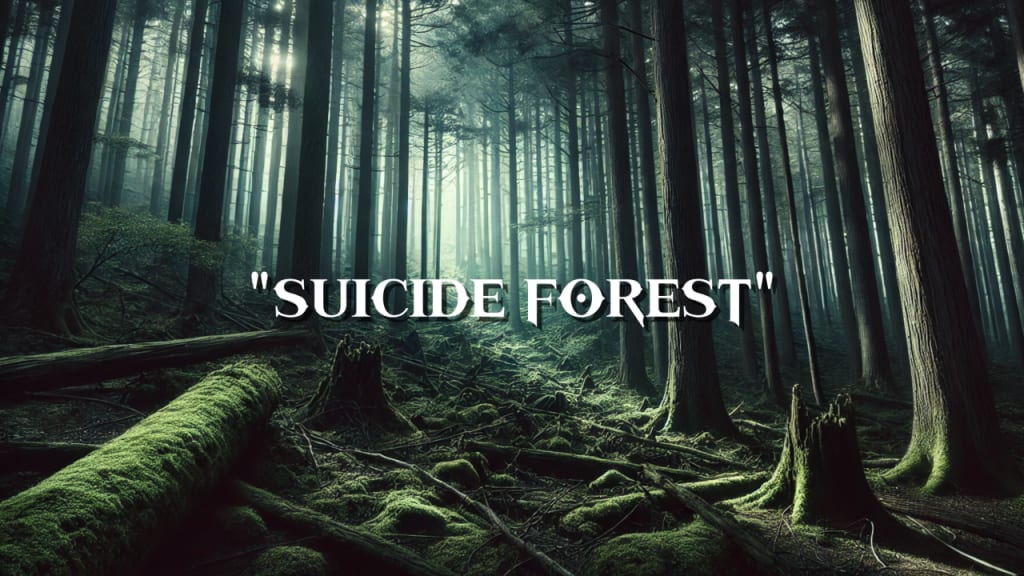
Beneath the towering gaze of Mount Fuji lies a forest that seems plucked straight from a dream—or perhaps a nightmare. Aokigahara, known as the "Sea of Trees," is a lush expanse of greenery famous for its otherworldly tranquility. But there's a shadow cast over its serene canopy. Despite its breathtaking beauty, Aokigahara is infamous as a place where many go to end their lives, earning it the morbid moniker of Japan’s "Suicide Forest."
How did such a naturally stunning landscape gain such a dark reputation? And why does it continue to attract both despair and fascination? Let’s unravel the many layers of Aokigahara’s story—its history, legends, and the ongoing battle to redefine its legacy.
Aokigahara: A Forest Like No Other
A Natural Wonder
Stretching over 30 square kilometers, Aokigahara is located at the northwestern base of Mount Fuji. Its origins trace back to a volcanic eruption over a thousand years ago, which left behind a unique landscape of hardened lava now blanketed by thick vegetation. The forest's density is such that sunlight barely penetrates, and its floor is coated with moss-covered roots, adding to its mystical aura.
The Soundless Sea
The forest's unusual silence is both enchanting and unsettling. Thanks to its volcanic soil and dense growth, sound within Aokigahara is absorbed, creating an eerie quiet. It's no wonder people describe walking through its paths as stepping into another realm entirely.
The Dark Reputation of Aokigahara
Myths and Folklore
Before its modern infamy, Aokigahara was steeped in Japanese folklore. Stories of "ubasute"—an ancient practice where the elderly or infirm were abandoned in remote locations during times of famine—linger in the forest’s narrative. Though largely mythical, such tales feed the perception of Aokigahara as a place where the desperate go to meet their end.
A Tragic Reality
In the post-war years, Aokigahara’s connection to suicide became cemented. Each year, numerous individuals travel to the forest to take their lives, leading authorities to conduct regular searches for human remains.
Local authorities refrain from publishing official statistics to avoid further sensationalism, but Aokigahara is widely regarded as one of the most common suicide sites in the world.
Cultural and Psychological Factors
Cultural Attitudes Toward Suicide
In Japan, suicide carries a complex history. Rooted in samurai traditions, acts like seppuku—ritual self-disembowelment—were once seen as an honorable way to preserve dignity. Though modern Japan condemns such acts, cultural echoes persist, influencing societal views on mental health and suicide.
The Allure of Aokigahara
Why Aokigahara? The forest offers a combination of accessibility and seclusion. Its maze-like structure ensures privacy, while its tranquil ambiance provides a false sense of peace. Tragically, some are drawn to the forest by its grim reputation, seeing it as the "perfect" place for their final moments.
Efforts to Change Aokigahara’s Legacy
Prevention Measures
To combat its tragic reputation, local authorities have implemented numerous preventive measures. Signs at the forest's entrance bear messages like “Your life is a precious gift from your parents” and “Think carefully about your children and loved ones” in hopes of dissuading those in despair.
Volunteer patrols regularly monitor the forest, offering help to those who seem distressed. Mental health organizations have also collaborated with local governments to raise awareness and offer support.
Reframing the Narrative
In recent years, efforts have been made to highlight Aokigahara’s natural beauty. Tour guides and environmentalists now promote the forest as a place for exploration and learning rather than sorrow. Hiking trails showcase its biodiversity, from unique moss species to hidden caves formed by ancient lava flows.
Pop Culture and Global Fascination
The Forest in Media
Aokigahara’s reputation has been amplified by movies, documentaries, and books. From the pages of The Complete Manual of Suicide by Wataru Tsurumi—blamed for romanticizing the location—to Hollywood films like The Forest (2016), the forest's portrayal in media has been both a curse and a call for awareness.
Sensationalism vs. Awareness
While some media portrayals sensationalize Aokigahara, others aim to shed light on Japan’s mental health crisis. Documentaries like Vice’s Suicide Forest in Japan offer a sobering look at the forest’s dual identity as a natural wonder and a site of tragedy.
Conclusion: A Forest of Duality
Aokigahara is a place of stark contrasts—a serene woodland haunted by tales of despair. While its beauty captivates visitors, its darker reputation serves as a poignant reminder of the importance of mental health awareness.
But there’s hope. Through community efforts and changing perceptions, Aokigahara is slowly being reclaimed as a place of life and discovery. If you ever find yourself at its entrance, remember that every step into the forest is a step into history, nature, and humanity’s enduring complexities.
About the Creator
Keep reading
More stories from Marveline Merab and writers in Earth and other communities.
The Blue City of Morocco: A Vibrant, Colorful Wonder You Can’t Miss
In the heart of Morocco’s Rif Mountains lies a city like no other, where every surface glimmers in shades of blue—from delicate pastels to striking cobalt. This isn’t just a place; it’s a masterpiece. Nestled in the Rif Mountains, Chefchaouen is a breathtaking blend of culture, history, and, you guessed it, every shade of blue you can imagine.
By Marveline Merababout a year ago in Earth
UK Exposed to ‘Serious Harm’ by Failure to Tackle AI Risks, MPs Warn
The United Kingdom is facing growing warnings from Parliament that its approach to regulating artificial intelligence (AI) could leave citizens and the financial system exposed to serious harm. A recent report by the House of Commons Treasury Select Committee criticizes the government for a “wait-and-see” attitude toward AI risks, especially in financial services.
By Aarif Lashariabout 3 hours ago in Earth
The Dryads Are Calling
Deep within the heart of ancient forests, where sunlight filters through towering canopies and the air hums with life, there exists a world few humans truly understand. It is a world of dryads, the mythical tree spirits of folklore, silently observing, nurturing, and sometimes guiding the creatures that dwell among the trees. Today, their legend continues to captivate the imagination, blending myth, nature, and a touch of magic.
By Aarif Lasharia day ago in Earth



Comments
There are no comments for this story
Be the first to respond and start the conversation.