
The Dangers of the Ill-Fated Titan Submarine
An Avoidable Tragedy

The Dangers of the Ill-Fated Titan Submarine: An Avoidable Tragedy
Introduction
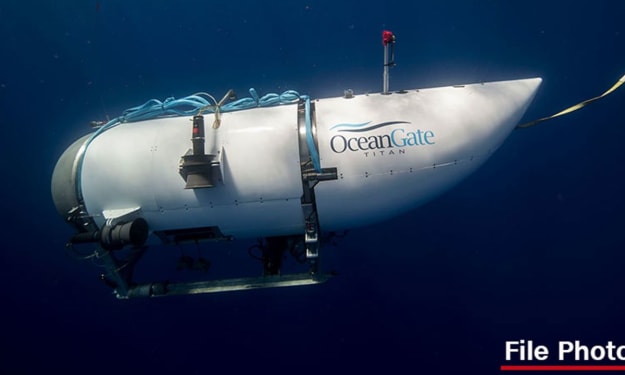
The ill-fated Titan submarine, designed to explore the depths of the ocean and provide an extraordinary experience for Titanic enthusiasts, has come under intense scrutiny. This article delves into the alarming safety concerns raised by experts and passengers alike, shedding light on the questionable decisions made during its construction and the potential consequences of such negligence.
1. A Questionable Construction
The construction of the Titan submarine raises serious concerns about the prioritization of safety. David Pogue, a reporter who experienced the submarine firsthand, reported that the vessel used components purchased from Camping World, including lighting and handles, which seemed unfit for a critical exploration vehicle. Furthermore, rusted scaffolding was used as ballast, compromising the structural integrity of the sub. These makeshift solutions and subpar components contributed to doubts about the vessel's overall safety.
2. The Critical Pressure Vessel
The pressure vessel, the most crucial component of the submarine, should have been the primary focus of safety measures. Ocean Gate, the company that owned the sub, claimed that the pressurized container was state-of-the-art, made of carbon fiber and titanium. However, concerns were raised about the vessel's design and materials used. One engineer who voiced his concerns was fired, while another passenger described the vessel as "Jerry-rigged" and "MacGyvered," suggesting a lack of professionalism in its construction.
3. Disregard for Safety Concerns
Despite warnings from experts and individuals who refused to ride the sub after witnessing its construction, safety concerns were seemingly ignored by Ocean Gate. The decision to dismiss these concerns highlights a reckless approach to passenger safety and raises questions about the company's commitment to providing a secure and reliable deep-sea exploration experience.
4. Lack of Reliable Communication
The importance of reliable communication in the depths of the ocean cannot be overstated. Fears were raised about the sub's communication system, which reportedly failed on at least one occasion when the sub went missing for five hours. The absence of an emergency beacon or a robust communication mechanism further exacerbated the potential risks associated with the Titan submarine.
5. Regulatory Challenges and Certification
Ocean Gate justified its unconventional construction choices by claiming that the sub fell outside existing industry paradigms, making it difficult to obtain certification. However, critics argue that this exemption from standard certification procedures jeopardized passenger safety. While Ocean Gate aimed to prioritize innovation, their disregard for safety standards led to a subpar and potentially hazardous final product.
Conclusion
The tragic fate of the Titan submarine serves as a stark reminder of the importance of safety and reliability in deep-sea exploration. The construction decisions made by Ocean Gate, including the use of substandard components and the dismissal of safety concerns, significantly compromised the integrity of the sub. It is imperative that future endeavors in this field prioritize safety over innovation to avoid avoidable tragedies.
Frequently Asked Questions (FAQs)
1. Was the Titan submarine designed with passenger safety in mind?
Unfortunately, the construction and components used in the Titan submarine raise doubts about its commitment to passenger safety. The vessel's makeshift solutions and disregard for safety concerns undermine its reliability.
2. How did Ocean Gate respond to safety concerns raised by experts?
Ocean Gate seemingly ignored safety concerns, firing an engineer who voiced his apprehensions and dismissing criticisms regarding the sub's construction. This lack of response is deeply concerning.
3. Were there any previous incidents involving the Titan submarine?
While the Titan submarine faced constant mechanical problems, the incident that raised significant alarm was when the sub went missing for five hours, highlighting communication and operational issues.
4. Why did Ocean Gate face challenges in obtaining certification for the sub?
Ocean Gate argued that the unconventional design and components of the Titan submarine fell outside existing industry paradigms, making certification difficult. However, critics argue that this exemption compromised passenger safety.
5. How can future deep-sea exploration endeavors ensure passenger safety?
Future endeavors must prioritize safety over innovation, adhering to robust certification processes and heeding the concerns of experts. This approach is vital to ensure the security and well-being of passengers.
About the Creator
Keep reading
More stories from Sajjad Rana Hussain and writers in Earth and other communities.
Tragedy Strikes: The Catastrophic Loss of the Titan Submersible
Tragedy Strikes: The Catastrophic Loss of the Titan Submersible In a devastating turn of events, the world received distressing news this afternoon at 3 P.M Eastern. After an exhaustive four-day search, the multinational task force leading the mission to locate the five people aboard the Titan submersible announced a heart-wrenching conclusion. The debris discovered points to the catastrophic loss of the pressure chamber, signifying a tragic fate for those on board. Let us delve into the details of this unfortunate incident and explore what transpired during the ill-fated voyage.
By Sajjad Rana Hussain3 years ago in Earth
US Lawmakers Arrive in Copenhagen to Counter Trump’s Greenland Threats
In a high-stakes diplomatic maneuver, a delegation of U.S. lawmakers recently arrived in Copenhagen to discuss Greenland’s future, aiming to counteract the aggressive rhetoric and territorial ambitions expressed by former President Donald Trump. The visit comes amid rising concerns over Greenland’s strategic importance in the Arctic and the implications of any unilateral moves by the United States. For Denmark, Greenland’s autonomous territory, the presence of U.S. lawmakers underscores both Washington’s interest in Arctic security and the need to maintain strong transatlantic ties. For the United States, the visit signals a delicate recalibration of policy following Trump’s controversial proposals regarding Greenland, including his infamous attempt to buy the island outright during his presidency. Why Greenland Matters Geopolitically Greenland is more than a frozen expanse of ice; it is a geopolitical prize. Strategically located between North America and Europe, Greenland is key to: Arctic shipping routes that are becoming increasingly navigable due to melting ice Natural resources, including rare earth minerals, oil, and gas reserves Military and surveillance installations, notably the Thule Air Base, which is critical to U.S. missile warning systems and space surveillance The Arctic region is warming faster than any other part of the planet, making Greenland both a resource hub and a potential flashpoint for international competition. Trump’s proposals had alarmed Denmark and other NATO allies, raising questions about the United States’ long-term commitment to respecting international norms and allied sovereignty. The Lawmakers’ Mission The delegation, composed of senators and representatives from both political parties, is tasked with: Reassuring Denmark that the U.S. government respects Greenland’s autonomy Discussing security cooperation, particularly regarding Arctic defense and NATO commitments Exploring economic partnerships that benefit Greenland while maintaining regional stability Officials emphasize that this visit is not about reversing Trump’s statements retroactively, but about ensuring that future U.S. policy reflects diplomatic consensus rather than unilateral ambition. Denmark’s Response Denmark has maintained a firm stance on Greenland’s sovereignty, consistently stating that the island is not for sale. Danish leaders have welcomed the U.S. delegation as a positive step toward strengthening trust and clarifying intentions. Copenhagen also hopes to use the opportunity to reinforce cooperative approaches to Arctic security, particularly in light of growing Russian and Chinese interest in the region. For Denmark, maintaining strong relations with the United States — while safeguarding Greenland’s autonomy — is a balancing act that requires careful diplomacy. Greenland’s Perspective Greenlanders themselves are increasingly vocal in the debate over their future. Many support greater economic independence and political autonomy, and local leaders insist that Greenlanders should have the final say over any decisions affecting their land and resources. The U.S. delegation’s visit highlights the need to consult Greenlandic authorities directly, rather than negotiating solely with Denmark. This approach is seen as a step toward more inclusive, respectful diplomacy, which acknowledges Greenland’s status as more than just a strategic asset. The Role of NATO and Transatlantic Relations Trump’s proposals regarding Greenland strained transatlantic relations, raising concerns among NATO members about the reliability of U.S. commitments. The arrival of bipartisan lawmakers in Copenhagen aims to reaffirm NATO solidarity and demonstrate that U.S. policy is consistent with alliance obligations. By engaging Denmark directly, Congress seeks to prevent miscommunication and maintain stability in a region that is increasingly vital for global security. Analysts note that Greenland’s location provides the United States with a critical vantage point for Arctic monitoring and missile defense, making cooperative relations essential. Global Implications The Greenland issue has broader consequences for international geopolitics and Arctic governance. Key points include: Resource security: Greenland’s rare earth minerals are essential for electronics, renewable energy, and defense technologies, making control and access highly strategic. Climate change and navigation: Melting ice is opening new shipping lanes, which could shift global trade patterns and increase competition for influence. Power dynamics in the Arctic: Russia and China have also shown growing interest in the Arctic, prompting the United States and Europe to strengthen alliances and prevent unilateral exploitation. The lawmakers’ visit signals to the international community that the U.S. is committed to diplomatic solutions rather than transactional or coercive strategies. Challenges Ahead Despite the visit’s diplomatic intent, challenges remain: Political polarization in the U.S.: Future administrations may have different approaches to Greenland, raising uncertainty about long-term commitments. Geopolitical competition: Russia and China continue to advance their presence in the Arctic, complicating cooperative efforts. Local autonomy: Greenlandic voices must be prioritized, or any policy may face resistance at the local level. Successfully navigating these challenges will require transparent dialogue, careful planning, and sustained international cooperation. The Path Forward The visit of U.S. lawmakers to Copenhagen is a cautionary and corrective measure. It signals that while Greenland is strategically important, it is not a bargaining chip. Future cooperation will likely focus on: Strengthening Arctic security frameworks Promoting economic development for Greenlanders Maintaining stability in U.S.-European relations Ensuring that Greenlandic voices remain central to decision-making This proactive approach reflects a broader understanding that diplomacy, not unilateral action, is essential in regions of high strategic value. Final Thoughts Greenland has moved from the margins of global attention to the forefront of geopolitical strategy and climate concern. The arrival of U.S. lawmakers in Copenhagen underscores the importance of measured, inclusive diplomacy in the Arctic, contrasting sharply with the impulsive rhetoric that characterized Trump’s Greenland proposals. As nations navigate the Arctic’s emerging opportunities and challenges, Greenland’s sovereignty and the voices of its people will remain central to regional stability, global security, and international cooperation. The lawmakers’ visit represents a step toward rebuilding trust, reinforcing alliances, and charting a sustainable path forward for one of the planet’s most strategically vital territories.
By Muhammad Hassan3 days ago in Earth



Comments
There are no comments for this story
Be the first to respond and start the conversation.