
The Crazy Life Of Somali Pirates
Heroes Or Villains?

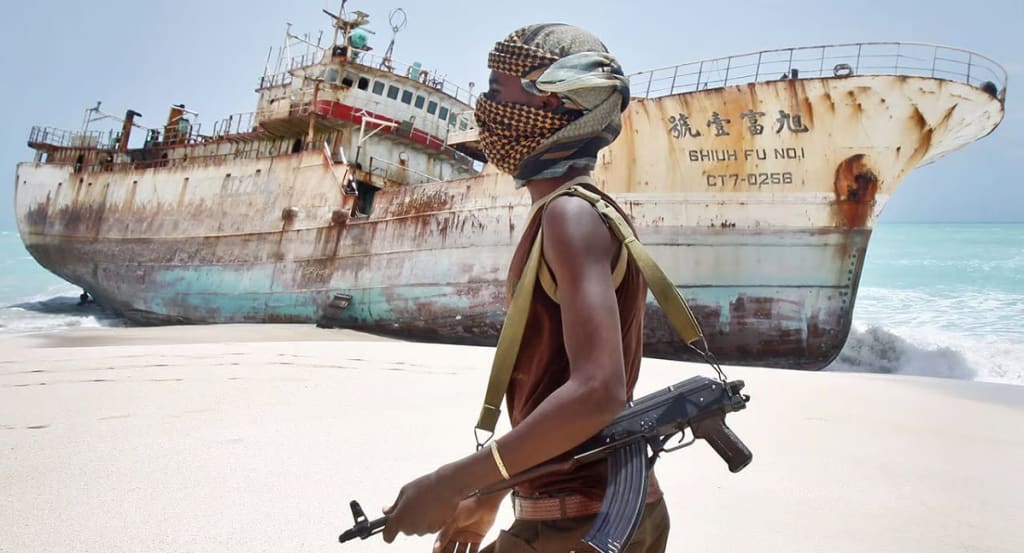
When we think of pirates, our minds often conjure images of swashbuckling rogues from classic tales. However, in the case of Somali pirates, the narrative is far more complex. While the world sees them as villains, many within Somalia view them as heroes, akin to their own version of Robin Hood. Understanding the roots of Somali piracy requires us to delve into the socio-political landscape that shaped these individuals and their choices.
The Rise of Somali Piracy
In April 2009, the hijacking of the Maersk Alabama by Somali pirates brought the issue into the global spotlight. But the story behind Somali piracy is not a recent phenomenon; it has deep historical roots. Years of civil war, foreign exploitation of Somalia’s waters, and illegal dumping of toxic waste turned local fishermen into pirates, driven by desperation and the need to survive.
Background of Somalia
Geographically, Somalia occupies a crucial position in Africa, bordered by the Indian Ocean to the east and the Gulf of Aden to the north. This location is significant as approximately 20% of global shipping trade passes through this area. Historically, Somalia was divided between British and Italian colonial rule until it gained independence in 1960. However, the political landscape shifted dramatically in 1969 when a military coup led to dictatorship, resulting in clan-based discrimination and civil unrest.
The Civil War and Its Aftermath
The civil war reached a boiling point in 1991, leading to the collapse of the central government. Rival clans fought for control, and during this chaos, northern Somalia declared itself an independent region known as Somaliland. The absence of governance allowed foreign fishing vessels to exploit Somalia’s rich marine resources, further exacerbating the plight of local fishermen.
Illegal Fishing and Toxic Waste Dumping
After the government’s collapse, foreign fishing boats began illegally taking seafood worth approximately $300 million annually from Somalia’s waters. The local fishermen, lacking the technology to compete, faced dire economic straits. To make matters worse, foreign companies started dumping toxic waste off the coast, poisoning the environment and the health of local communities.
The Impact of Toxic Waste
Since the 1980s, companies from Europe have dumped hazardous materials in Somalia, including uranium and lead. This practice escalated after the civil war, leading to widespread health issues among the population. Reports indicated a spike in cancer cases and other illnesses, creating a volatile situation for the Somali people.
The Emergence of Piracy
Faced with starvation and unemployment, local fishermen began to take matters into their own hands. They formed groups to protect their waters, attacking illegal fishing vessels. This initial act of defense gradually morphed into piracy as they realized they could demand ransom for the return of captured ships and crews.
The Transition to Organized Piracy
As piracy became more lucrative, it evolved into an organized industry. Gangs began to form, recruiting local youth who saw piracy as a viable means of income. By the late 1990s, Puntland declared itself autonomous, further enabling pirate activities. The pirates upgraded their equipment, moving from fishing boats to speedboats, and piracy became a full-fledged business.
The Mechanics of Hijacking
Hijacking a ship was a calculated endeavor for Somali pirates. The process typically involved approaching a vessel, often armed, and using a rope ladder to board. The success rate of these hijackings was about 20-30%, but once successful, they would steer the hijacked ship to a friendly port in Somalia.
Ransom Negotiations
After capturing a vessel, pirates would contact the shipping company to negotiate a ransom. Payments were often made through banks in London or Dubai, sometimes delivered via parachutes. The financial model involved splitting the ransom among the pirates, investors, and local communities, which is why many viewed them as modern-day Robin Hoods.
The Maersk Alabama Incident
The hijacking of the Maersk Alabama marked a significant turning point in the public perception of Somali piracy. Captain Richard Phillips and his crew were taken hostage, leading to a dramatic rescue operation by the U.S. Navy. This incident brought international attention to the issue, framing the pirates as a serious threat to global trade.
International Response
In response to the growing piracy crisis, international coalitions launched naval missions to counteract pirate activities. The U.S. Navy, along with forces from NATO and the European Union, began patrolling the waters to deter hijackings. By 2011, incidents of piracy had peaked, but increased security measures, including armed guards on commercial ships, led to a decline in successful hijackings.
The Ongoing Debate: Heroes or Villains?
Despite the international crackdown, the debate over whether Somali pirates are heroes or villains continues. Many Somalis still view piracy as a form of national defense against foreign exploitation. A survey indicated that around 70% of the Somali population supported piracy as a means of protecting their resources.
The Cycle of Injustice
While piracy arose as a response to injustice, it also perpetuates a cycle of violence and crime. The actions of local gangs often led to further instability, disrupting traditional societal structures. The dilemma remains complex; while piracy can be seen as a fight against oppression, it also contributes to ongoing conflict and lawlessness.
A Call for Justice
The story of Somali pirates is not simply one of crime; it is a reflection of deep-rooted issues of poverty, exploitation, and injustice. As the global community grapples with the consequences of piracy, it must also confront the underlying causes that drive individuals to such desperate measures. Ultimately, addressing the issues of illegal fishing and toxic waste dumping is essential to finding a long-term solution to piracy in Somalia.
As we navigate the complexities of this narrative, we are reminded that revolting against injustice is a sign of humanity. However, when that revolt takes the form of further injustice, it becomes a cycle that is difficult to break. The international community must recognize the plight of the Somali people and work towards solutions that address both the symptoms and the root causes of piracy.
For those interested in learning more about the intricate dynamics of Somali piracy and its implications on global trade, further resources and discussions can be explored.
About the Creator
Ellen Sammy
Writer and Blogger
Keep reading
More stories from Ellen Sammy and writers in Earth and other communities.
Navigating The Cosmos The Voyager Missions And Humanity's Quest For Alien Life
Are we alone in the universe? This question has haunted humanity for centuries. If intelligent life exists elsewhere, do they ponder the same question? How can we communicate across the vastness of space? To address these questions, NASA launched the Voyager missions, a remarkable endeavor that has expanded our understanding of the cosmos and our place within it.
By Ellen Sammy12 months ago in Earth
A Green Solution to Urban Pollution
Air pollution has become one of the most serious environmental challenges facing modern cities. Rapid industrialization, increasing vehicle emissions, and expanding urban populations have significantly degraded air quality around the world. Polluted air not only harms ecosystems but also poses severe health risks to humans, contributing to respiratory diseases, heart conditions, and reduced life expectancy. Among the many strategies proposed to combat this problem, planting and preserving trees stands out as one of the most natural, cost-effective, and sustainable solutions.
By Irshad Abbasi about 13 hours ago in Earth


Comments
There are no comments for this story
Be the first to respond and start the conversation.