
THE CONTROVERSIAL DECISION TO DROP THE ATOMIC BOMB ON JAPAN
HIROSHIMA AND NAGASAKI BOMBINGS

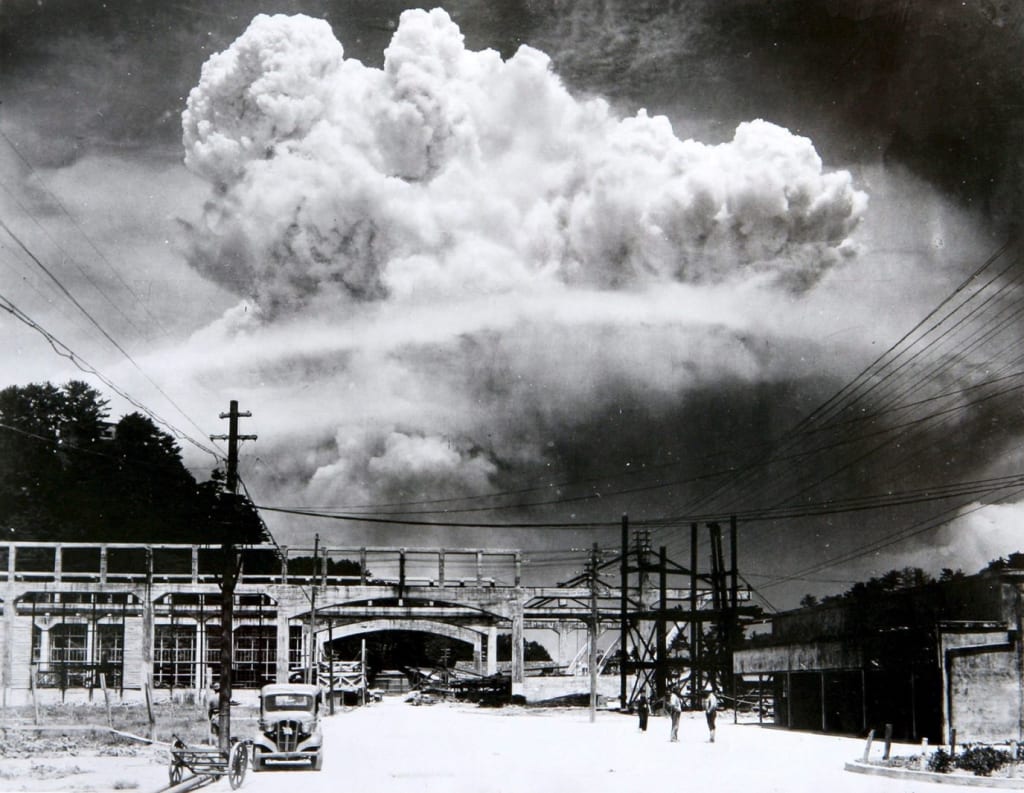
In August 1945, the world witnessed the devastation wrought by the United States on Japan. The bombings of Hiroshima and Nagasaki killed hundreds of thousands of people and effectively ended World War II. Many have since questioned the decision to use atomic weapons and the morality of such actions. So why did the USA destroy Japan?
The answer to this question is complex and multifaceted. At the time, the United States was engaged in a brutal war with Japan, one that had already claimed the lives of hundreds of thousands of people. The US had been fighting in the Pacific Theater for years, with victories in battles such as Midway and Guadalcanal. However, progress was slow, and the Japanese military was tenacious and unwilling to surrender.
The decision to use atomic weapons was not taken lightly. President Harry S. Truman, who had taken office just months before, was briefed on the Manhattan Project, a top-secret effort to develop a nuclear bomb. Truman was faced with a difficult decision: continue the war with Japan, which would likely result in many more casualties, or use the atomic bomb and potentially bring a swift end to the conflict.
Truman ultimately chose the latter, believing that the use of atomic weapons was necessary to end the war quickly and prevent further loss of life. In his statement announcing the bombings, Truman said, "We have used it in order to shorten the agony of war, in order to save the lives of thousands and thousands of young Americans."
There were other factors at play as well. The Soviet Union had declared war on Japan in early August, and Truman may have wanted to use the atomic bomb as a show of force to the Soviets. The bomb would also demonstrate the US's technological superiority and ability to develop devastating weapons.
Regardless of the motivations, the bombings of Hiroshima and Nagasaki were horrific events that caused unimaginable suffering. The immediate death toll was estimated at around 200,000, with many more suffering from radiation sickness and other long-term effects. The bombings also raised questions about the morality of using atomic weapons, a debate that continues to this day.
In Japan, the bombings had a profound impact on the country and its people. The devastation wrought by the atomic bombs was unprecedented, and many Japanese citizens were left feeling betrayed by their government and the world at large. In the years following the war, Japan became a pacifist nation, renouncing the use of military force and focusing on rebuilding and reconciliation.
The decision to use atomic weapons remains controversial to this day, with many arguing that the bombings were unnecessary and immoral. However, it's important to remember the context in which these decisions were made. The United States was engaged in a brutal and costly war, and Truman was faced with the difficult decision of how to bring it to a swift end. While the bombings of Hiroshima and Nagasaki were undoubtedly tragic, they may have prevented even greater loss of life in the long run.
In conclusion, the decision to use atomic weapons on Japan was a complex and controversial one. While it's difficult to fully justify the devastation caused by the bombings, it's important to understand the context in which these decisions were made. The bombings brought a swift end to a brutal and costly war, but at a terrible cost to the people of Japan. We must continue to reflect on these events and learn from them, to ensure that such horrors are never repeated.
"There is no glory in battle worth the blood it costs." - Dwight D. Eisenhower
About the Creator
solando
i am a content writer
script writer
prompt engineer
Without Democracy, Donald Trump’s Venezuelan Oil Quest Will Fail
Donald Trump’s renewed interest in Venezuelan oil may seem, on the surface, like a hard-nosed geopolitical calculation. Venezuela holds the world’s largest proven oil reserves, and amid global energy uncertainty, access to those resources is undeniably tempting. But history, economics, and politics all point to the same conclusion: without democratic reform in Venezuela, any attempt by a Trump-led US administration to secure reliable Venezuelan oil will ultimately fail.
By Aarif Lashari4 days ago in Earth
So You Decided To Become a Nurse Practitioner:
So you decided to become an "Advanced Practice" nurse. Congratulations!... is what I would say if this was a good idea. Grad school? In this economy? What were you thinking? Likely it was something along the lines of either 1) “I've seen these other chucklefucks do it— Why can't I?” or even 2) “I've got a nice career, I should shake it up. I miss feeling like I have no clue what I'm doing.”
By Sandor Szaboa day ago in Fiction




Comments
There are no comments for this story
Be the first to respond and start the conversation.