
"The Clock in the Wild"
How Animals Experience Time Differently—and What That Says About Us


Humans march through life to the steady tick of the clock. A second, a minute, an hour—rigid structures governing our days. But in the wild, where shadows shift and seasons drift, time does not follow a clock. And some say animals move through time on a different rhythm entirely.
In a forest untouched by highways and city lights, where moss grows thick and time seems to stand still, lived a raven named Koa. Koa had seen more than his fair share of days—more than most birds ever do. Some believed he was hundreds of years old, others said he simply remembered better than most. The truth? Koa had mastered something very few creatures could—he had learned how to feel time.
While humans debated over whether time was an illusion or a measurable constant, animals simply lived it. To a hummingbird, time raced. Its wings beat 80 times per second, its heart thudded over a thousand beats a minute. Every flower bloom, every gust of wind, every danger arrived in a blur of motion. In the hummingbird's world, a second could hold the weight of a minute. And yet, to a tortoise sunning itself near the banks of the river, life unfolded in slow, deliberate movements. Each moment stretched and yawned like the rising sun.
One summer, something curious happened in the forest. A team of scientists, equipped with cameras, sensors, and a deep desire to understand animal consciousness, arrived to study time perception in wildlife. They set up camp near the edge of the forest and began their observations.
A young woman named Lila led the team. She believed that understanding how animals perceived time could unlock new paths in neuroscience—and maybe even help humans reconnect with a deeper rhythm of life. “Time is not absolute,” she told her colleagues. “A dog waiting for its owner feels those hours differently than we do. A fly dodging a swatter sees the world in more frames per second. We are all in different time zones—not just across the globe, but across species.”
The scientists recorded squirrels reacting to falling nuts before they even hit the ground. They captured hawks adjusting mid-flight to gusts of wind humans wouldn’t have noticed. But the most baffling discovery came from the camera trained on Koa, the raven.
At first, Koa did nothing extraordinary. He flew from branch to branch, occasionally cawed into the wind, and watched the humans with a gaze too knowing for comfort. But then came the moment Lila would later describe as “temporal elasticity.”
It happened one misty morning. Koa, perched above the research tent, suddenly swooped down and intercepted a falling pinecone that had been dislodged by a squirrel. Not remarkable on its own—except the video showed something odd. When slowed down, Koa appeared to move before the pinecone began to fall. Not just reflexively, but intentionally. Like he had seen it coming from a future the squirrel had not yet reached.
Lila replayed the footage dozens of times. The team argued—some called it coincidence, others blamed a glitch in the timestamp. But Lila suspected something more profound. What if Koa was experiencing time differently? What if his perception wasn’t linear?
She remembered a paper she had read years ago about flicker fusion rate—the rate at which animals can process visual stimuli. Flies, for example, perceive more frames per second than humans. What appears as a blur to us is a detailed event for them. Could ravens, known for their intelligence, possess a similar perceptual advantage—not just visually, but temporally?
She began journaling her thoughts:
> “To a mayfly, a day is a lifetime. To a Galapagos tortoise, decades are but chapters in a long story. Time is not a thread running straight—it’s a river with many eddies. And Koa… perhaps Koa knows how to swim upstream.”
The forest seemed to agree. As the days passed, Lila felt her own sense of time begin to shift. Her wristwatch no longer felt necessary. She started to wake with the birds and sleep with the stars. She sat for hours simply listening—to the crunch of twigs under deer hooves, to the echoing call of loons at dusk, to the wind whispering through pine needles like ancient secrets.
She began to see how a fox might feel time in the tense pause before a pounce. How a mother bear nursing her cubs might stretch each second into eternity. How the song of the cicada, measured in cycles of seventeen years, was a kind of time-travel in itself.
The final day of the research trip came with little fanfare. The tents came down, the cameras were packed. But Koa remained, watching. As Lila zipped up her backpack, she turned once more toward the tree where the raven perched.
“Thank you,” she whispered.
Koa tilted his head, as if acknowledging the message had arrived before she spoke it.
Back in the city, Lila wrote her paper. She titled it, “The Elastic Clock: Temporal Perception in Non-Human Species.” It received modest academic attention, but on Vocal Media, where she published a more poetic retelling, the story resonated deeply.
People wrote in droves, sharing stories of pets who seemed to anticipate their moods, birds who returned on the same day each year, dogs who aged quickly but loved slowly. They spoke of feeling disconnected from the natural rhythms of life and yearning to understand the world the way a raven—or a tortoise—might.
Because maybe animals don’t just live differently.
Maybe they remember differently.
Maybe they feel time the way we feel love—not in minutes or hours, but in moments that bend and stretch and linger.
And maybe, just maybe, the clock in the wild ticks to a wiser beat.
About the Creator
Soul Drafts
Storyteller of quiet moments and deep emotions. I write to explore love, loss, memory, and the magic hidden in everyday lives. ✉️
Reader insights
Nice work
Very well written. Keep up the good work!
Top insights
Excellent storytelling
Original narrative & well developed characters
Expert insights and opinions
Arguments were carefully researched and presented
Keep reading
More stories from Soul Drafts and writers in Earth and other communities.
Navigating the Economy of Your Inner World
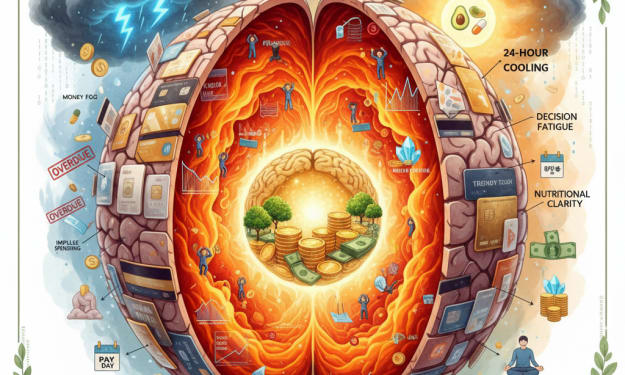
Core Concept: We are applying the "Niche Earth" philosophy to Personal Finance. This piece explores how to manage the "climate" of your bank account, avoid the "tectonic shifts" of impulse spending, and build a "solid core" of financial security through evidence-based habits.
By Being Inquisitive7 days ago in Earth


Comments
There are no comments for this story
Be the first to respond and start the conversation.