
The Climate Crisis: A Call to Action for Our Planet's Future
Climate change is no longer a distant threat—it's a pressing reality that affects every part of the globe. From intensifying storms to rising sea levels and unpredictable weather patterns, the evidence is undeniable. Yet, amid the alarming statistics and images of natural disasters, there lies an opportunity for us to change course and protect our planet for future generations. The time to act is now.


Understanding the Climate Crisis
At its core, climate change is the long-term alteration of temperature and weather patterns, primarily driven by human activities such as the burning of fossil fuels, deforestation, and industrial processes. These activities release vast amounts of greenhouse gases—most notably carbon dioxide (CO2)—into the atmosphere. These gases trap heat, causing the Earth's temperature to rise, a phenomenon commonly referred to as global warming.
The effects of climate change are already being felt worldwide. Glaciers are melting at unprecedented rates, oceans are becoming more acidic, and wildfires are becoming more frequent and intense. According to the Intergovernmental Panel on Climate Change (IPCC), we are on track to surpass the 1.5°C threshold for global warming as early as 2030 if immediate action is not taken. Surpassing this threshold would lead to catastrophic impacts on ecosystems, economies, and communities.
Why Climate Change Matters
Climate change is not just an environmental issue—it is a humanitarian crisis. Its effects are disproportionately impacting the most vulnerable populations, including low-income communities, indigenous peoples, and small island nations. These groups are often the least responsible for greenhouse gas emissions but bear the brunt of the consequences. Flooding, droughts, and other extreme weather events disrupt food production, displace millions of people, and threaten access to clean water.
Beyond human suffering, climate change endangers biodiversity. Entire ecosystems are at risk of collapse as species struggle to adapt to rapidly changing environments. Coral reefs, for example, which are home to nearly a quarter of marine species, are dying off due to warming waters and ocean acidification. The loss of biodiversity weakens ecosystems, making them less resilient to future stresses and reducing their ability to provide essential services such as clean air, water, and fertile soil.
The Path Forward: Mitigation and Adaptation
Tackling climate change requires a two-pronged approach: mitigation and adaptation.
Mitigation involves reducing the flow of greenhouse gases into the atmosphere. This can be achieved through transitioning to renewable energy sources such as solar and wind, enhancing energy efficiency, reforestation efforts, and developing carbon capture technologies. Many countries have pledged to reduce emissions under international agreements like the Paris Climate Accord, aiming to limit global temperature rise to well below 2°C above pre-industrial levels.
Adaptation, on the other hand, involves adjusting to the inevitable changes that are already occurring due to climate change. This includes building more resilient infrastructure, developing sustainable agriculture practices, and creating early warning systems for extreme weather events. Communities, especially those in vulnerable regions, need support to adapt to these changes and safeguard their livelihoods.
The Role of Individuals
While governments and industries play a crucial role in combating climate change, individual actions also make a difference. By making sustainable choices in our daily lives, we can collectively reduce our carbon footprint. Here are some steps that anyone can take:
Reduce Energy Use: Use energy-efficient appliances, insulate homes to conserve heat, and switch to renewable energy sources where possible.
Adopt Sustainable Transportation: Opt for public transportation, carpooling, biking, or walking instead of driving alone. Electric vehicles are also a greener alternative to traditional gasoline-powered cars.
Minimize Waste: Reduce, reuse, and recycle. Cutting down on single-use plastics and being mindful of consumption can significantly decrease waste and energy use.
Support Sustainable Agriculture: Choose local, organic produce when possible, and consider adopting a more plant-based diet. The meat and dairy industries are significant contributors to greenhouse gas emissions.
Advocate for Change: Push for stronger environmental policies by voting for leaders who prioritize climate action, participating in environmental movements, and holding companies accountable for their environmental impact.
The Global Effort: Hope on the Horizon
Despite the daunting challenges, there is reason for hope. Technological advancements in renewable energy are becoming more efficient and cost-effective. Global awareness is rising, with youth-led movements like Fridays for Future inspiring millions to demand climate action. Governments and corporations are increasingly committing to sustainability goals, with some countries even setting targets to achieve net-zero emissions by mid-century.
International cooperation is critical to solving the climate crisis. The recent focus on "climate justice" highlights the need for developed countries, which have historically contributed the most to emissions, to support developing nations in their efforts to mitigate and adapt to climate change.
Our Planet, Our Responsibility
The climate crisis is the defining challenge of our time. Its impacts are already being felt, and its future consequences will be severe if we fail to act. However, by taking immediate, collective action, we can still limit global warming and build a sustainable future for all.
The responsibility falls on every one of us—governments, businesses, and individuals alike—to work towards solutions. Climate change may be a global problem, but local actions matter. The choices we make today will shape the world of tomorrow. Let’s choose a future where people and nature thrive together. The time to act is now.
About the Creator
Maruf Rahman Antu
I am a versatile article writer with a passion for crafting engaging, informative, and impactful content across various subjects.
Keep reading
More stories from Maruf Rahman Antu and writers in Earth and other communities.
10 Unforgettable Adventure Destinations for Nature Lovers and Cultural Enthusiasts
1. Amalfi Coast, Italy: The Coastal Beauty of Italy Nestled along the Mediterranean, the Amalfi Coast is an enchanting destination for lovers of dramatic coastlines and scenic towns. With its pastel-colored buildings clinging to cliffs and panoramic views of the shimmering sea, this region offers both relaxation and adventure. The winding coastal paths are perfect for scenic hikes, while the fresh Italian cuisine in charming towns like Positano and Ravello is a delightful indulgence. The Amalfi Coast is ideal for travelers seeking a mix of stunning landscapes and authentic Italian charm.
By Maruf Rahman Antuabout a year ago in Earth
The Reality of the Illusion of Time
Recently, as I strolled along the short stretch to my strength training session, I aimlessly took in the row of tatty shops and shabby buildings along the route and passed an off-street, in which one of my sisters used to live, around thirteen years ago.
By Chantal Christie Weiss3 days ago in Earth
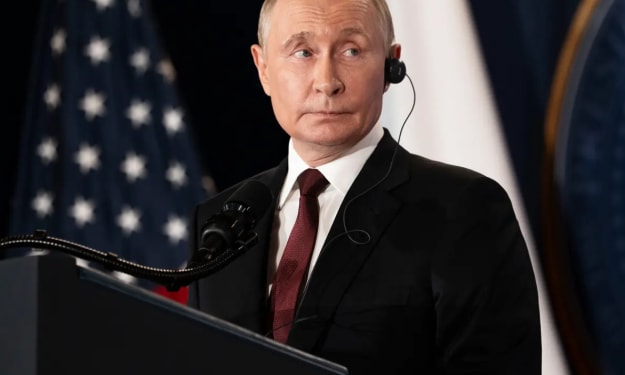
Why Putin Went Quiet When Challenged by Trump Over Venezuela
When U.S. forces captured Venezuelan President Nicolás Maduro in early January 2026, the world was stunned. Venezuela has long been a Russian ally, yet Russian President Vladimir Putin remained almost completely silent when challenged directly by U.S. President Donald Trump. Why would a leader so often outspoken on the world stage hold back in such a dramatic moment? Let’s unpack the story and explore what it means for global politics. A Bold Move That Shocked the World On January 3, U.S. forces executed a daring operation in Venezuela, taking Maduro into custody in New York to face charges including drug trafficking and narco‑terrorism. The operation was framed by the U.S. as a step to enforce justice, but critics saw it as an extraordinary overreach of power. Venezuela is no ordinary country for Russia. Since the days of Hugo Chávez, Moscow has cultivated close ties with Caracas, offering military support, energy deals, and diplomatic backing on the global stage. Past actions included Russian bombers visiting Venezuela and high-profile defense agreements. Given this history, many expected a fiery response from Putin. Yet, the Kremlin remained calm, issuing measured statements rather than sharp threats. Why Silence Was Strategic Experts suggest there are several reasons for Putin’s muted reaction, each revealing the careful calculation behind the Kremlin’s foreign policy. 1. Focus on the War in Ukraine Russia’s primary priority remains Ukraine. Engaged in a high-stakes military and diplomatic battle, Putin cannot afford distractions or new confrontations far from home. Escalating tensions with the United States over Venezuela could jeopardize Moscow’s position in Europe. A New York Times report highlighted that Russia is “subordinating all other interests to the war in Ukraine,” suggesting that even a high-profile ally like Venezuela takes a back seat to Moscow’s strategic goals. 2. Limited Military Options While Russia’s alliance with Venezuela is longstanding, much of the support has been symbolic rather than operational. Defense systems and military cooperation exist on paper, but Russia lacks the immediate ability to counter a U.S. operation thousands of miles away. Putin may have recognized that responding aggressively would be both ineffective and costly, potentially risking military and economic consequences that Moscow cannot afford. 3. Maintaining Diplomatic Channels with Washington With Donald Trump back in the White House since 2025, there has been cautious optimism in Moscow about recalibrating U.S.–Russia relations. Avoiding a dramatic confrontation over Venezuela keeps diplomatic channels open, allowing Russia to negotiate on other high-priority issues like Ukraine and sanctions relief. In other words, silence can be a calculated strategy, signaling restraint rather than weakness. 4. Russia’s Global Influence Is Waning The Maduro episode also highlights a broader geopolitical reality: Russia’s global reach has limits. Since the 2022 invasion of Ukraine, Moscow’s influence in regions like the Middle East and parts of the former Soviet Union has weakened. Venezuela remains one of its few high-profile allies outside Europe, but even there, Russia’s power is largely symbolic. By not escalating, Putin is acknowledging a practical truth: Russia cannot be everywhere at once, and some battles are not worth fighting. 5. Choosing Battles Wisely Some analysts emphasize that Putin’s quiet response is more about strategic prioritization than capitulation. In a world dominated by nuclear powers and volatile global politics, direct confrontation with the United States over Venezuela could spiral into a far larger crisis. By staying silent, the Kremlin may be signaling that it picks its battles carefully, focusing resources on Ukraine, where the stakes are highest. What This Means for the World Putin’s silence sends several messages: Russia is currently stretched, economically and militarily. Moscow is prioritizing Ukraine over symbolic allies. Strategic restraint is sometimes more powerful than public confrontation. The limits of Russian influence are becoming more visible to the world. This episode reflects a new reality in geopolitics: power is as much about choosing when not to act as when to assert force. The Bigger Picture The capture of Maduro is a defining moment not just for Venezuela, but for global politics. It shows the United States asserting power in a way not seen for decades, while Russia’s quiet reaction underscores its current limits and priorities. For observers, Putin’s silence is a lesson in modern geopolitics: even the most assertive leaders exercise restraint when stakes are high and risks are global. In the end, the Maduro affair reminds us that in today’s world, the loudest response is not always the most effective one — sometimes, quiet calculation speaks volumes. Sources and Further Reading The US capture of Maduro reveals Russia’s weakness – Atlantic Council ‘It sends a horrible signal’: US politicians react to capture of Nicolás Maduro – The Guardian Russia slams 'neocolonial threats' against Venezuela – Reuters
By Muhammad Hassan6 days ago in Earth



Comments (1)
Wonderful