
The Big Discovery: Meet Perucetus, Earth's Giant Whale from the Past
Perucetus Colossus Challenges Limits of Animal Size

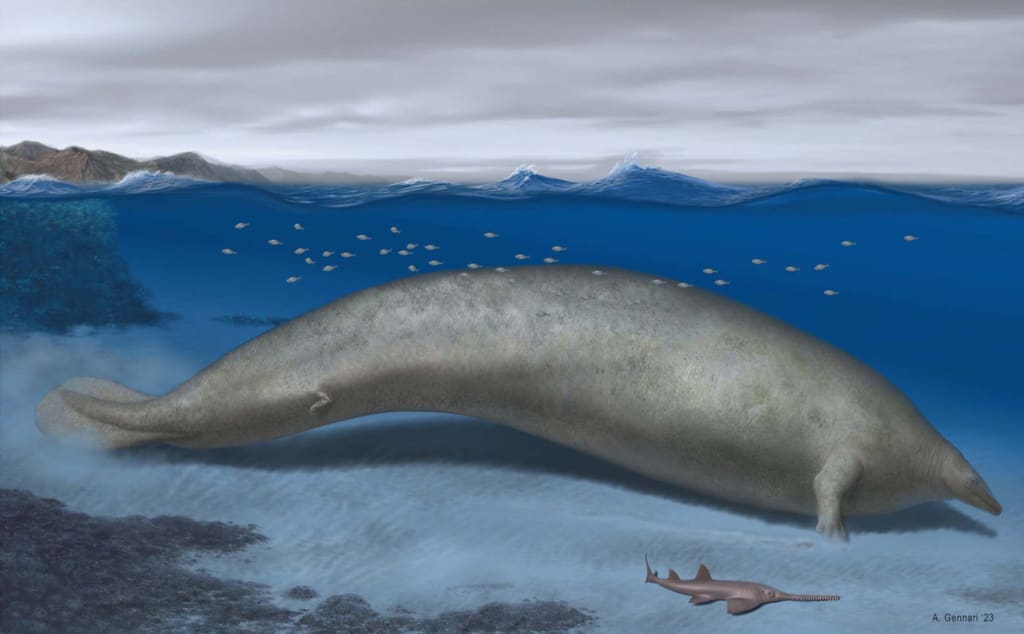
In the world of animals, there's a limit to how big they can get. Even the biggest creatures, like the blue whale, have their size capped. But in 2023, scientists found something that might change the record.
They dug up a part of a giant whale in Peru, calling it Perucetus colossus. This enormous whale lived around 39 million years ago, shaking up what we know about big animals. Figuring out how heavy Perucetus was is tough, but scientists guess it could be between 85 and 340 metric tons – way bigger than the known largest whale, the blue whale, which maxes out at around 190 metric tons.
Now, why is Perucetus so special? Its bones are thicker and denser than today's whales. This makes it hard for scientists to figure out its weight based on the bones alone. They had to use some tricky methods with other animals to make their guess.
Perucetus was not a speedy swimmer like today's whales. Instead, it seems it swam slowly near the coasts. The shape of its bones and spine made it more like a manatee, another type of sea creature that's not as fast. Despite being slow, Perucetus being huge could have given it some perks, like staying close to the sea floor and not getting tossed around by strong waves near the coast.
Now, what did this giant whale eat? Scientists aren't sure, but they think it might have snacked on stuff at the bottom of the sea or maybe scavenged for food. Large, dead things in the water are easy to find, just like how sharks do it. Imagine a whale the size of a city block scavenging for its meals – pretty wild!
But there's still a lot we don't know about Perucetus. We don't have its head, and there's more to learn about its life. One thing's for sure, though – it's the heaviest skeleton ever found.
So, even though there are limits to how big animals can get, Perucetus is making scientists think maybe we haven't found the biggest one yet. While we might not discover the remains of fictional giants like Godzilla, for now, Perucetus might just be the biggest creature Earth has ever seen.
In conclusion, the discovery of Perucetus colossus has opened a fascinating chapter in our understanding of Earth's ancient giants. This colossal whale challenges the known limits of animal size, presenting a puzzle for scientists to solve. Its massive weight, unique skeletal structure, and slow-swimming lifestyle defy conventional wisdom about the evolution of size in whales.
While we grapple with questions about Perucetus' diet, behavior, and overall lifestyle, one thing remains certain – it is a giant among giants, with the heaviest skeleton ever unearthed. The comparison to modern whales and its resemblance to a manatee raise intriguing possibilities about the diversity of marine life in the past.
As we continue to delve into the mysteries of Perucetus, it prompts us to reconsider the boundaries of what we thought was possible in the world of ancient creatures. While the elusive remains of mythical giants like Godzilla may elude us, Perucetus stands as a remarkable example of Earth's prehistoric wonders. In the ongoing exploration of our planet's past, Perucetus may well hold the crown as the largest creature to have roamed our ancient seas, leaving us with a sense of awe and curiosity about the untold stories of Earth's colossal inhabitants.
Thank you for reading!
Stay tuned for more exciting discoveries and educational content. If you enjoyed this exploration, don't forget to like, share, and subscribe for future updates. Your engagement fuels our passion for unraveling the mysteries of the natural world.
Goodbye for now, and until our next adventure together!
About the Creator
Digi Ben
Welcome to the world of insightful and engaging articles! Whether you're seeking in-depth analyses, practical guides, or entertaining narratives, my articles here are tailored to cater to diverse interests. Stay tuned!
Denmark and Greenland Prepare for US Talks as Trump Says Territory’s PM Has a ‘Big Problem’
Denmark and Greenland are preparing for crucial talks with the United States amid renewed diplomatic tension, after former US President Donald Trump claimed that Greenland’s prime minister has a “big problem.” The remarks, reported as part of ongoing European political coverage, have drawn attention to the fragile balance between diplomacy, sovereignty, and strategic interests in the Arctic. As delegations ready themselves for discussions in Washington, the episode underscores how Greenland has once again become a focal point in global geopolitics.
By Aarif Lashari4 days ago in Earth
Protests Across Iran: Is War With the US or Israel Imminent — and What Would It Change?
Iran is once again at the center of global attention as widespread protests continue across the country, coinciding with heightened regional tensions involving the United States and Israel. Demonstrations fueled by political repression, economic hardship, and anger over state violence have created one of the most volatile moments Iran has faced in decades. As images of unrest spread and rhetoric between Tehran, Washington, and Tel Aviv sharpens, a pressing question looms: is Iran on the brink of war with the US or Israel—and if so, what would such a conflict actually change?
By Aarif Lashari4 days ago in Earth


Comments
There are no comments for this story
Be the first to respond and start the conversation.