
The Best Selling Book on Global Environment - Plastic Free : The Inspiring Story of a Global Environmental Movement and Why It Matters
Harper Collins
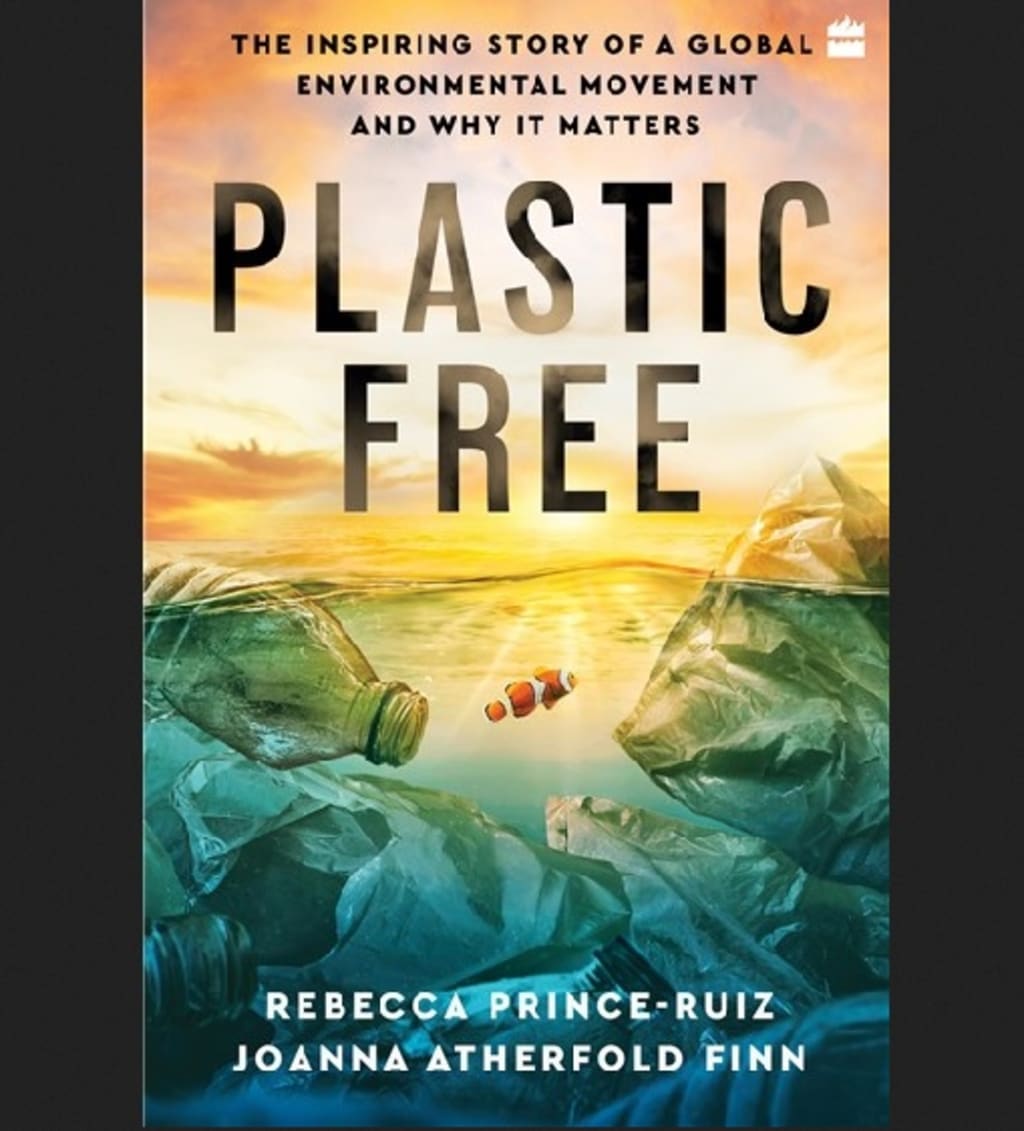
'Who wants to join me in being plastic-free next month?'
When Rebecca Prince-Ruiz asked her colleagues this question in 2011, she had no clue that it would spark a worldwide movement of 250 million people in 177 countries to limit their use of plastic less than a decade later. The extraordinary tale of how a basic grassroots project blossomed into one of the world's most successful environmental movements is told in Plastic Free. It also gives advice from people all across the world who have participated in the Plastic Free July challenge and decreased their trash dramatically.
Plastic Free is a book about positive transformation that reminds us that tiny efforts, one step - and piece of plastic - at a time - may have a big influence.
Rebecca Prince-Ruiz set a goal to avoid using plastic entirely for the month of July 2011. The Plastic Free July movement, which got its start with a small group of individuals in Perth, has expanded to 177 countries and 250 million members, enabling people to use less single-use plastic and build a greener future which is explained in her Book for Global Environment.
Story
This book looks at how one of the world's major environmental movements was started and provides lessons learned from its success. It talks to the vast scope of the plastic trash problem and how we can combat it collectively, from narrating marine-debris research missions to tracking what actually happens to our garbage to sharing ideas from behavioural study. Plastic Free recounts the uplifting tale of how ordinary people have made change in their homes, communities, workplaces, schools, businesses, and beyond by interweaving interviews with participants, activists, and experts.
In the face of global environmental challenges, it is natural to feel overwhelmed and question what impact our individual activities can possibly make.
Plastic Free provides hope for the future by telling the experiences of people who took on what appeared to be an impossible task and succeeded in imaginative and practical ways, one step and one piece of plastic at a time.
Plastic Free is the incredible tale of how a social media post from a remote part of Western Australia developed into a global network of 250 million activists.
Rebecca Prince-Ruiz had an awakening regarding the magnitude of plastic pollution in 2011, after visiting a garbage sorting plant. It was the spark for a self-challenge to go plastic-free for a month. The "accidental campaign" has subsequently evolved into a powerful environmental movement.
Sobering facts, such as the fact that just 9% of all plastics are ever recycled, are juxtaposed with devastating anecdotes about plastic's fatal impact on animals and its omnipresent, poisonous presence in the ocean and on land. Yet, the book concentrates on positive examples of genuine development.
From beach clean-ups to working with restaurants to reduce single-use straws, bags, and packaging, sidebars and pull quotes from varied perspectives provide practical, inspirational answers. The objective is the establishment of a circular economy, in which goods are redesigned with their final purposes in mind, and waste is transported out of the system, as it is in nature.
The book follows the history of the Plastic Free movement, examining the changes in its organisation, messages, and activities. From a tiny group of concerned people in suburban Perth to the formation of the Plastic-Free Foundation, the organisation has kept its funding and personnel to a bare minimum, depending on inventive and lateral thinking ways to tap into public concern for the environment. They keep communications straightforward and non judgmental, and use behavioural economics to encourage individuals to modify their behaviours in little increments that build up to bigger, more long-term change.
Joanna Atherfold and Rebecca Prince-Ruiz Finn's Plastic Free encourages everyone to reconsider how they consume, waste, and pollute via their purchasing habits. This book makes it simpler to be more conscious about the items we use and reuse by providing practical solutions and positive encouragements.
THE ISSUE
Every day, plastic trash has a negative influence on the world's ecosystems, habitats, human health, and sustainable development. Despite the enormity of the problem, the general public and other key stakeholders have not been sufficiently engaged and informed on how they may contribute to the solution.
THE Solution
Public awareness can assist to modify how plastic is perceived, utilised, and handled as garbage. Consumer awareness campaigns, business awareness campaigns, documentary films, school projects, and cleaning actions, among other things, can all be part of a city's strategic action plan.
The goal is to raise public awareness and change community perceptions of the hazards of plastic pollution as well as viable remedies, so empowering more people and groups to take action. Changes in individual attitudes and shopping patterns, greater sorting and recycling activity, and ethical company procedures and practises are examples of community initiatives.
While Plastic Free focuses on solutions, readers will also learn about the history of disposable plastics and consumer culture, what the numbers on the bottom of shampoo bottles and lunch boxes mean, the impact of microplastics and plastic microbeads, the difference between bioplastic, biodegradable, and compostable, and an introduction to behavioural economics and the circular economy.
It's difficult to imagine a reader finishing Plastic Free and not changing one or two or ten behaviours, whether it's bringing a reusable mug to the coffee shop, refusing the ubiquitous plastic straw (or, better yet, buying a reusable metal one), or rejecting a plastic shopping bag in favour of a cloth one. (Plastic Free motivated this reviewer to remove her travel set of bamboo reusable cutlery from the silverware drawer and place it in her bag, something she had been meaning to do for a long time.) Little modifications will pave the way to sustainability, just as tiny stones may build a road.
Readers all throughout the world can and should read Plastic Free. The future of the Earth we love is in our hands, as are the practical, effective, and daily decisions that will safeguard it.
About the Creator
Half of World’s CO2 Emissions Come From Just 32 Fossil Fuel Firms, Study Shows
A groundbreaking new study has revealed that 32 fossil fuel companies are responsible for half of global carbon dioxide emissions since the industrial era began. The findings highlight the outsized influence of major oil, gas, and coal producers on climate change, and raise urgent questions about accountability, regulation, and the transition to cleaner energy.
By Aarif Lashari5 days ago in Earth
“Do Not Copy This Site’s Content”: Why Originality Matters More Than Ever in the Digital Age
“Do not copy this site’s content.” It’s a warning most internet users have seen countless times, often at the bottom of webpages or buried in terms and conditions. Many scroll past it without a second thought. But in today’s digital world, that simple sentence carries far more weight than people realize.
By Muhammad Hassana day ago in Earth
The Blue Ridge Stalker
Tom had left the Ford down the way, its spark plugs finally exhausted and no mechanics for a dozen miles back through the foothills to Strossburg. No matter, he had worn his boots—almost as if he planned for this to happen. The puzzle he sought to solve emanated from the woods clinging to the slopes above; the valley behind held no mysteries.
By Stephen A. Roddewig4 days ago in Fiction


Comments
There are no comments for this story
Be the first to respond and start the conversation.