


Gardens have been an essential part of human life for centuries. They can be found in many forms, from small backyard plots to expansive public parks. Gardens provide beauty, relaxation, and a connection to nature that is vital for our well-being. In this essay, I will explore the history, benefits, and types of gardens.
History of Gardens
The history of gardens dates back to ancient civilizations such as Babylon, Egypt, and Persia. These gardens were typically used for food production, medicinal herbs, and religious ceremonies. The Hanging Gardens of Babylon, one of the Seven Wonders of the World, was a marvel of ancient engineering, with tiered gardens and an intricate irrigation system.
In medieval Europe, gardens were used as places of beauty and contemplation, often associated with monasteries and churches. The gardens were designed with symmetry and order, and featured fountains, sculptures, and ornamental plants. In the Renaissance era, Italian gardens became popular, with their emphasis on formal design and geometric shapes.
In the 18th and 19th centuries, English gardens became popular, with their emphasis on natural landscapes and picturesque views. These gardens often featured sweeping lawns, meandering paths, and a mix of exotic and native plants. Public parks also began to emerge in urban areas, providing green spaces for city dwellers to enjoy.

Benefits of Gardens
Gardens provide numerous benefits, both physical and mental. Research has shown that spending time in nature can reduce stress, anxiety, and depression. Gardens also provide opportunities for physical activity, such as digging, planting, and weeding, which can improve overall health and well-being.

In addition, gardens can improve the environment by providing habitats for wildlife and reducing carbon dioxide levels. They can also provide food for people and promote sustainable agriculture practices.
Types of Gardens

There are many types of gardens, each with its own purpose and design. Here are some of the most common types of gardens:
Vegetable Gardens: Vegetable gardens are designed for growing edible plants such as tomatoes, lettuce, and cucumbers. They can be small backyard plots or large community gardens.
Flower Gardens: Flower gardens are designed for growing ornamental plants such as roses, daisies, and tulips. They can be formal or informal, and often feature a mix of colors and textures.
Herb Gardens: Herb gardens are designed for growing medicinal or culinary herbs such as basil, mint, and lavender. They can be small containers on a windowsill or larger outdoor plots.
Container Gardens: Container gardens are designed for growing plants in pots or other containers, such as hanging baskets or window boxes. They can be used to add color and texture to small spaces or to grow plants in areas with poor soil.
Water Gardens: Water gardens are designed for growing aquatic plants such as water lilies and lotus flowers. They often feature a pond or fountain and can provide a serene and peaceful environment.
Rock Gardens: Rock gardens are designed for growing plants that thrive in rocky, arid environments, such as succulents and cacti. They often feature a mix of rocks, gravel, and sand.
Japanese Gardens: Japanese gardens are designed for contemplation and meditation. They often feature a mix of water, rocks, and carefully pruned plants, and are designed to create a sense of harmony and balance.
Conclusion
Gardens have been an important part of human life for centuries, providing beauty, relaxation, and a connection to nature. They have evolved over time, from ancient food-producing gardens to modern urban parks. Gardens provide numerous benefits, both physical and mental, and there are many different types of gardens to suit every taste and purpose. Whether you have a small balcony or a large backyard, there is a garden waiting
About the Creator
Shilpa Rawade
Shilpa Rawade is a master of the written word,expertly navigating the realms of poetry,story telling,beauty tips,and recipes.
Keep reading
More stories from Shilpa Rawade and writers in Earth and other communities.
"The Role of Water in Shaping the Natural World"
Waterfalls are natural wonders that have captivated humans for centuries. They are formed when a river or stream flows over a steep cliff or rock face, creating a stunning display of cascading water. Waterfalls come in many shapes and sizes, from the small and delicate to the large and thunderous.
By Shilpa Rawade3 years ago in Earth
I Spoke to Astrophysicists About Starlink’s Expansion: The Doomsday Scenario Keeping Them Up at Night
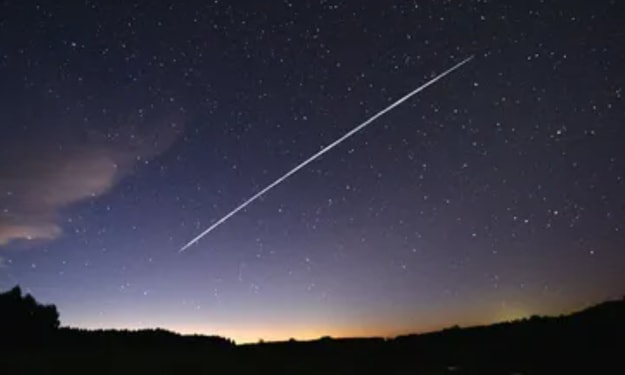
SpaceX’s Starlink project has captured headlines for its ambitious goal: provide high-speed internet across the globe by deploying thousands of low-Earth orbit satellites. While the idea of connecting remote communities is exciting, astrophysicists and space experts are sounding the alarm about a growing doomsday scenario that could threaten both space exploration and our ability to observe the night sky. After speaking to several astrophysicists, it’s clear that Starlink’s expansion, if unchecked, could dramatically alter Earth's orbital environment, disrupt astronomical observations, and even increase the risk of space debris collisions. Here’s what experts are warning the public about. The Scale of Starlink’s Expansion As of now, SpaceX has launched over 4,000 Starlink satellites, with plans to deploy tens of thousands more in the coming years. Each satellite orbits at altitudes between 340 km and 1,200 km, which places them in the low-Earth orbit region used by countless other satellites and scientific missions. Astrophysicists point out that this rapid proliferation is unprecedented. Dr. Lisa Montez, an astronomer specializing in satellite impacts on optical telescopes, told me, “We are looking at a situation where the density of satellites is increasing faster than anyone has fully planned for. This is uncharted territory.” The problem isn’t just the sheer number of satellites—it’s the concentration in specific orbital bands, which makes collisions more likely and complicates orbital management. The Night Sky Is at Risk For centuries, humanity has marveled at the stars, studying the cosmos to better understand our place in the universe. But astrophysicists warn that Starlink is dramatically altering the night sky, making it more challenging to conduct research and enjoy unpolluted stargazing. Every time a telescope captures an image, the reflective surfaces of Starlink satellites can leave streaks of light, masking or distorting the data. “Even a single bright satellite passing through a telescope’s field of view can ruin an entire night of observation,” Dr. Montez explains. Observatories around the world are already noticing the impact. The Vera C. Rubin Observatory in Chile, set to be one of the most advanced facilities for studying dark matter and the evolution of galaxies, may see thousands of Starlink satellites crossing its field of view nightly, potentially reducing the quality of its data and increasing processing costs. The Doomsday Scenario: Space Debris Beyond observations, astrophysicists are increasingly concerned about space debris, which could trigger a cascading chain reaction known as Kessler Syndrome. This occurs when collisions between satellites produce debris that then hits other satellites, creating more debris in an accelerating feedback loop. Professor Rajesh Patel, a space environment specialist, told me, “If a few hundred Starlink satellites collide, it could create tens of thousands of fragments. That would threaten other satellites, international space missions, and even human spaceflight.” Space debris doesn’t just float harmlessly—it travels at speeds over 28,000 km/h, enough to destroy functional satellites or damage spacecraft. With tens of thousands of Starlink satellites planned, the potential for catastrophic collisions is growing, especially since low-Earth orbit is already crowded. Mitigation Efforts and Controversies SpaceX has acknowledged these concerns and claims to implement collision avoidance protocols, using automated systems to maneuver satellites out of harm’s way. The company also plans for satellites to deorbit at the end of their lifespan, burning up in the atmosphere. However, experts argue that these measures may not be enough. Automated systems can fail, and human error or unexpected orbital dynamics could still lead to accidents. Furthermore, the sheer number of satellites makes it difficult to track and manage each one effectively, particularly as other private companies and nations plan similar mega-constellations. Dr. Montez adds, “Even if every satellite works perfectly, the night sky is already changing. The aesthetic and scientific impacts are immediate, whereas collision risks are looming but potentially devastating.” Broader Implications for Humanity The expansion of Starlink raises ethical and regulatory questions. Who has the right to fill low-Earth orbit? How much impact on astronomy and scientific research is acceptable for the sake of global internet coverage? International regulatory bodies like the United Nations Office for Outer Space Affairs (UNOOSA) and the Federal Communications Commission (FCC) have some oversight, but critics argue that global coordination is lagging behind corporate launches. Without international agreements and enforceable regulations, the sky could become a congested and hazardous environment, impacting both science and commerce. Astrophysicists emphasize that this isn’t just a matter of aesthetics. The ability to observe celestial phenomena affects climate science, space weather monitoring, and tracking near-Earth objects. If observations are increasingly compromised, our understanding of Earth and space could suffer. What Can Be Done? Experts suggest several strategies to mitigate risks: International Coordination: Global treaties or agreements to regulate satellite density and orbital placement. Reflectivity Reduction: Coating satellites to reduce brightness and their impact on telescopes. Enhanced Tracking Systems: Better monitoring of orbital debris and automated collision avoidance. Selective Deployment: Careful planning to avoid overcrowding specific orbital bands. While SpaceX is implementing some of these solutions, astrophysicists argue that industry self-regulation is insufficient. They advocate for a coordinated international approach to protect both scientific research and long-term orbital sustainability. Conclusion The expansion of Starlink represents a remarkable technological achievement, promising global internet access and unprecedented connectivity. Yet it also highlights the unintended consequences of space commercialization, including the potential for a cluttered sky, disrupted astronomy, and catastrophic space debris collisions. Astrophysicists remain vigilant. They warn that without careful oversight, humanity could face a doomsday scenario in low-Earth orbit, jeopardizing scientific discovery and space safety for generations. As we continue to celebrate innovations like Starlink, it’s crucial to remember that the sky belongs to all of us—scientists, enthusiasts, and everyday observers alike. Balancing technological progress with environmental stewardship of space may be one of the most critical challenges of the 21st century.
By Muhammad Hassanabout 17 hours ago in Earth
Turning Waste into Worth: Plastic Pyrolysis in the Circular Economy
Plastic pollution has become one of the defining environmental challenges of our time. From overflowing landfills to microplastics in oceans, the traditional “take–make–dispose” model is no longer sustainable. In response, the concept of the circular economy has gained global attention, aiming to keep materials in use for as long as possible while reducing waste. Among the emerging technologies supporting this transition, plastic pyrolysis stands out as a promising solution.
By Bestonpyrolysisa day ago in Earth



Comments
There are no comments for this story
Be the first to respond and start the conversation.