
The 7 Deadliest Shapes Earth Could Be
Exploring Theories of Alternate Earths and Their Implications

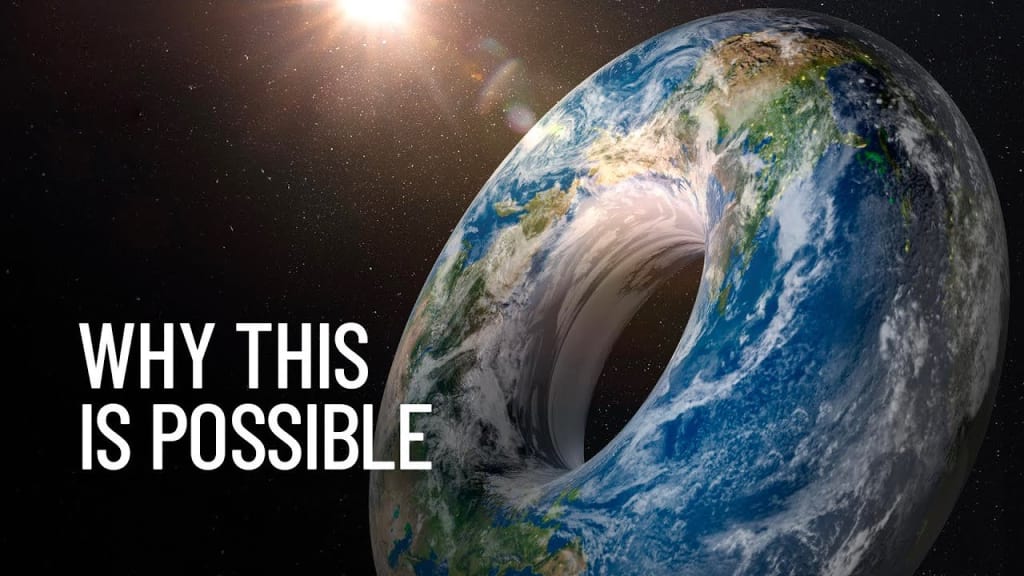
If I told you that in another universe, Earth could be shaped like a donut, you'd probably think I'm crazy. But theoretically, it could happen. This alternate Earth might also be squeezed into the shape of a dumbbell, or it could even be flat. Okay, maybe that one's a bit harder to pull off, but Earth could be many strange and different shapes. Today, I'll take you through seven of the weirdest possibilities. Some shapes can be incredibly dangerous, while others might be better in some ways than what we have now.
Number Seven: Donut Earth

On a donut Earth, or a Taurus-shaped Earth as the science community likes to call it, gravity would be very different depending on where you're standing. You could weigh up to three times less than what you weigh right now. Our current round Earth has a surface gravity of 1G, but things would be a bit different on a donut Earth. At the poles, the surface gravity would be 65 Gs, while near the equator, it would only be 0.3 Gs. You'd feel like you're bouncing around on Mars.
Also, the moon would act strangely. It could behave in two different ways: it might be pulled toward the hole and bob up and down in the middle, or it might be affected by the gravity of the donut's outer edges and create a figure-8 movement. This would affect the ocean tides and cause unstable water levels, destroying cities that sit on the coast. The weather in certain parts of the planet would also be extreme, with massive hurricanes and storms wreaking havoc. Despite these problems, it would still be possible for humans to survive on this planet. Sure, some places would be inhospitable and it might be hard to travel due to the low gravity, but we could live here.
Number Six: Dumbbell Earth
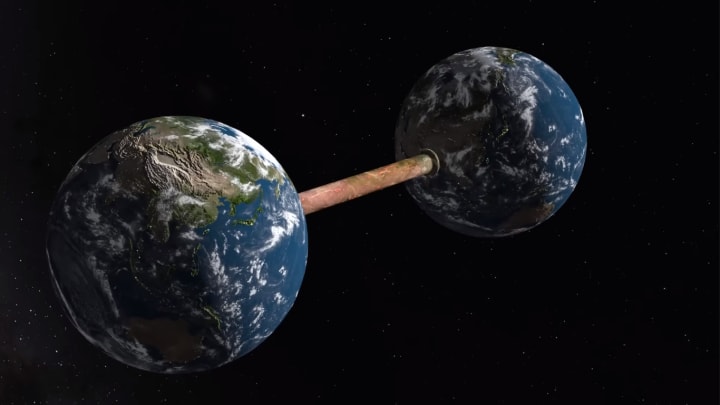
This next planet falls a little further into the realm of science fiction. This is dumbbell Earth, two separate planets connected by a narrow middle section. The gravity in this part would be significantly weaker, as the middle section would essentially be pulled in two directions by the outer planets. This would create some extreme volcanic activity, which might cause the planets to break apart. Crossing between the planets would be incredibly dangerous and, in some cases, impossible due to the gravity.
Living on either of the outer Earths would feel pretty close to what we have now. They'd have similar gravity, weather, and atmosphere. The main difference would be that each Earth would have different cultures and technology. They might evolve differently and contain completely different species.
Number Five: Ellipsoid Earth
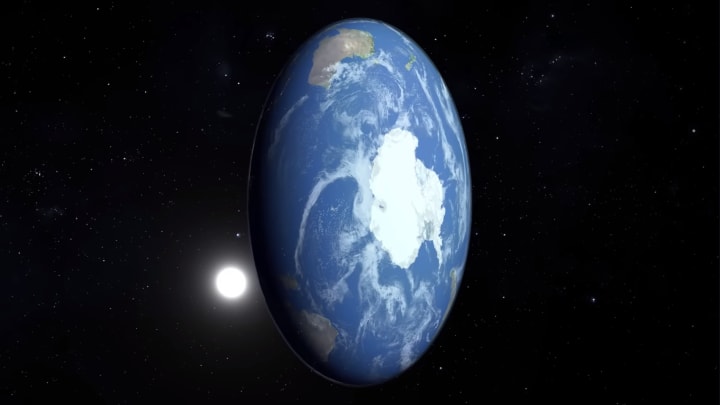
This kind of Earth would be egg-shaped, not the sphere that we're used to. It would still be habitable, but there'd be some major differences from how we live now. Gravity would be stronger or weaker depending on where you stood on the planet. The narrower parts of the planet would have the strongest gravity, and the wider sides would have weaker gravity. You'd also notice some differences in the weather. Places along the equator would have a broad range of tropical, milder temperatures, and places near the polar regions would be much colder and have more extreme temperatures than what we're used to. But overall, apart from a few differences, a planet like this would be very livable for us humans.
Number Four: Flat Earth

Before we have some fun talking about a flat Earth, let's make something crystal clear: a flat planet is impossible, and we definitely don't live on one. Gravity naturally shapes massive celestial bodies into spheres, so a flat Earth would completely alter our understanding of gravity, and it's just impossible.
But living on a flat Earth, air pressure would be a major concern. Gravity would draw too much air toward the Earth's center, leaving the areas around the edge with no air pressure at all. If you lived in Australia, you wouldn't have enough oxygen to breathe, and if you lived closer to the Arctic, you'd be crushed by the weight of the air. You'd also have to consider that a flat Earth wouldn't have a core and therefore no geomagnetic field to protect us from solar winds. Everyone would get a serious case of radiation poisoning from the sun.
Number Three: Cube Earth
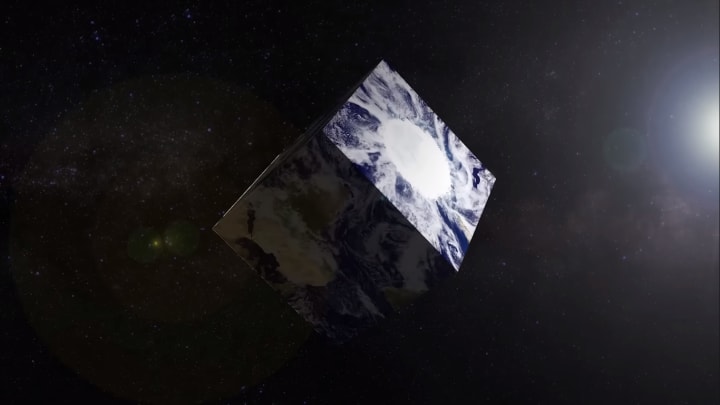
Earth now has six sides, but unfortunately, none of them are any fun. Walking on them would feel like you're constantly climbing up a super steep hill. On this cubed Earth, gravity is strongest at the center of each of its faces. So the further you are from the center, the more you'll feel its pull. But maybe you won't notice it after all, as you'd only be able to live near the center of each of its sides. That's because, due to this Earth's gravity, all the water would be pulled into the planet's multiple centers. The edges would be rocky and barren, unable to support any kind of life. It would also make traveling to the other sides of the planet incredibly difficult or impossible. People on different sides would likely evolve in different ways, and each side would have a different climate and weather. A side that doesn't get much sun might be incredibly frigid, whereas a side that gets lots of sun would look a lot different.
Number Two: Hollow Earth
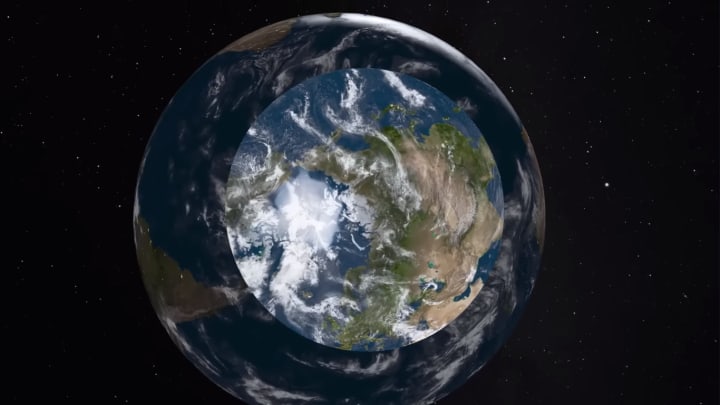
Some of the planet shapes we've seen on this list are theoretically possible, but a hollow Earth is anything but that. Gravity would force the hollow Earth to collapse on itself, essentially creating a smaller sphere. But let's assume that didn't happen. Well, there still wouldn't be any life because there'd be no atmosphere. There would be no magnetic field because our core would be hollow. No magnetic field equals no atmosphere, and not having an atmosphere would mean a ridiculous amount of solar radiation from the sun would be frying us. Plus, if you somehow managed to land on this planet, you'd instantly fly off. A hollow Earth's gravity would be so weak that nothing could stick to it. This planet's shape kind of sucks.
Number One: Alderson Disc
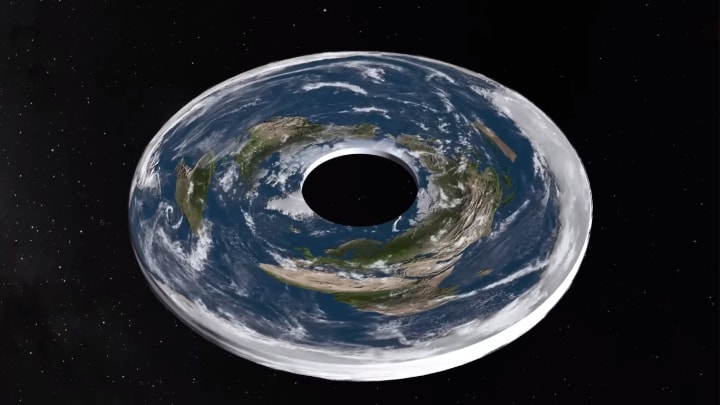
For this last one, we're going to cheat a little bit. What you're looking at here is known as an Alderson disc. It's like a DVD version of Earth and is less of a theoretical planet shape and more of a megastructure that could possibly be created, but we'd need a ridiculous amount of materials. You'd likely need to mine the entire wealth of minerals from planets like Earth, Mars, and a few others, making them completely uninhabitable. This disc would be massive, able to house billions and billions of people. It would be 241 million km wide. For reference, the circumference of Earth is just 40,000 km. But the people living on this Alderson disc would only be able to live in the middle of the band. Closer to the hole near the sun would be extremely hot, and the edges of the disc would be incredibly cold.
There's also another major issue with this megastructure: since it's so big, there's the chance that the disc could collapse in on itself and create a black hole. I don't think I like this one.
Maybe instead of contemplating these crazy shapes of alternative Earths, we should appreciate what we have right now. Maybe in the future, it'll progress in all sorts of interesting ways, like maybe becoming a type seven civilization. But that sounds like a story for another time.
About the Creator
Sheko
Unlock Attraction Mastery with Sheko! Discover powerful strategies to exude confidence, stay curious, uphold your principles, and embrace abundance. Attract genuine love and admiration effortlessly. Join me and magnetize hearts!
I Spoke to Astrophysicists About Starlink’s Expansion: The Doomsday Scenario Keeping Them Up at Night
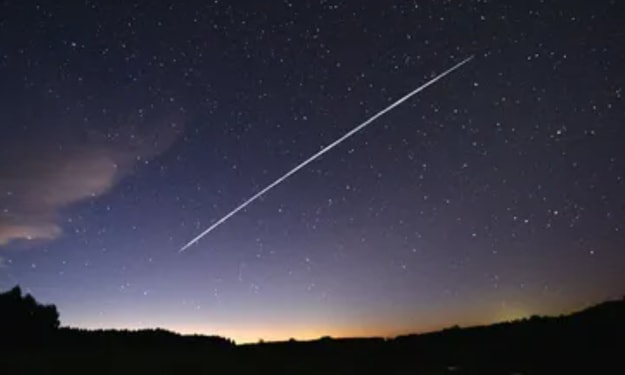
SpaceX’s Starlink project has captured headlines for its ambitious goal: provide high-speed internet across the globe by deploying thousands of low-Earth orbit satellites. While the idea of connecting remote communities is exciting, astrophysicists and space experts are sounding the alarm about a growing doomsday scenario that could threaten both space exploration and our ability to observe the night sky. After speaking to several astrophysicists, it’s clear that Starlink’s expansion, if unchecked, could dramatically alter Earth's orbital environment, disrupt astronomical observations, and even increase the risk of space debris collisions. Here’s what experts are warning the public about. The Scale of Starlink’s Expansion As of now, SpaceX has launched over 4,000 Starlink satellites, with plans to deploy tens of thousands more in the coming years. Each satellite orbits at altitudes between 340 km and 1,200 km, which places them in the low-Earth orbit region used by countless other satellites and scientific missions. Astrophysicists point out that this rapid proliferation is unprecedented. Dr. Lisa Montez, an astronomer specializing in satellite impacts on optical telescopes, told me, “We are looking at a situation where the density of satellites is increasing faster than anyone has fully planned for. This is uncharted territory.” The problem isn’t just the sheer number of satellites—it’s the concentration in specific orbital bands, which makes collisions more likely and complicates orbital management. The Night Sky Is at Risk For centuries, humanity has marveled at the stars, studying the cosmos to better understand our place in the universe. But astrophysicists warn that Starlink is dramatically altering the night sky, making it more challenging to conduct research and enjoy unpolluted stargazing. Every time a telescope captures an image, the reflective surfaces of Starlink satellites can leave streaks of light, masking or distorting the data. “Even a single bright satellite passing through a telescope’s field of view can ruin an entire night of observation,” Dr. Montez explains. Observatories around the world are already noticing the impact. The Vera C. Rubin Observatory in Chile, set to be one of the most advanced facilities for studying dark matter and the evolution of galaxies, may see thousands of Starlink satellites crossing its field of view nightly, potentially reducing the quality of its data and increasing processing costs. The Doomsday Scenario: Space Debris Beyond observations, astrophysicists are increasingly concerned about space debris, which could trigger a cascading chain reaction known as Kessler Syndrome. This occurs when collisions between satellites produce debris that then hits other satellites, creating more debris in an accelerating feedback loop. Professor Rajesh Patel, a space environment specialist, told me, “If a few hundred Starlink satellites collide, it could create tens of thousands of fragments. That would threaten other satellites, international space missions, and even human spaceflight.” Space debris doesn’t just float harmlessly—it travels at speeds over 28,000 km/h, enough to destroy functional satellites or damage spacecraft. With tens of thousands of Starlink satellites planned, the potential for catastrophic collisions is growing, especially since low-Earth orbit is already crowded. Mitigation Efforts and Controversies SpaceX has acknowledged these concerns and claims to implement collision avoidance protocols, using automated systems to maneuver satellites out of harm’s way. The company also plans for satellites to deorbit at the end of their lifespan, burning up in the atmosphere. However, experts argue that these measures may not be enough. Automated systems can fail, and human error or unexpected orbital dynamics could still lead to accidents. Furthermore, the sheer number of satellites makes it difficult to track and manage each one effectively, particularly as other private companies and nations plan similar mega-constellations. Dr. Montez adds, “Even if every satellite works perfectly, the night sky is already changing. The aesthetic and scientific impacts are immediate, whereas collision risks are looming but potentially devastating.” Broader Implications for Humanity The expansion of Starlink raises ethical and regulatory questions. Who has the right to fill low-Earth orbit? How much impact on astronomy and scientific research is acceptable for the sake of global internet coverage? International regulatory bodies like the United Nations Office for Outer Space Affairs (UNOOSA) and the Federal Communications Commission (FCC) have some oversight, but critics argue that global coordination is lagging behind corporate launches. Without international agreements and enforceable regulations, the sky could become a congested and hazardous environment, impacting both science and commerce. Astrophysicists emphasize that this isn’t just a matter of aesthetics. The ability to observe celestial phenomena affects climate science, space weather monitoring, and tracking near-Earth objects. If observations are increasingly compromised, our understanding of Earth and space could suffer. What Can Be Done? Experts suggest several strategies to mitigate risks: International Coordination: Global treaties or agreements to regulate satellite density and orbital placement. Reflectivity Reduction: Coating satellites to reduce brightness and their impact on telescopes. Enhanced Tracking Systems: Better monitoring of orbital debris and automated collision avoidance. Selective Deployment: Careful planning to avoid overcrowding specific orbital bands. While SpaceX is implementing some of these solutions, astrophysicists argue that industry self-regulation is insufficient. They advocate for a coordinated international approach to protect both scientific research and long-term orbital sustainability. Conclusion The expansion of Starlink represents a remarkable technological achievement, promising global internet access and unprecedented connectivity. Yet it also highlights the unintended consequences of space commercialization, including the potential for a cluttered sky, disrupted astronomy, and catastrophic space debris collisions. Astrophysicists remain vigilant. They warn that without careful oversight, humanity could face a doomsday scenario in low-Earth orbit, jeopardizing scientific discovery and space safety for generations. As we continue to celebrate innovations like Starlink, it’s crucial to remember that the sky belongs to all of us—scientists, enthusiasts, and everyday observers alike. Balancing technological progress with environmental stewardship of space may be one of the most critical challenges of the 21st century.
By Muhammad Hassanabout 11 hours ago in Earth
Turning Waste into Worth: Plastic Pyrolysis in the Circular Economy
Plastic pollution has become one of the defining environmental challenges of our time. From overflowing landfills to microplastics in oceans, the traditional “take–make–dispose” model is no longer sustainable. In response, the concept of the circular economy has gained global attention, aiming to keep materials in use for as long as possible while reducing waste. Among the emerging technologies supporting this transition, plastic pyrolysis stands out as a promising solution.
By Bestonpyrolysisabout 19 hours ago in Earth


Comments (1)
Very interesting and inspires ideals for sci-fi/fiction films about different worlds on different earths. Pretty cool. Great writing :)