
The 10 Smallest Animals on Earth
"Tiny Titans: The Smallest Animals on Earth"
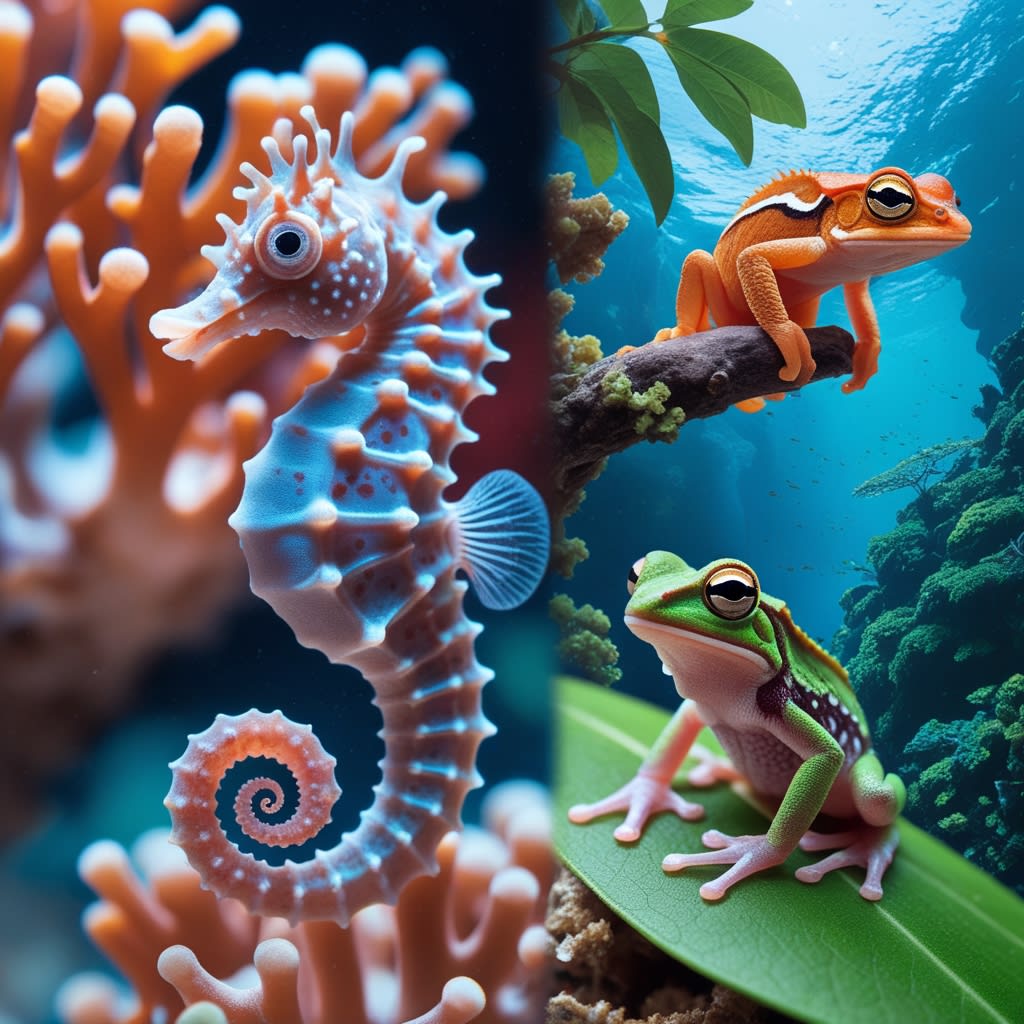
The animal kingdom is full of fascinating creatures, many of which are known for their massive size, such as whales and elephants. However, some animals are so tiny that they can fit on the tip of your finger—or even on a single grain of rice! These miniature creatures play an essential role in their ecosystems despite their small stature. In this article, we’ll explore the 10 smallest animals on Earth, their unique characteristics, habitats, size, and whether they pose any danger to humans.
1. Scydosella musawasensis – The Smallest Beetle in the World
What is it? A species of featherwing beetle, the tiniest beetle ever recorded.
Size: 0.325 mm long (less than 1/3 of a millimeter!)
Where does it live? Found in Central and South America, particularly in moist leaf litter and decomposing wood.
What makes it unique? This beetle is so small that it can easily pass through the holes of a fine mesh screen. It feeds on fungi and bacteria growing on decomposing organic material.
Is it harmful to humans? No, it is completely harmless and even helps in the decomposition process of plant matter.
2. Paedophryne amauensis – The World’s Smallest Frog
What is it? The smallest known vertebrate (animal with a backbone).
Size: 7.7 mm long (about the size of a housefly!)
Where does it live? Found in the rainforests of Papua New Guinea, hiding in the leaf litter on the forest floor.
What makes it unique? This tiny frog was discovered in 2009 and officially named in 2012. It is an expert at camouflage, blending perfectly with its surroundings. Despite its small size, it has a loud, high-pitched croak used to communicate with others of its kind.
Is it harmful to humans? No, it is completely harmless and plays a vital role in controlling insect populations.
3. Dicopomorpha echmepterygis – The Smallest Insect
What is it? A parasitic wasp and the smallest known insect species.
Size: 0.139 mm long (smaller than a grain of salt!)
Where does it live? Found in North America, often inside the eggs of other insects.
What makes it unique? Males of this species are so tiny that they don’t even have wings or eyes. They spend their entire life inside host insect eggs, mating with females before they even hatch.
Is it harmful to humans? No, it only affects other insects and is invisible to the naked eye.
4. Hippocampus denise – The Tiny Seahorse
What is it? A species of pygmy seahorse.
Size: 16 mm long (smaller than a thumbtack!)
Where does it live? Found in coral reefs in the Pacific Ocean, particularly in Indonesia, the Philippines, and northern Australia.
What makes it unique? This tiny seahorse clings to soft coral using its tail, blending in perfectly to avoid predators. Its body color changes to match its surroundings, making it nearly invisible.
Is it harmful to humans? No, it is completely harmless and delicate.
5. Brookesia micra – The Miniature Chameleon
What is it? One of the smallest reptiles in the world.
Size: 29 mm long (small enough to stand on a matchstick!)
Where does it live? Found only in Madagascar, particularly in dry forests and on the forest floor.
What makes it unique? Unlike larger chameleons, this species doesn’t change color dramatically but still has excellent camouflage abilities. At night, it sleeps on thin branches to stay safe from predators.
Is it harmful to humans? No, it is completely harmless and fragile.
6. Kitti’s Hog-Nosed Bat – The Bumblebee Bat
What is it? The smallest bat species in the world.
Size: 29–33 mm in length, weighing about 2 grams (as light as a small paperclip!)
Where does it live? Found in limestone caves in Thailand and Myanmar.
What makes it unique? It is also one of the smallest mammals in the world. Despite its size, it is an agile flyer and feeds exclusively on insects.
Is it harmful to humans? No, it poses no threat and helps control insect populations.
7. Speckled Padloper Tortoise – The Tiniest Tortoise
What is it? The smallest known species of tortoise.
Size: 6–10 cm long (fits in the palm of your hand!)
Where does it live? Found in rocky areas of South Africa.
What makes it unique? Unlike larger tortoises, this species is very agile, moving quickly over rocky terrain. Its shell has a speckled pattern that helps it blend into its environment.
Is it harmful to humans? No, it is a gentle herbivore.
8. Etruscan Shrew – The Smallest Mammal by Weight
What is it? The world’s lightest mammal.
Size: 3.5 cm long, weighing only 1.2 grams (lighter than a raisin!)
Where does it live? Found in Europe, North Africa, and Asia, preferring warm, moist environments.
What makes it unique? This shrew has a metabolism so fast that it needs to eat almost constantly to survive. It can consume up to twice its body weight in food daily.
Is it harmful to humans? No, it is completely harmless and actually helps control insect populations.
9. Pygmy Rabbit – The Tiniest Rabbit
What is it? The smallest rabbit species.
Size: 24–29 cm long, weighing about 400 grams (smaller than a standard football!)
Where does it live? Found in North America, mainly in sagebrush habitats.
What makes it unique? Unlike larger rabbits, this species is highly dependent on sagebrush for both food and shelter. It is shy and avoids open areas.
Is it harmful to humans? No, it is completely harmless and rarely seen.
10. Monte Iberia Eleuth – The Smallest Land Frog
What is it? One of the smallest amphibians in the world.
Size: 8.5–10 mm long (as small as a fingernail!)
Where does it live? Found only in Cuba, in humid forests.
What makes it unique? This tiny frog is critically endangered and has toxic skin secretions that help protect it from predators.
Is it harmful to humans? Yes, slightly. Its toxins can be harmful if touched or ingested.
Final Thoughts
Despite their small size, these animals play vital roles in their ecosystems. Some are predators, keeping insect populations in check, while others are prey for larger animals. Their tiny sizes also make them incredibly hard to study, meaning many more species may still be undiscovered.
Would you like to read about more fascinating tiny creatures? Let me know in the comments!
About the Creator
Your Plant's Family Tree: Using AI to Understand Genera, Species, and Cultivars
You bought a plant labeled "Pink Princess." Months later, its leaves emerge solid green. A friend gives you a cutting of their "Monstera," but it looks nothing like the massive, fenestrated plant you saw on social media. You search for "lavender" at the nursery and face a wall of options—English, French, Spanish, Hidcote, Grosso—all different sizes, colors, and hardiness levels.
By Emma Wallace7 days ago in Earth
Cassie and Johnny
I’m the kind of dame you notice. I’m no femme fatale, but you can’t ignore me, at least not until I warn you about what’s coming, then everybody ignores me. Hell, they usually blame me afterwards and give Johnny all the credit for saving the day, but my Johnny couldn’t save a seat at the movies without my help. Sure, he’s brawny, but brainy? Not so much. Like that time I asked him to spot me five bucks, and he said he didn’t see it anywhere on me, and believe you me, he looked but good.
By Harper Lewis4 days ago in Critique




Comments (2)
Nice points you rised
Fabulous piece. Thanks for sharing