
The 10 longest snakes in the world - how much do these amazing reptiles measure?
No, there are no snakes that won't fit on a sizeable truck. However, this does not change the fact that the largest individuals reach enormous sizes. What are they? Take a tour in the footsteps of the world's longest snakes.

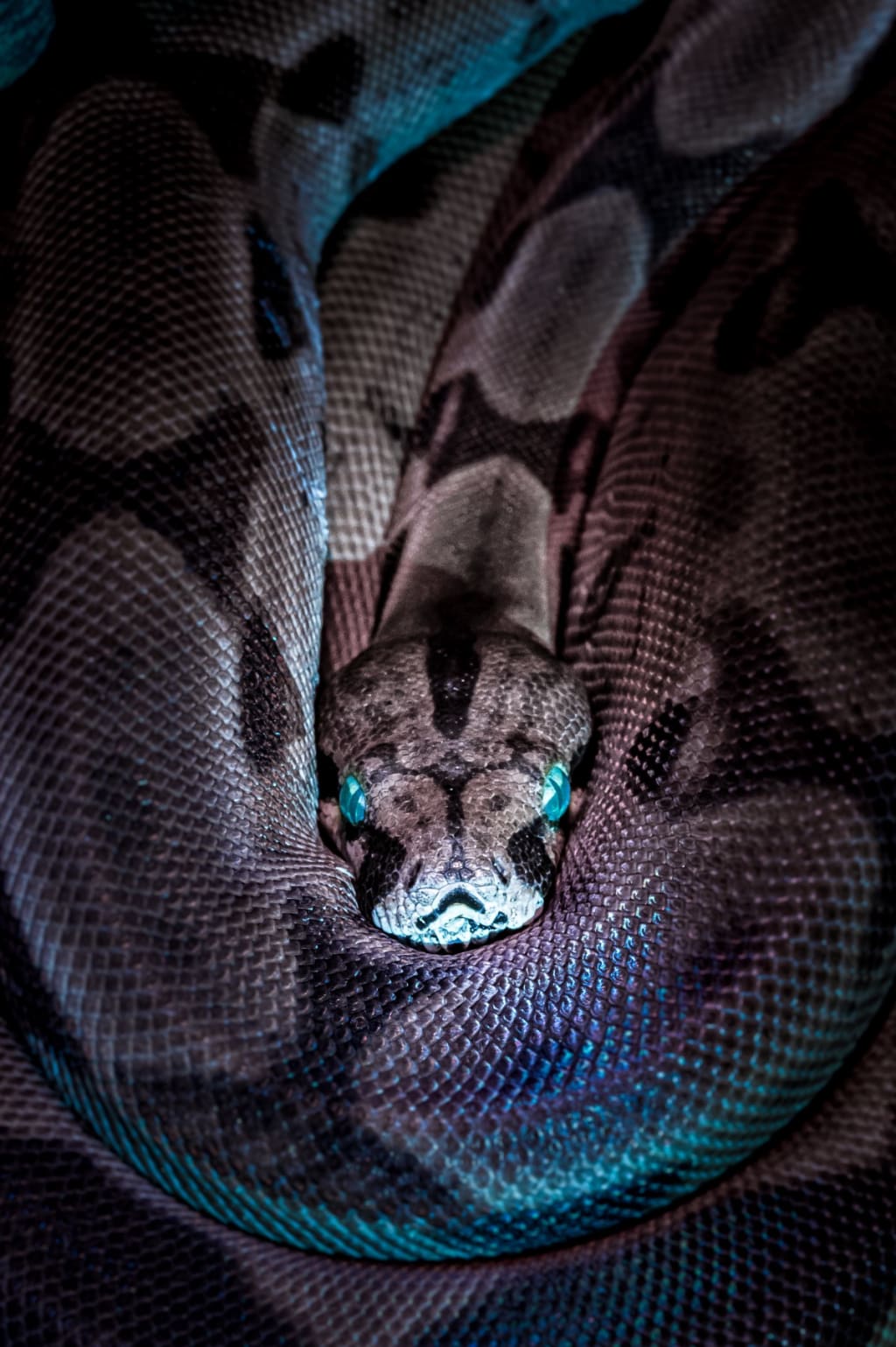
Most of us see the world's longest snakes as real monsters, reaching enormous sizes and able to devour a horse with hooves. Much of this is due to the wild imagination of filmmakers, who in their productions present these reptiles as beasts from hell. No, there are no anacondas, which are able to crush a wooden building with a hug of their body.
The largest animals in the world ruled our planet many millions of years ago. We are talking about dinosaurs - ancient reptiles, whose every step made the earth vibrate. However, not all giant reptiles became extinct at the end of their era.
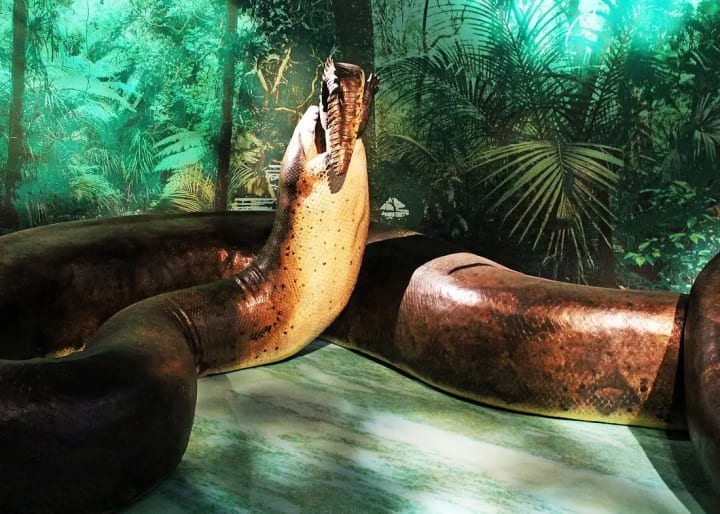
Shortly after the extinction of the dinosaurs, titanoboa appeared — the largest snake in history, which easily killed even large crocodiles. It measured about 15 meters long and could weigh a ton. At its widest point, its massive body reached a diameter of 100 cm. Today, such individuals no longer occur. So, what is the largest snake in the world?
Australian Taipan
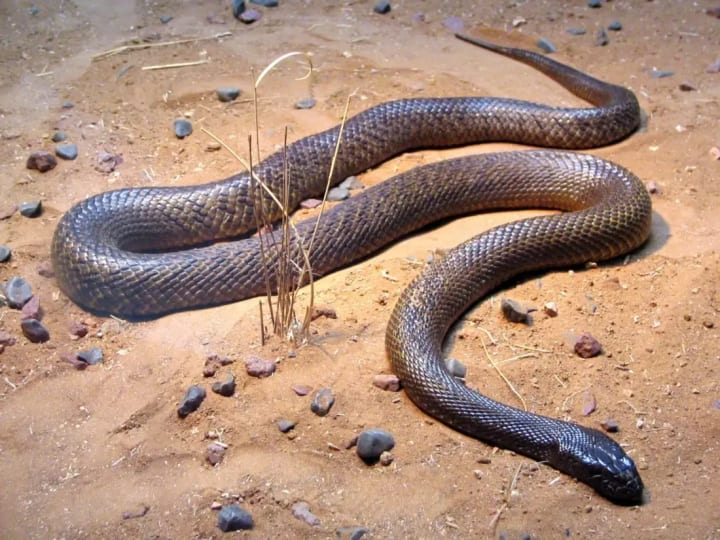
The list of giant snakes opens one of the most venomous representatives of the family Treacherous. Australian Taipan, because it is about him, occurs on the island of New Guinea and Australia, primarily in the north and north-east.
It thrives in grasslands and dry forests, but its territory also includes tropical forests and moist monsoon forests. It preys on small mammals and birds. It can reach 150 to 200 cm in length. The longest captured individual measured as much as 290 cm.
Olive python
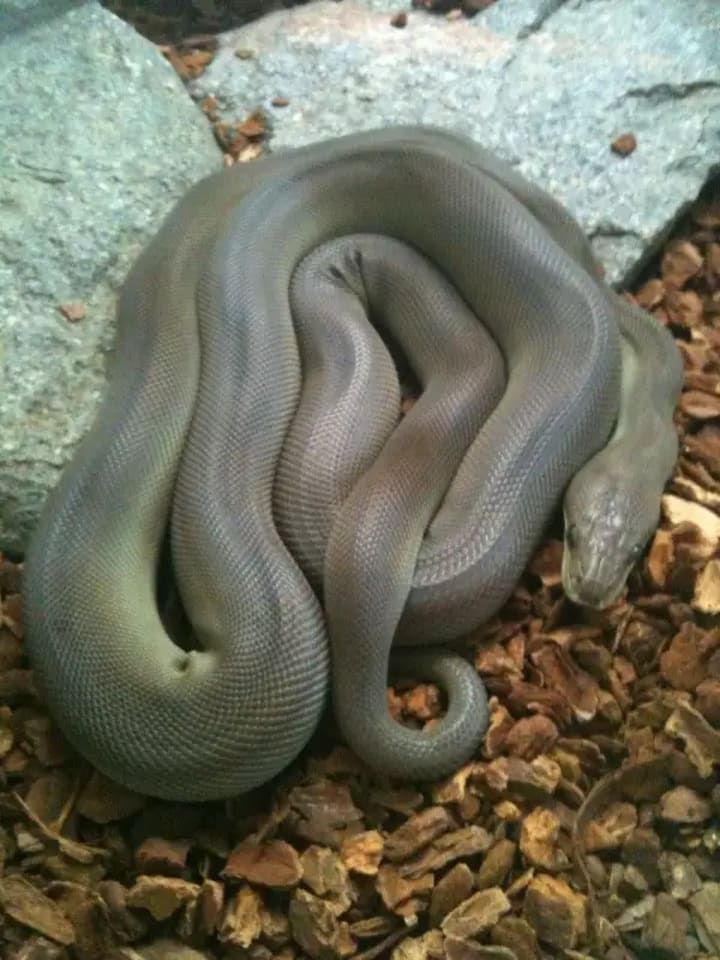
Another place in our list was taken by one of the longest snakes in Australia. The olive python owes its name to its characteristic coloration. It is a typical strangler, which kills its prey with the braids of its massive body.
It preys on reptiles and small mammals. Two subspecies of the olive python are classified today: Liasis olivaceus olivaceus, which measures up to 300 cm in length, and Liasis olivaceus barroni, which exceeds 400 cm in length.
Boa Constrictor

Time for the most famous representative of the strangler family. Boa Constrictor, inhabiting North America, Central America, South America and the Caribbean, is related to the aforementioned ancient giant titanoboa.
The beautifully colored reptile, whose skin is dominated by shades of brown, beige and gray, in some ways resembles the largest spiders in the world. It has been labeled a killing machine, but in practice does not pose much of a threat to humans. Its diet is primarily dominated by small and medium-sized mammals, although it usually lurks on small rodents.
Adult specimens reach up to 430 cm in length, but it is worth noting that specimens bred in captivity do not often exceed 250 cm.
Black mamba
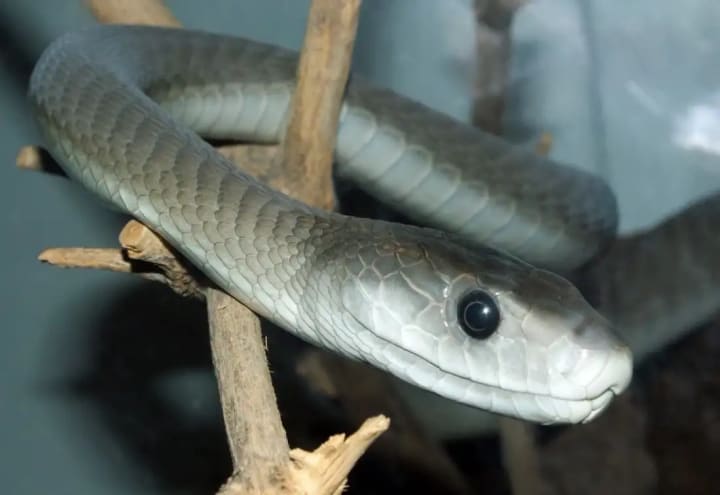
The next species on our list is extremely infamous and this time with good reason. The black mamba is a highly venomous species of snake. It is one of the longest snakes in the world and the longest in Africa alone. Additionally, it is hellishly fast, aggressive, and nature has equipped it with a deadly toxin. It is better not to meet this reptile on your way, because the black mamba can attack without any apparent reason.
Despite appearances, the name of this animal does not refer to the coloration at all. Its skin can be olive, sandy, brown and — not very often — black. The nomenclature refers to the pitch-black interior of the snake’s mouth. The largest captured specimen measured up to 430 cm, it is worth mentioning that the average individuals are almost twice as short.
Light-skinned tiger python
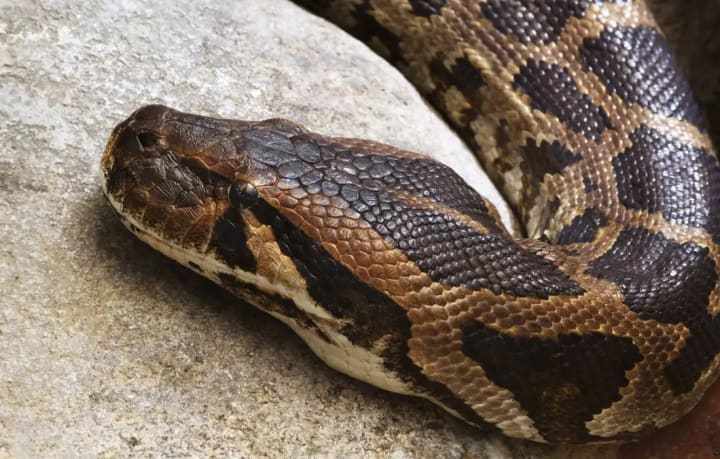
Another large strangler on our list. It is one of the two subspecies of the tiger python. It is found in Asian countries — Laos, Indonesia, Malaysia, Burma and the southern part of China.
It is not the largest strangler in the world, the record specimen measured 4.6 meters. Seen in person, however, it makes an incredible impression, mainly because of its massive body, which at its widest point can have a larger girth than an adult male’s thigh.
King cobra
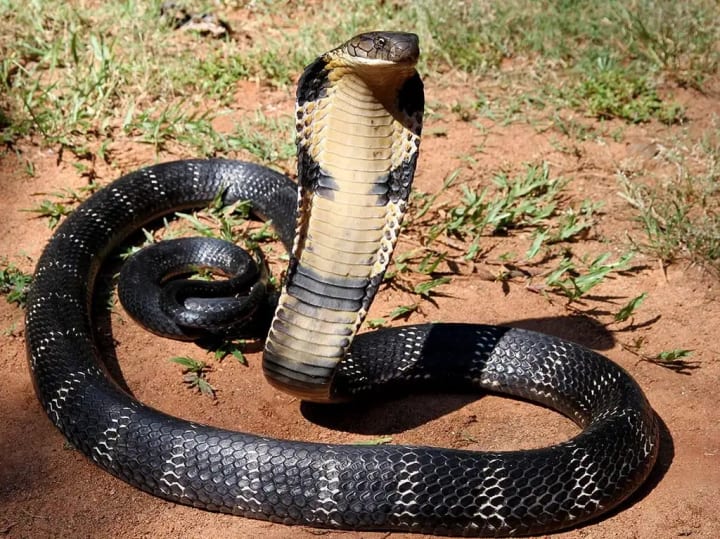
It’s time for the true queen of venomous snakes. The king cobra grows throughout its life, so the oldest individuals are also the largest. Interestingly, we are literally talking about a born killer here — snakes are capable of attacking right after hatching.
The snake inhabits the mountain forests and jungles of Thailand, Vietnam, Laos, southern China, the Philippines, India and Cambodia. A mature individual reaches up to 570 cm in length, and it is worth noting that males are longer than females, which is not a very common phenomenon in the snake kingdom. The king cobra produces significant amounts of highly toxic venom. Without administering serum, a bitten human dies after several minutes.
Dark-skinned (Burmese) tiger python
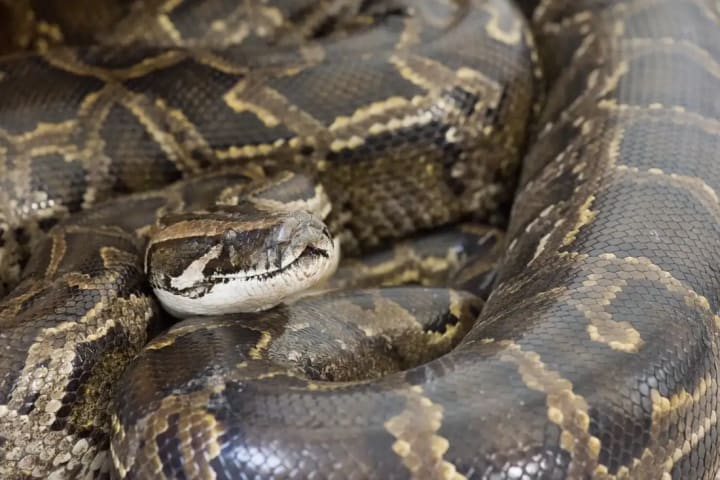
Another representative of tiger pythons in our list. The Burmese python inhabits southeastern areas of Asia. A snake endowed with a massive body with a clearly distinguishable head is slightly darker than its light-skinned counterpart.
It is also longer than it is. The largest dark-skinned tiger pythons can reach nearly 5.8 meters in length, which puts them at the top of the giant snake world.
African rock python
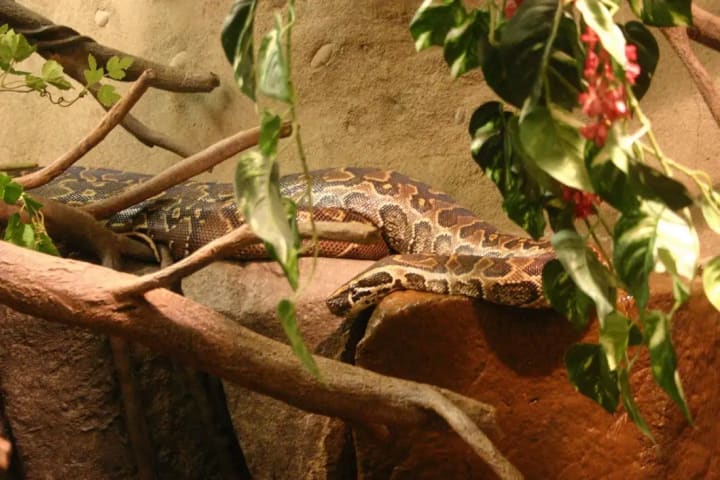
Even larger is the species found in the Black Continent. The African rock python is quite a rare snake, which is largely due to the specific environment in which it lives. It occupies areas where there are the most adverse conditions for life, food is scarce, and competition among predators — huge. For this reason, juveniles often end up as food for other carnivores.
If they manage to survive the growth period, they get to the top of the food chain. The average length of this strangler is about 5 meters, not to mention that specimens over 7 meters have been described.
Green anaconda
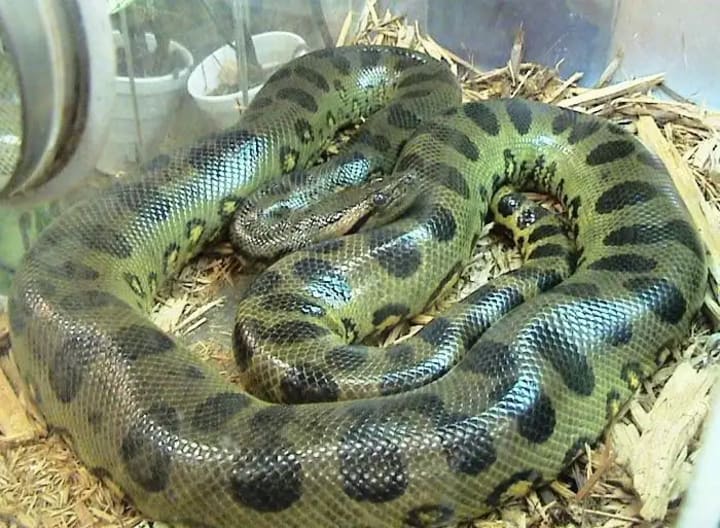
We are nearing the end of our list. Although the green anaconda is not the longest snake in the world, it holds the title of the heaviest representative of its suborder. Inhabits tropical forests of South America.
A mature female can reach up to 7 meters in length. Such a large snake weighs as much as 250 kg.
Reticulated python
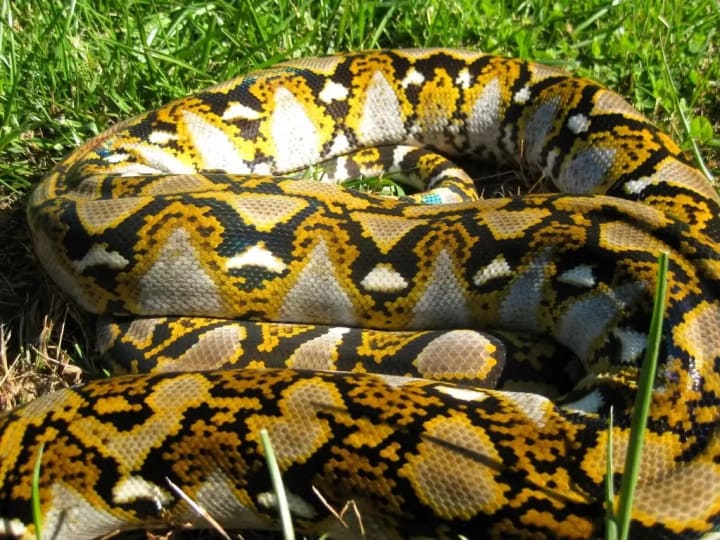
The species that closes our ranking is the reticulated python. In its suborder, it is the largest animal in the world. It is found in lowland areas of Asian countries. Many times individuals measuring 9 meters were described.
Currently, such snakes no longer exist. The average specimen living in the wild reaches just over 6 meters. Among modern snakes, the world’s largest python is a captive Medusa, which at the age of 9 years had a length of almost 770 cm. Experts believe that it has a chance to reach even 10 meters.
Already read? Great! If you leave a comment or start following me I would be extremely grateful for it. You can also help me continue writing articles by donating a tip. Regards!
About the Creator
Without Democracy, Donald Trump’s Venezuelan Oil Quest Will Fail
Donald Trump’s renewed interest in Venezuelan oil may seem, on the surface, like a hard-nosed geopolitical calculation. Venezuela holds the world’s largest proven oil reserves, and amid global energy uncertainty, access to those resources is undeniably tempting. But history, economics, and politics all point to the same conclusion: without democratic reform in Venezuela, any attempt by a Trump-led US administration to secure reliable Venezuelan oil will ultimately fail.
By Aarif Lashari5 days ago in Earth




Comments
There are no comments for this story
Be the first to respond and start the conversation.