Sustainability
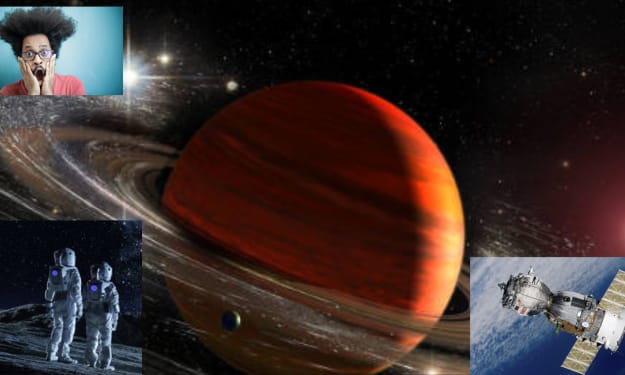
Imagine a scenario in which people attempted to land on Saturn
In 2017, NASA's Cassini probe sent us our closest view of Saturn as it dove into the planet's stormy atmosphere. And the results were stunning. But what would it be like if humans made the journey in person? At its closest, Saturn is 1.2 billion kilometers away from Earth. So with today's spacecraft technology, you'll need about eight years to make the trip. Finally, you arrive and get your first glimpse of Saturn with your own eyes. It's an enormous planet, the second largest in the solar system. In fact, over 760 Earths can fit inside. But hold up. We can't visit Saturn and skip over the best part, its iconic rings. Saturn's rings are almost as wide as the distance between the Earth and the moon, so at first glance, they seem like an easy place to land and explore on foot. Except there's one problem. While they look like giant discs, they're not a solid track at all. Instead, they're made of millions of chunks of ice, some as tiny as dust particles, others as large as buses. But if you were able to hike on one of Saturn's outermost rings, you'll walk about 12 million kilometers to make it around the longest one. That's about 15 round trips from the Earth to the moon. Along the way, you'll come across tiny moons and spokes of dust levitating above the surface. Now, you might notice that streams of tiny ice particles are also flying off the rings, heading towards Saturn. That's ring rain. It turns out, Saturn's magnetic fields are slowly but surely draining away the rings, so we're lucky to visit the rings now, because every 30 minutes, they lose enough water to fill an Olympic-sized swimming pool, and if we arrived 300 million years in the future, we'd miss them entirely. Now, let's climb back aboard and visit the planet itself, 282,000 kilometers away. As we reach the north pole, we'll notice a slight problem with our plan to land on the surface below. There is no surface below. Saturn's made almost entirely of hydrogen and helium gas, which is why it's called a gas giant. 4,000 kilometers above the surface, we hit Saturn's upper atmosphere. As we plummet through the north pole, we'll be treated to the sight of a magnificent aurora, like the ones we see in Alaska. It turns out, Saturn's magnetic field generates huge electrical currents, which heat up the atmosphere at the poles. Unfortunately, the electrical activity within this aurora can disrupt our ship's electronics and navigation system, so best marvel at a distance. Next, we'll hit the troposphere, the part of the atmosphere where weather happens. So watch out, powerful winds may slam into us at nearly 400 meters per second. That's over three times faster than the strongest hurricanes on Earth. All around us, thick yellow clouds give the planet its color. These are filled with ammonia crystals. If you take a sniff, you might be able to smell that distinctive scent, but you should probably keep the window closed. Ammonia is very irritating and could wreak havoc on your respiratory system. Plus, it's freezing out here, reaching as low as minus 250 degrees Celsius, much colder than the East Antarctic Plateau, the coldest place on Earth. So let's head down where it's a bit warmer. Down here, at a depth of 300 kilometers, we reach a layer of water, which is a balmy 0 degrees Celsius. Now, the deeper we plunge, the higher the pressure is around us. And in this next layer, the pressure is so high, it forces those liquid water molecules together, creating solid ice. That ice mixes in with surrounding gasses, so get ready to fight through a flurry of hail. Hopefully, the ice won't shred our ship to pieces, but if we make it through, get ready to go for a swim. Because 1,000 kilometers into the interior, the pressure is so high, it forces hydrogen molecules together into a liquid, which doesn't bode well for us, since even the sturdiest submarine would be crushed in these conditions. And if we somehow survive to reach the next layer, we'll hit yet another obstacle. A layer of liquid metallic hydrogen. The problem here is that this metal can conduct electricity, so even if our navigation equipment and electronics escape the aurora upstairs, it's probably down for the count now. But if we could survive here, our final stop might uncover a mystery in the deepest depths of Saturn. You see, scientists suspect Saturn has a core made of iron and nickel, but they're not sure if it's liquid, like the previous layer, or solid, like Earth's core. So maybe we'll be the lucky ones to find out once and for all. Though, it's over 83,000 degrees Celsius in here, hotter than the surface of the sun and hot enough to dissolve our spacecraft with us inside! Hm. Maybe we should leave the Saturn exploration to unmanned probes after all.
By Mayleen Rosa3 years ago in Earth
Health and Wellness
In a bustling city where life moved at breakneck speed, Emma found herself caught in the whirlwind of constant demands and deadlines. Her days were consumed by work, leaving little time for self-care and personal well-being. Struggling with fatigue, stress, and an increasing sense of imbalance, she knew something needed to change.One fateful evening, as she walked past a serene park on her way home, Emma noticed a flyer for a holistic wellness retreat. Intrigued by the promise of rejuvenation, she decided to embark on a transformative journey towards health and well-being.The retreat, nestled amidst lush greenery, offered a respite from the urban chaos. Under the guidance of experienced wellness practitioners, Emma began to explore the pillars of health: physical, mental, emotional, and spiritual. Each day brought new insights and practices that gradually shifted her perspective.Mornings began with invigorating yoga sessions that awakened her body's vitality. Guided meditation sessions helped Emma navigate the labyrinth of her thoughts, allowing her to find moments of calm amidst the storm. Engaging workshops on nutrition and mindful eating reshaped her relationship with food, fostering a deeper connection to nourishment.But it wasn't just about individual wellness; the retreat emphasized community and connection. Emma formed bonds with fellow participants, sharing stories and supporting each other's growth. In the evenings, around a crackling bonfire, they engaged in open discussions about life's challenges, forging a network of empathetic souls.As days turned into weeks, Emma's transformation became evident. Her complexion glowed with health, her step was lighter, and her smile more genuine. However, the most profound change was within. She had learned the art of balance - the delicate dance between pushing herself to achieve and knowing when to pause and recharge.The retreat's climax came during a silent mindfulness hike to a breathtaking summit. Standing atop, surrounded by nature's grandeur, Emma felt a profound sense of unity with the universe. Her journey had come full circle, reminding her that true wellness transcends the physical and encompasses the harmony of mind, body, and spirit.Returning to the city, Emma faced the same demands as before, but her approach had shifted. Armed with mindfulness tools, healthier habits, and a renewed sense of purpose, she navigated challenges with grace. She became an advocate for wellness in her workplace, promoting breaks, mental health support, and team bonding.The story of Emma's journey towards health and wellness spread through her actions, inspiring others to reconsider their priorities. With each step taken on her path, the ripple effect of positive change expanded, transforming lives one decision at a time."Harmony Renewed" is a tale of awakening, reminding us that amidst life's chaos, the pursuit of health and wellness is a lifelong journey, and the key to a fulfilled existence lies in finding balance and harmony within ourselves and the world around us.
By Waliullah Ibrahim3 years ago in Earth
the challenges of changing weather patterns, droughts, and unpredictable crop yields,
Amid the rolling hills of Greendale, where golden fields stretched as far as the eye could see, the Cooper family had cultivated the earth for generations. Their farm was a haven of life, where the whispering winds told tales of resilience and love for the land. However, as time marched on, the familiar patterns of the seasons began to unravel, ushering in an era of uncertainty that would test the Coopers' very connection to the soil beneath their feet.
By owolabi abdulakeem idowu3 years ago in Earth
Solutions to the Climate Change Problem: Paving the Way to a Sustainable Future
As greenhouse gas emissions continue to drive global temperatures higher, the need for effective solutions has never been more pressing. In this article, we delve into a range of strategies and approaches that hold the promise of mitigating and ultimately addressing the climate change problem.
By kathy rich3 years ago in Earth
The Far-Reaching Effects of Global Warming: Unveiling a Planet in Peril
Global warming, driven primarily by human activities such as burning fossil fuels and deforestation, is ushering in a new era of unprecedented environmental change. The consequences of rising temperatures are vast and profound, impacting ecosystems, weather patterns, sea levels, and even human societies. In this article, we delve into the multifaceted effects of global warming and the urgent need for concerted action to mitigate its far-reaching impacts.
By kathy rich3 years ago in Earth
Managing the Impacts of Climate Change: A Call to Action for a Resilient Future
Rising global temperatures, changing weather patterns, and ecological disruptions are already affecting communities, economies, and ecosystems worldwide. To mitigate and manage these impacts, a comprehensive and coordinated approach is essential. In this article, we explore strategies and solutions to effectively manage the consequences of climate change and build a more resilient and sustainable future.
By kathy rich3 years ago in Earth
Air Pollution and Climate Change: A Deadly Duo Threatening Our Planet
Air pollution and climate change are two interlinked global challenges that pose significant threats to our environment, health, and the well-being of both current and future generations. These issues are intricately connected, with air pollutants contributing to climate change and climate change exacerbating air pollution. Understanding the complex relationship between these two phenomena is crucial for devising effective strategies to mitigate their impacts.
By kathy rich3 years ago in Earth
Health Threats and Climate Change: A Looming Crisis
As global temperatures rise and weather patterns become increasingly unpredictable, the impact on human well-being cannot be ignored. The intricate interplay between health threats and climate change is a complex issue that demands immediate attention and comprehensive solutions.
By kathy rich3 years ago in Earth
Harmony of Nature and Peace of Mind
In our bustling modern lives, where stress and anxiety have become all too common, finding solace in the simple beauty of nature has never been more important. The profound connection between nature and peace of mind has been recognized for centuries, transcending cultures and generations. This synergy provides a serene refuge, offering respite from the complexities of daily life and a pathway to inner tranquility.
By Abdulmajeed Abdul3 years ago in Earth
MASTERING THE PRINCIPLES OF FINANCE
Are you ready to take control of your financial destiny? If so, you have the right content to your financial success. In today's fast-paced world, understanding the principles of finance is more important than ever. Whether you are a graduate, a seasoned professional, or someone looking to improve your financial literacy, mastering the key concepts of finance can empower you to make smart, informed decisions that will set you on the path to financial success. In this comprehensive guide, will demystify the world of finance and provide you with the knowledge and tools you need to navigate the complex landscape of money management. From budgeting and saving to investing and retirement planning is covered. Get ready to take charge of your financial future and embark on a journey towards financial freedom.
By Quodus Michael Akadarinongo3 years ago in Earth